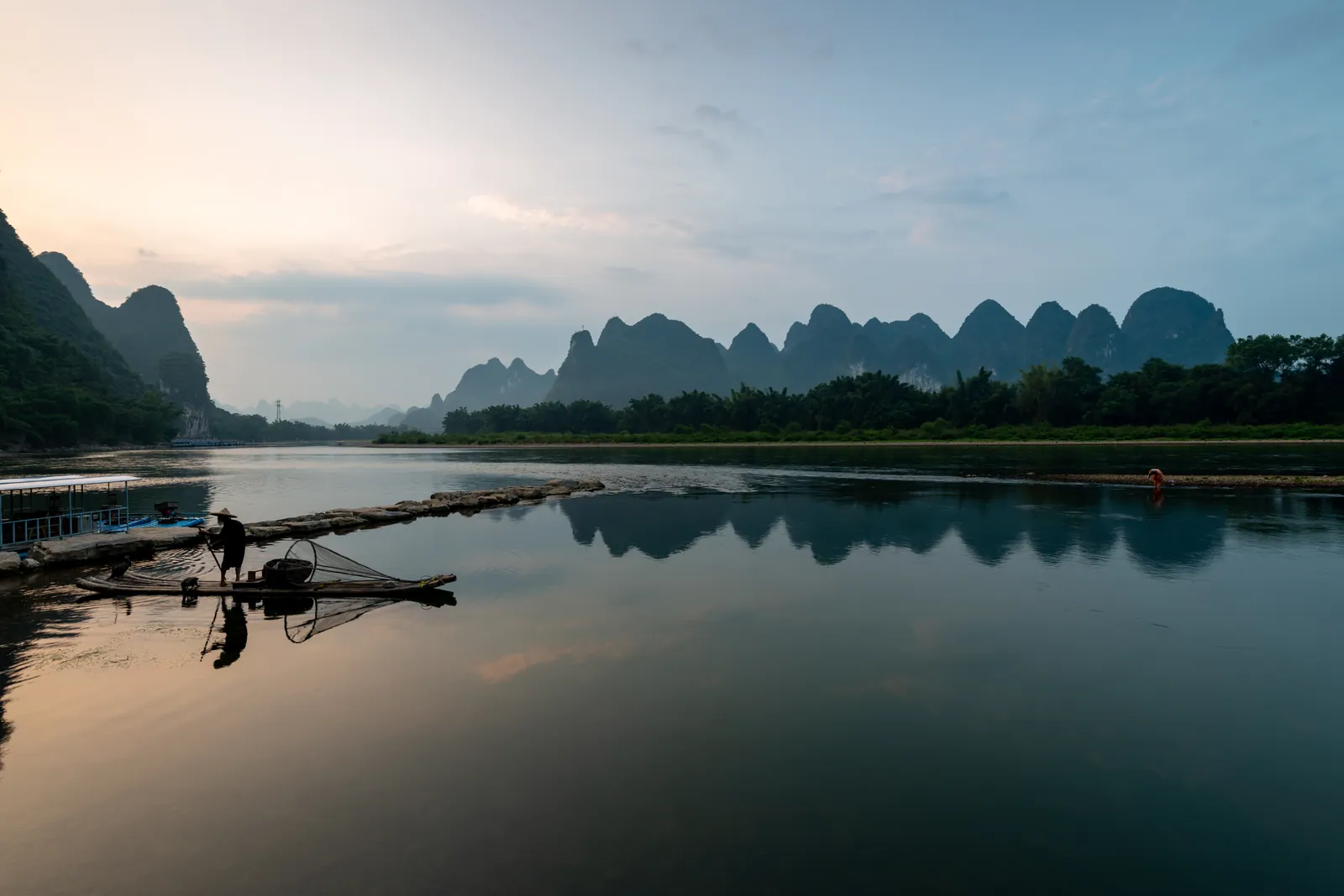
Short answer: with 7 days, follow the classic triangle by high-speed train: Beijing and the Great Wall, Xi’an and the Terracotta Army, then Shanghai. With 10 days, add the canal town of Suzhou and Hangzhou’s West Lake. With 14 days, go west and south instead of east: Beijing and Xi’an, then the pandas and spicy food of Chengdu, the Li River from Guilin to Yangshuo, and Shanghai to finish. Trains and short flights cover every leg, and you never need a car.
This guide turns the sample trips on our China travel guide into day-by-day plans, with travel times between stops and the best area to sleep in each night. Choose your season with our best time to visit China guide, see the highlights in our top 10 places to visit in China, and for a plan built around your dates and interests, use our AI trip planner. Everything was checked as of October 2026.
The three routes at a glance
| Route | Days | Stops and nights | Best for |
|---|---|---|---|
| The classic triangle | 7 | Beijing 3, Xi’an 2, Shanghai 1–2 | First trip, imperial history, the Great Wall |
| Triangle plus the water towns | 10 | Beijing 3, Xi’an 2, Shanghai 3 (with Suzhou), Hangzhou 1 | History plus gardens, lakes and a slower pace |
| Beijing to the karst | 14 | Beijing 3, Xi’an 2, Chengdu 3, Yangshuo 3, Shanghai 2 | Pandas, Sichuan food, river scenery, cycling |
Fly into Beijing and home from Shanghai: it saves a day of backtracking, and both cities have big international airports. Check your entry rules first. As of October 2026, citizens of nearly 50 countries, including Canada, the UK, most of the EU, Australia, New Zealand and Japan, can visit visa-free for up to 30 days under a policy that runs until December 31, 2026 for most of them; US citizens need a visa, unless they use the 240-hour visa-free transit with an onward ticket to a third country or region. Our China guide has the details.
Travel times between the main stops
These are the legs used in the plans below. China’s high-speed timetables are published on China Railway’s 12306 website and app, and times vary a lot by train, depending on how many stops it makes, so the figures here are typical ranges rather than one timetable. Many cities have several stations, such as Beijing South and Shanghai Hongqiao; check which one your ticket uses.
| Leg | Fastest public transport | Time | Source |
|---|---|---|---|
| Beijing – Shanghai | High-speed G train | about 4.5–6 h (fastest trains about 4 h 18 min) | Approximate |
| Beijing – Xi’an | High-speed G train | about 4.5–6 h | Approximate |
| Xi’an – Shanghai | Flight | about 2–2.5 h | Approximate |
| Xi’an – Chengdu | High-speed train | about 3–4 h | Approximate |
| Shanghai – Suzhou | High-speed train | about 25–30 min | Approximate |
| Shanghai – Hangzhou | High-speed train | about 1 h | Approximate |
| Chengdu – Guilin | Flight | about 1.5 h | Approximate |
| Guilin – Yangshuo | Li River cruise | about 4–4.5 h downstream | Approximate |
| Guilin – Shanghai | Flight | about 2–2.5 h | Approximate |
| Yangshuo or Guilin – Hong Kong West Kowloon | High-speed train | about 3–3.5 h | Approximate |
| Beijing – Mutianyu (Great Wall) | Tour bus, hired car or public bus | about 70 km (45 miles), 1.5–2 h | Approximate |
| Xi’an – Terracotta Army | Tourist bus, metro and bus, or taxi | about 40 km (25 miles) | Approximate |
Train tickets are real-name: book on 12306 (in English) with your passport number, then show the passport itself at the entrance, security and the gates. Sales open about 15 days ahead on most routes, and refunds are free more than eight days before departure. Arrive 30 to 45 minutes early at big stations.
7 days: Beijing, Xi’an and Shanghai
The classic first trip. It is busy but very doable, because the trains are fast and the big sights all sell timed, real-name tickets online.
- Day 1, Beijing: Arrive and take the airport express or a taxi into town. Evening walk around the Drum and Bell Towers and the Houhai lakes, with Peking duck for dinner. Sleep: Wangfujing and Dongcheng, or a courtyard hotel near Houhai.
- Day 2, the Forbidden City and the Temple of Heaven: Tiananmen Square and the Forbidden City on a ticket booked ahead with your passport (it is closed on Mondays, except on national holidays), the view from Jingshan Park, and the Temple of Heaven in the late afternoon. Sleep: same.
- Day 3, the Great Wall: Mutianyu, about 70 km (45 miles) northeast, is restored and green, with a cable car up and a toboggan down; book the real-name ticket ahead and go early. Back for a hutong walk and the Summer Palace if you have energy. Sleep: same.
- Day 4, to Xi’an: A morning high-speed train to Xi’an North (about 4.5 to 6 hours). Cycle the Ming city wall at sunset and eat in the Muslim Quarter. Sleep: near the Bell and Drum Towers.
- Day 5, the Terracotta Army: The warriors at Lintong, about 40 km (25 miles) east, at opening time, with the Huaqing Palace nearby. In the evening, the Big Wild Goose Pagoda and its fountains. Sleep: same.
- Day 6, to Shanghai: Fly from Xi’an (about 2 to 2.5 hours). The Bund and the Pudong skyline at night, or an evening Huangpu River cruise. Sleep: the Bund or People’s Square.
- Day 7, Shanghai and home: Yu Garden and the old town early, the former French Concession’s plane-tree streets, then the metro or Maglev to Pudong airport. Stay a second night if your flight is the next day.
Swap it: if you would rather see fewer places properly, drop Shanghai and give Beijing four nights and Xi’an three, flying home from Xi’an. More detail on each stop is in our Beijing, Xi’an and Shanghai guides.
10 days: Beijing, Xi’an, Shanghai, Suzhou and Hangzhou
Three more days turn the triangle into a fuller picture of China, adding the classical gardens and canals of Suzhou and the lake and tea hills of Hangzhou, both a short train ride from Shanghai.
- Days 1–3, Beijing: as in the 7-day plan, with the Summer Palace given its own afternoon. Sleep: Wangfujing, Dongcheng or Houhai (3 nights).
- Days 4–5, Xi’an: the train south, the city wall, the Terracotta Army and the Muslim Quarter. Sleep: Bell and Drum Towers (2 nights).
- Day 6, to Shanghai: Fly from Xi’an; evening on the Bund. Sleep: the Bund, People’s Square or Jing’an (3 nights).
- Day 7, Shanghai: The Shanghai Museum, Yu Garden, the former French Concession and Xintiandi, and the Shanghai Tower’s observation deck at dusk.
- Day 8, Suzhou day trip: A high-speed train of about 25 to 30 minutes. The Humble Administrator’s Garden and the Lingering Garden on timed tickets, then the canal lanes of Pingjiang Road. Back to Shanghai for dinner.
- Day 9, Hangzhou: Train to Hangzhou (about an hour). Walk or cycle the causeways of West Lake, take a boat to the islands, and visit the Longjing tea villages in the hills. Sleep: by West Lake (1 night).
- Day 10, home: Lingyin Temple early, then the train back to Shanghai for your flight, or fly home from Hangzhou.
Swap it: love mountains more than gardens? Replace Suzhou with two nights at Huangshan, the Yellow Mountain, reached by high-speed train from Hangzhou. Details for each stop: Suzhou and Hangzhou.
14 days: Beijing to the karst
Two weeks lets you see three very different Chinas: the imperial north, the spicy, laid-back southwest and the limestone peaks of Guangxi, with Shanghai’s skyline at the end. Two legs are short domestic flights.
- Days 1–3, Beijing: the Forbidden City, the Temple of Heaven, the Great Wall at Mutianyu and the hutongs. Sleep: Wangfujing, Dongcheng or Houhai (3 nights).
- Days 4–5, Xi’an: the train south, the city wall and the Terracotta Army. Sleep: Bell and Drum Towers (2 nights).
- Day 6, to Chengdu: High-speed train from Xi’an (about 3 to 4 hours) across the Qinling Mountains. Evening hotpot. Sleep: Chunxi Road, or near Wenshu Monastery for the pandas (3 nights).
- Day 7, the pandas: The Chengdu Research Base of Giant Panda Breeding at opening time, when the pandas are most active (book the real-name ticket ahead); afternoon tea in People’s Park and the Kuanzhai Xiangzi lanes.
- Day 8, Leshan or the city: The Leshan Giant Buddha by train, or Wenshu Monastery, the Wuhou Shrine and a Sichuan opera with face-changing.
- Day 9, to Guilin: Fly to Guilin (about 1.5 hours). The Reed Flute Cave or an evening on the city’s lakes. Sleep: central Guilin (1 night).
- Day 10, the Li River: The classic cruise from the piers south of Guilin to Yangshuo, about 4 to 4.5 hours past Nine Horses Fresco Hill and the view on the 20-yuan note. Sleep: Yangshuo, in town or in the Yulong River villages (3 nights).
- Day 11, the countryside: Cycle the Yulong River valley among the peaks and rice fields, or float down it on a bamboo raft.
- Day 12, Xingping or a cooking class: The old town of Xingping and the 20-yuan viewpoint, or a Yangshuo cooking class and a sunset climb.
- Day 13, to Shanghai: Fly from Guilin (about 2 to 2.5 hours). The Bund at night. Sleep: the Bund or People’s Square (2 nights, or 1 if you fly home on day 14).
- Day 14, Shanghai and home: Yu Garden, the French Concession and the Shanghai Tower before your flight.
Swap it: end in Hong Kong instead of Shanghai: high-speed trains run from Yangshuo and Guilin to Hong Kong West Kowloon in about 3 to 3.5 hours. In late September and October, add a night at the Longji rice terraces, about two hours north of Guilin, when they turn gold. More in our Chengdu, Guilin, Yangshuo and Hong Kong guides.
Where to sleep, by stop
| Stop | Best area for a short stay | Why |
|---|---|---|
| Beijing | Wangfujing and Dongcheng, or courtyard hotels around Houhai and the Drum Tower | Close to the Forbidden City and the metro; hutong atmosphere |
| Xi’an | Around the Bell and Drum Towers, or South Gate | Inside the walls, next to the Muslim Quarter and the metro |
| Shanghai | The Bund and East Nanjing Road, People’s Square or Jing’an | River views or the main metro hub; Hongqiao for early trains |
| Suzhou | The old town near Pingjiang Road | Canals and gardens on foot |
| Hangzhou | Around West Lake | Walk or cycle to the lake and the tea hills |
| Chengdu | Chunxi Road and Taikoo Li, or Wenshu Monastery | Food and metro; Wenshu is closest to the panda base |
| Guilin | The center near the lakes | Short ride to the cruise shuttle buses |
| Yangshuo | West Street area, or the Yulong River villages | Restaurants and nightlife, or quiet stays among the fields |
Not every hotel or guesthouse in China is licensed to take foreign guests, so book through a platform that shows foreigner-friendly properties, and carry your passport for check-in, where the hotel registers you with the police. Rooms fill and prices rise during the May Day holiday (May 1–5) and Golden Week (October 1–7).
Alternatives by interest
Hikers and mountain lovers
Swap the eastern cities for the mountains: the sandstone pillars of Zhangjiajie, the granite peaks of Huangshan (an overnight on the summit for sunrise), or Jiuzhaigou‘s turquoise lakes from Chengdu. Spring and autumn are best; summer brings crowds and rain, and winter can close trails.
Food lovers
Eat your way across the regions: Peking duck and dumplings in Beijing, biangbiang noodles and lamb skewers in Xi’an’s Muslim Quarter, xiaolongbao in Shanghai, hotpot and mapo tofu in Chengdu and Chongqing, and dim sum in Guangzhou. A two-week food route could run Beijing, Xi’an, Chengdu, Chongqing and Guangzhou, finishing in Hong Kong.
Families
Keep to fewer bases and give each one more time: Beijing (the Great Wall toboggan at Mutianyu is a hit), Chengdu for the pandas, and Yangshuo for cycling, rafting and caves. Trains are calm, clean and easy with children, and many sights let young children in free.
Culture and the Silk Road
With extra time, continue from Xi’an to Luoyang‘s Longmen Grottoes and the walled town of Pingyao, or fly west to Dunhuang for the Mogao Caves and the dunes. In Yunnan, Lijiang and Dali make a gentle week of old towns and mountain views.
Tips for planning your route
- Avoid the holiday weeks. The first week of May and Golden Week (October 1–7) are the busiest travel periods of the year; trains and sights sell out. Late April, mid-May, September and mid-to-late October are ideal.
- Book sights with your passport. The Forbidden City, the Terracotta Army, the panda base, Mutianyu and the Suzhou gardens use real-name online booking with daily caps; many museums close on Mondays.
- Set up payments before you go. Alipay and WeChat Pay accept foreign Visa and Mastercard cards and are used for almost everything, including taxis through DiDi; carry some cash as backup.
- Download your apps. Many foreign services, including Google Maps, don’t work on Chinese networks; use Amap, Baidu Maps or Apple Maps and a translation app.
- Fill in the arrival card online. It is free on the National Immigration Administration’s website or app; ignore sites that charge.
- Leave the car behind. Foreign and international driving permits are not recognized, so rely on trains, flights, taxis and hired drivers.
China itinerary FAQ
Is 7 days enough for China?
Yes for Beijing, the Great Wall, Xi’an and a taste of Shanghai, thanks to the high-speed trains. It is not enough to add the south or the southwest without rushing; for Chengdu or Guilin, plan 10 to 14 days.
Should I start in Beijing or Shanghai?
Start wherever your flight is cheapest, but Beijing first works well: you see the biggest sights while you are fresh and finish in Shanghai’s modern, easy-going center. Book open-jaw flights to avoid backtracking.
How long is the train from Beijing to Shanghai?
About 4.5 to 6 hours by high-speed G train, depending on stops; the fastest trains take about 4 hours 18 minutes. Check current times on 12306.
Can I visit China without a visa?
Citizens of nearly 50 countries, including Canada, the UK, most of the EU, Australia and New Zealand, can stay up to 30 days visa-free under a policy running until December 31, 2026 for most of them. Citizens of 57 countries, including the US, can use the 240-hour (10-day) visa-free transit if they fly on to a third country or region, such as Hong Kong.
Do I need a car in China?
No, and you usually can’t rent one: you need a Chinese driving license. High-speed trains, domestic flights, metros, DiDi and hired drivers cover everything in these plans.
Is the Li River cruise worth it?
Yes: the 4- to 4.5-hour stretch from Guilin to Yangshuo passes the finest karst scenery in China. For a quieter, cheaper alternative, take a bamboo raft on the Yulong River or the short boat trip around Xingping.
What is the best month for a China itinerary?
April to May and September to October, avoiding the May Day and October Golden Week holidays. Mid-May and late September are often ideal across Beijing, Xi’an, Shanghai and Guilin.
Sources
Researched and last reviewed by TravelerCenter on 8 October 2026. Visa-free entry, the 240-hour transit, the arrival card and hotel registration come from the National Immigration Administration and Chinese embassies; real-name train booking, sale windows and refund rules from China Railway’s 12306; site booking rules and hours from the Forbidden City, Mutianyu, the Terracotta Army museum and the Chengdu panda base, as cited on our destination guides; payments from the guide published by Chinese embassies; and holiday dates from the State Council. Train and flight journey times, the Li River cruise duration and road distances are approximate, and the fastest Beijing–Shanghai time comes from press reports on the 2026 timetable. Timetables, prices and rules change, so check with the operator before you travel.
Data: Wikidata (CC0)