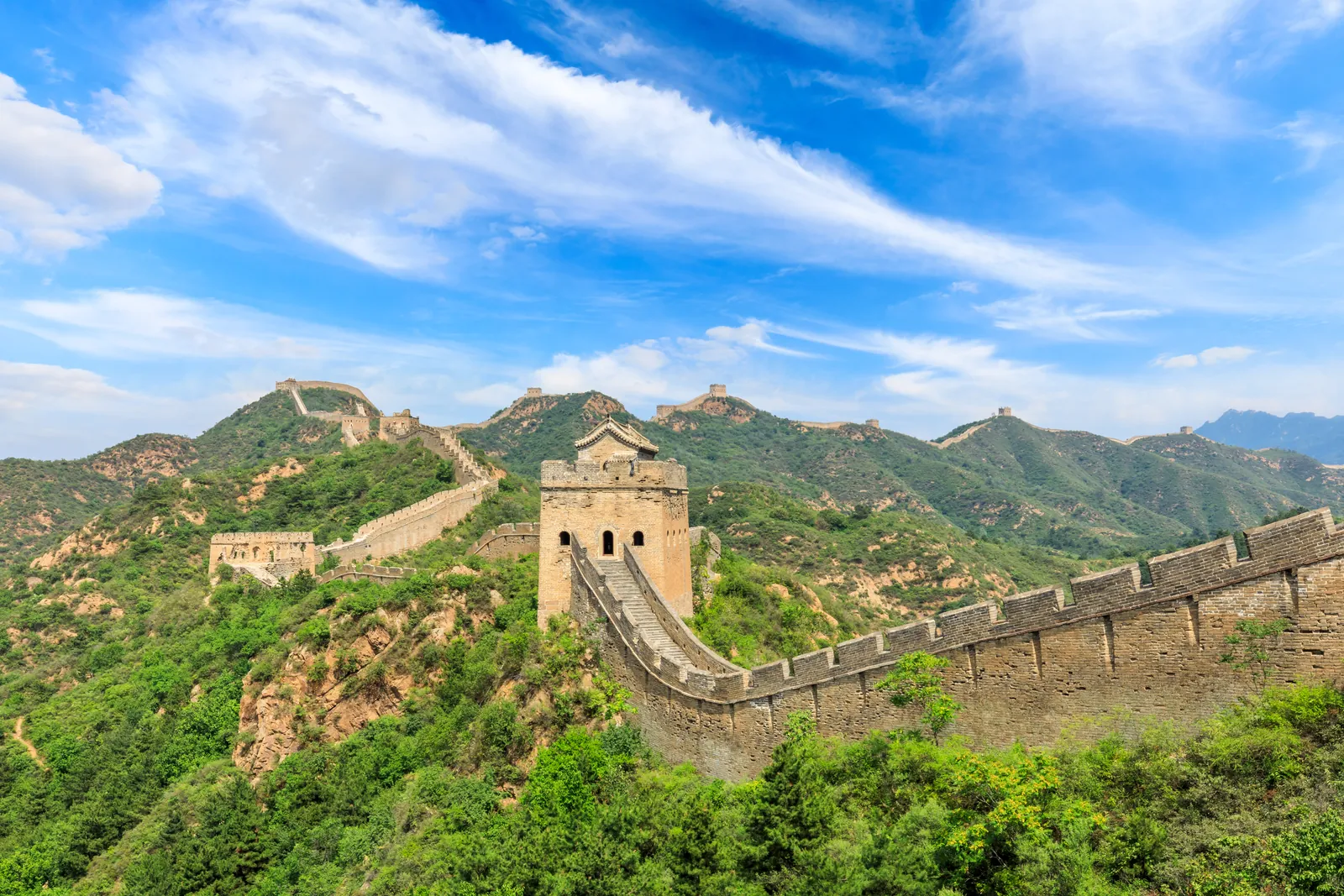
Short answer: The top places to visit in China are Beijing with the Great Wall, Xi’an and the Terracotta Army, Shanghai, Guilin and Yangshuo on the Li River, Chengdu for the giant pandas, Hangzhou and West Lake, Suzhou’s classical gardens, Zhangjiajie, Lijiang in Yunnan, and Huangshan, the Yellow Mountain. For a first trip, follow the “golden triangle” of Beijing, Xi’an and Shanghai by high-speed train, then add Guilin or Chengdu.
China is roughly the size of the United States, but the world’s largest high-speed rail network makes a two-week first trip very doable. This list mixes the great imperial sights with the landscapes of Chinese painting, from karst peaks and sandstone pillars to granite mountains above a sea of clouds.
The list is ordered the way we would recommend it for a first visit. Seasons come from the China Meteorological Administration’s 1991–2020 normals, prices are approximate for October 2026 at about 6.74 yuan to the US dollar, and facts were checked in October 2026.
1. Beijing and the Great Wall
Why it made the list: China’s capital for most of the last 800 years holds more imperial grandeur than anywhere else: the Forbidden City, the vast palace of the Ming and Qing emperors, the round blue-roofed Temple of Heaven, the lakeside Summer Palace and old hutong lanes of courtyard houses. Beyond the city, the Great Wall snakes over the mountains within day-trip reach.
When to go: April to May and September to October. July and August are hot and rainy, and December to February cold, though the Wall and palaces are quiet then and the sky is often blue. Avoid the National Day Golden Week, October 1–7, the busiest week of the year.
Don’t miss: the Forbidden City (60 yuan from April to October, 40 yuan from November to March), and a day on the Great Wall at Mutianyu, a restored, forested section about 70 km (45 miles) from the center, with a cable car and a toboggan run down.
Getting there and how long: fly into Beijing Capital or Daxing, or take the high-speed train from Shanghai in about 4.5 to 6 hours. Stay three or four days, one of them on the Wall.
Practical note: the Forbidden City sells no tickets on the day and is closed on Mondays except national holidays: book online in advance with your passport number and bring the same passport. Mutianyu tickets are also real-name, up to 30 days ahead. See our Beijing travel guide.
2. Xi’an and the Terracotta Army
Why it made the list: Xi’an was China’s capital under 13 dynasties and the eastern start of the Silk Road. Some 40 km (25 miles) east of the city, the Terracotta Army, thousands of life-size clay soldiers buried around 210 BC to guard the tomb of China’s first emperor, is one of the great archaeological sights on Earth.
When to go: April to May and September to October; July and August are hot, and winter is cold and sometimes smoggy.
Don’t miss: Pit 1 of the Terracotta Army, with its ranks of infantry (120 yuan), then a bike ride around the top of the complete Ming city wall and dinner in the Muslim Quarter, famous for noodles, flatbreads and lamb.
Getting there and how long: high-speed trains reach Xi’an North from Beijing in about 4.5 to 6 hours and from Chengdu in about 3 to 4. Give it two or three days.
Practical note: book the Terracotta Army and the free Shaanxi History Museum in advance with your passport; the museum is closed on Mondays. See our Xi’an travel guide.
3. Shanghai
Why it made the list: China’s largest and most cosmopolitan city sets two eras face to face: the Bund, a riverside promenade of 1920s banks and hotels, and across the Huangpu River the skyscrapers of Pudong, led by the twisting Shanghai Tower. In between are the classical Yu Garden, the plane-tree streets of the former French Concession and some of China’s best restaurants.
When to go: April to May and October to November. June brings the plum rains, July and August the heat, and January and February are cold and damp.
Don’t miss: the Bund at night, when Pudong lights up, and a plate of soup dumplings in the old town near Yu Garden.
Getting there and how long: most international flights land at Pudong; the Maglev, the world’s first commercial magnetic-levitation line, runs to Longyang Road in about 8 minutes (50 yuan in standard class). Stay three days, or five or six with day trips to Suzhou, Hangzhou or a water town.
Practical note: the metro has 20 lines with English signs and fares from 3 yuan; pay with Alipay or WeChat Pay QR codes, which now accept foreign bank cards. See our Shanghai travel guide.
4. Guilin and Yangshuo
Why they made the list: a forest of steep, green limestone peaks rising from rice fields and rivers, the scenery of countless Chinese scroll paintings. The Li River winds through it from Guilin to the small town of Yangshuo, and the cruise between them is one of the great journeys in China.
When to go: April to May for green fields and September to November for clear skies. June is the wettest month in Guilin, and the Longji rice terraces turn gold in October.
Don’t miss: the Li River cruise, about 4 to 4.5 hours downstream past Nine Horses Fresco Hill to the view near Xingping printed on the 20-yuan note (about 200–500 yuan, depending on the ship), and a bamboo raft on the Yulong River near Yangshuo.
Getting there and how long: fly to Guilin, or take the high-speed train from Guangzhou in about 2.5 to 3 hours or Hong Kong West Kowloon in about 3 to 3.5. Allow three to five days: one or two in Guilin and two or three in Yangshuo.
Practical note: cycle or ride a scooter along the Yulong River for the quietest countryside. See our Guilin travel guide and Yangshuo travel guide, and our guide to boat trips.
5. Chengdu
Why it made the list: the capital of Sichuan is famous for two things: giant pandas and fiery food. Life here moves at a famously relaxed pace, in bamboo chairs at teahouses and late-night hotpot restaurants, and the city was named a UNESCO City of Gastronomy in 2010.
When to go: March to June and September to November; July and August are hot, humid and wet. In autumn, the panda nurseries, with cubs born after the summer breeding season, are the star attraction.
Don’t miss: the Chengdu Research Base of Giant Panda Breeding at breakfast time, when the pandas are most active (55 yuan), and a Sichuan meal of mapo tofu, dandan noodles and hotpot.
Getting there and how long: fly into Tianfu or Shuangliu, or take the high-speed train from Xi’an in about 3 to 4 hours or Chongqing in about 1 to 1.5. Stay three days, or five or six with the Leshan Giant Buddha or Mount Emei.
Practical note: the panda base requires an online real-name reservation, and you must show the same passport at the gate. See our Chengdu travel guide.
6. Hangzhou and West Lake
Why it made the list: “Above there is heaven, below there are Suzhou and Hangzhou,” goes the old saying, and West Lake is the reason: a lake of causeways, willows, arched bridges and pagodas that has inspired poets and painters for over a thousand years. The West Lake Cultural Landscape became a UNESCO World Heritage Site in 2011.
When to go: March to May for spring blossoms and September to November. June brings the plum rains, and July and August are very hot.
Don’t miss: a walk or bike ride along the Su and Bai causeways, and Longjing (Dragon Well) tea in the tea villages in the hills.
Getting there and how long: about an hour from Shanghai by high-speed train. Two or three days, or a long day trip.
Practical note: Lingyin Temple’s carved grottoes are best early on a weekday; the lakeside is packed during the national holidays. See our Hangzhou travel guide.
7. Suzhou
Why it made the list: the city of classical gardens and canals. Nine of its gardens, miniature worlds of rockeries, ponds, pavilions and latticed windows, form a UNESCO World Heritage Site, and the old city keeps its canals, arched stone bridges and whitewashed houses.
When to go: April to May and October to November; June brings the plum rains.
Don’t miss: the Humble Administrator’s Garden, the largest, begun in 1509, and the small Master of the Nets Garden, often called the most perfect. Walk Pingjiang Road along the canal at dusk.
Getting there and how long: about 25 to 30 minutes from Shanghai by high-speed train. One or two days, or a full-day trip from Shanghai.
Practical note: the gardens are small and fill up quickly with tour groups; go at opening time. See our Suzhou travel guide.
8. Zhangjiajie
Why it made the list: one of the strangest landscapes on Earth: more than 3,000 quartz-sandstone pillars, many over 200 m (660 ft) tall, rising sheer from forested valleys, often wreathed in mist. The Wulingyuan Scenic Area is a UNESCO World Heritage Site, and its peaks inspired the floating mountains of the film Avatar.
When to go: April to May and September to early November. Summer is hot, humid and crowded; winter is quiet, foggy and sometimes icy.
Don’t miss: Yuanjiajie and Tianzi Mountain inside Wulingyuan, reached by the Bailong Elevator up a cliff face (about 65 yuan one way), and Tianmen Mountain, next to the city.
Getting there and how long: fly to Zhangjiajie Hehua, or take the high-speed train to Zhangjiajie West from Changsha or Chongqing. Allow three or four days.
Practical note: the Wulingyuan ticket is 165 yuan, valid for four consecutive days, and does not include the elevator and cable cars; book it with your passport. See our Zhangjiajie travel guide and our hiking guide.
9. Lijiang and Yunnan
Why it made the list: high on a plateau in northwest Yunnan, Lijiang’s UNESCO-listed Old Town is a maze of cobbled lanes, wooden houses and spring-fed canals, the historic home of the Naxi people. Above it rises the glaciated Jade Dragon Snow Mountain, and Tiger Leaping Gorge and the old town of Dali are within easy reach.
When to go: March to May and October to November, when it is sunny and dry; June to September is the rainy season.
Don’t miss: the Old Town and Black Dragon Pool early in the morning, and the cable car on Jade Dragon Snow Mountain to a viewing platform at about 4,500 m (14,800 ft).
Getting there and how long: fly to Lijiang, or take the fast train from Kunming via Dali in about 3 to 3.5 hours. Stay three or four days, plus two for Tiger Leaping Gorge.
Practical note: the Old Town maintenance fee is 50 yuan, valid for 365 days. Lijiang sits at about 2,400 m, so take the first day slowly before going higher. See our Lijiang travel guide and Dali travel guide.
10. Huangshan (the Yellow Mountain)
Why it made the list: the most celebrated mountain landscape in China: a granite massif of sheer peaks, clinging pines and seas of cloud that pour through the valleys at dawn, painted by artists for more than a thousand years. It is a UNESCO World Heritage Site for both its scenery and its culture.
When to go: April to May and September to November. Summer is busy and stormy; winter is cold and icy, with beautiful rime and snow.
Don’t miss: sunrise over the sea of clouds from the summit area, which means a night in a mountain hotel, and the old Huizhou villages of Hongcun and Xidi below.
Getting there and how long: high-speed trains run to Huangshan North from Hangzhou, Shanghai and Nanjing, then a bus to Tangkou at the foot of the mountain. Allow two or three days.
Practical note: the scenic-area ticket costs 190 yuan in 2026, valid for three consecutive days, and cable cars cost 80 to 90 yuan one way; daily visitor numbers are capped, so book early for holidays. See our Huangshan travel guide.
How to fit them into one trip
A first trip of ten days to two weeks usually follows the golden triangle: Beijing (four nights), the high-speed train to Xi’an (two nights), then on to Shanghai (three nights) with day trips to Suzhou and Hangzhou. With two weeks, add Guilin and Yangshuo (three or four nights) or Chengdu (three nights) between Xi’an and Shanghai. Zhangjiajie, Huangshan and Yunnan each need three days or more, so they suit a second trip or a slower third week. For winter ice festivals, see our Harbin travel guide; for tropical beaches, our Sanya travel guide.
Time your trip with our best time to visit China guide, and our AI trip planner builds the day-by-day plan for your dates.
Plan your trip
Read our China travel guide for visa-free entry, payments and trains, check the season for each stop in the Destination weather tool, convert yuan with the Money exchange tool, and print a few phrase cards for taxis and restaurants.
Frequently asked questions
What is the best place in China for first-time visitors?
Beijing, for the Forbidden City and the Great Wall. Pair it with Xi’an and Shanghai, which are a few hours away by high-speed train, and you have the classic first trip.
What is the most beautiful place in China?
Most travelers would pick the Li River between Guilin and Yangshuo, the sandstone pillars of Zhangjiajie, or Huangshan’s peaks above the sea of clouds. For cities, West Lake in Hangzhou and Suzhou’s gardens are the classic beauties.
How many days do you need in China?
Ten days covers Beijing, Xi’an and Shanghai with a day trip to Suzhou or Hangzhou. Two weeks lets you add Guilin and Yangshuo or Chengdu. Three weeks or a second trip are better for Zhangjiajie, Huangshan and Yunnan.
When should you avoid traveling in China?
The national holiday weeks: the first week of May and the National Day Golden Week, October 1–7, are the busiest travel weeks of the year, and trains sell out around Chinese New Year, which falls on February 6, 2027. Late April, mid-May, September and mid-to-late October are better.
Do you need to book China’s top sights in advance?
Yes, for many of them. The Forbidden City, the Terracotta Army, the Chengdu panda base and the Mutianyu Great Wall use real-name online booking with your passport number, and popular days sell out, so book as soon as your dates are set.