Short answer: For the 2026–27 winter, our top 10 ski destinations are Zermatt in Switzerland, St. Anton in Austria, Chamonix and Val d’Isère in France, Cortina d’Ampezzo in Italy’s Dolomites, Whistler and Lake Louise in Canada, Park City and Jackson Hole in the United States, and Niseko in Japan. Most of them open between late November and early December 2026, and several keep skiing into late April or early May 2027.
Choosing a ski trip is about more than snow: you want the right terrain for your group, a journey you can face with a ski bag, and something to do when your legs say no. This list mixes the big names of the Alps with North America’s largest resorts and Japan’s powder capital.
For each place you get why it is on the list, the 2026–27 season dates the resort or its tourist office has published, who it suits, how to get there and one thing to do off the slopes. Dates always depend on snow and resorts often open in stages, so check the official lift status before you book. We have left out the Southern Hemisphere: resorts in Chile, Argentina and New Zealand ski during the northern summer, so they are a different trip.
The Alps
1. Zermatt, Switzerland
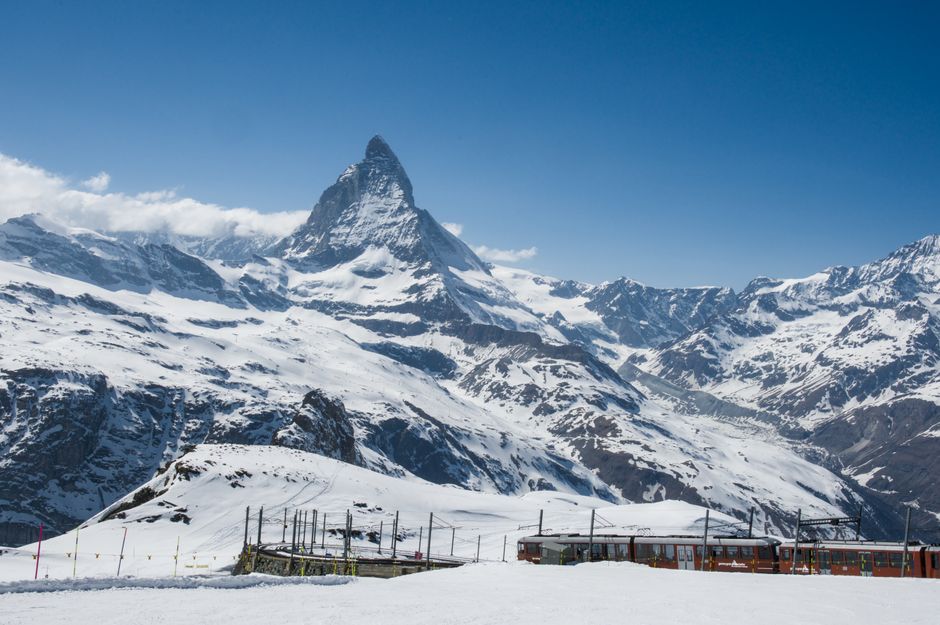
Why ski here: skiing under the Matterhorn is hard to beat, and its high glacier area gives Zermatt a very long season. The ski areas link over the border with Breuil-Cervinia in Italy, giving up to 200 kilometers (about 125 miles) of pistes on an international pass.
Season 2026–27: the lift company lists the winter season from 1 November 2026 to 3 May 2027. The lower Sunnegga–Rothorn and Gornergrat areas open on 28 November 2026; Sunnegga–Rothorn is scheduled to close on 11 April and Gornergrat on 18 April 2027.
Best for: confident intermediates and good skiers who want long, scenic runs and a day trip to Italy on skis.
Getting there: Zermatt is car-free. Drivers park in Täsch, about 5 km (3 miles) away, and take the shuttle train, which runs every 20 minutes and takes 12 minutes. By train it is about 3.5 hours from Zurich Airport and 4 hours from Geneva.
Off the slopes: ride the Gornergrat railway toward the 3,089-meter (10,134-foot) summit station, then sled the Rotenboden–Riffelberg toboggan run: 2 km long, about 10 minutes, with the Matterhorn in view. See our Zermatt travel guide and Switzerland travel guide.
2. St. Anton am Arlberg, Austria
Why ski here: St. Anton is part of Ski Arlberg, which links St. Anton, St. Christoph, Stuben, Lech, Zürs and more into 301 km (about 187 miles) of slopes served by 85 lifts. It is also one of Europe’s great freeride bases, with more than 200 km of off-piste runs according to the resort.
Season 2026–27: 2 December 2026 to 18 April 2027 for St. Anton–St. Christoph–Stuben and Lech–Zürs, with limited operation possible at the start and end.
Best for: strong intermediates and experts. The descent from the Valluga, St. Anton’s highest point, is only allowed with a professional guide.
Getting there: one of the easiest train trips in the Alps. The station is a short walk from the village center and the cable cars, and Railjet and EuroCity trains arrive every two hours, with direct trains from Innsbruck (100 km) and Zurich (200 km).
Off the slopes: take the direct train to Innsbruck for a day in its old town. See our St. Anton am Arlberg travel guide and Austria travel guide.
3. Chamonix, France
Why ski here: Chamonix sits at the foot of Mont Blanc and is famous for big-mountain skiing. From the Aiguille du Midi cable car at 3,842 meters (12,605 feet) starts the Vallée Blanche, which the tourist office calls one of the world’s finest glacier off-piste runs. This winter the first section of the new Grands Montets lift system, a 10-person gondola from Argentière to Lognan, is due to open for the 2026 Christmas holidays.
Season 2026–27: Grands Montets and La Flégère are scheduled to open on 28 November 2026, Brévent and Balme–Vallorcine on 12 December, and Les Houches on 19 December, all depending on snow. Grands Montets is scheduled to run until 2 May 2027.
Best for: advanced and expert skiers, and anyone keen to ski with a mountain guide. The tourist office says a guide and the right equipment are essential for the Vallée Blanche.
Getting there: Geneva Airport is the usual gateway, about 1 hour 15 minutes by road depending on traffic.
Off the slopes: when it is running, ride the Aiguille du Midi for the view of Mont Blanc and the glass Step into the Void. The Chamonix guest card from your lodging also gives free travel on the valley train between Servoz and Vallorcine. See our Chamonix travel guide and France travel guide.
4. Val d’Isère, France
Why ski here: Val d’Isère shares a lift pass with Tignes, giving more than 300 km of marked runs between 1,550 meters and over 3,400 meters. That altitude is why the season runs from late November to early May.
Season 2026–27: 28 November 2026 to 2 May 2027.
Best for: everyone, from beginners to experts. The linked area has 161 marked runs (21 green, 65 blue, 41 red and 32 black). Beginners get the Savonnette green run on the snow front, free lifts for first lessons and easy-skiing areas on Solaise and Bellevarde.
Getting there: the nearest station is Bourg-Saint-Maurice, about 40 minutes away by Altibus coach. From the UK, Eurostar’s ski train runs on Saturdays from 19 December 2026 to 20 February 2027, reaching Bourg-Saint-Maurice in just under 8 hours from London.
Off the slopes: non-skiers can buy a pedestrian lift pass to ride the gondolas up for lunch and views, and there are Nordic loops at Lac de l’Ouillette. See our Val d’Isère travel guide.
5. Cortina d’Ampezzo, Italy
Why ski here: Cortina hosted the 1956 Winter Olympics and co-hosted the Milano Cortina 2026 Games, when it staged the women’s alpine skiing on the Tofane. It is part of the Dolomiti Superski lift-pass area, and the setting among pale Dolomite peaks is one of the most beautiful in skiing.
Season 2026–27: Dolomiti Superski’s season runs from 28 November 2026 to 11 April 2027. At the beginning and end of the season the skiable area may be limited.
Best for: intermediates who like long cruising runs, and couples who want a lively town as much as the skiing.
Getting there: the Cortina Express bus runs from Venice Airport to Cortina in about two hours, without stops or changes, every day of the year.
Off the slopes: walk to the Olympic Ice Stadium, built for the 1956 Games and the curling venue in 2026. See our Cortina d’Ampezzo travel guide, Dolomites travel guide and Italy travel guide.
North America
6. Whistler Blackcomb, Canada
Why ski here: Whistler Blackcomb calls itself North America’s largest ski resort: 8,171 acres, more than 200 marked runs, 16 alpine bowls and 3 glaciers, served by 36 lifts. The two mountains are linked by the PEAK 2 PEAK Gondola, and the resort averages 422 inches (1,072 cm) of snow a year.
Season 2026–27: opening day is 20 November 2026. The closing date had not been published when we checked.
Best for: every level. The resort’s own split is 20% easiest, 35% more difficult, 25% most difficult and 20% experts only.
Getting there: Epic Rides runs buses from downtown Vancouver to Whistler Village in about 1 hour 45 minutes on average, with skis carried free. If you drive the Sea-to-Sky Highway, winter tires or chains are required on signed routes in British Columbia from 1 October to 30 April.
Off the slopes: go snowshoeing or cross-country skiing at Whistler Olympic Park, a 2010 Olympic venue just south of Whistler, which opens for the winter season from 27 November 2026. See our Whistler travel guide and Vancouver travel guide.
7. Lake Louise and Banff, Canada
Why ski here: skiing inside Banff National Park, with views across the Canadian Rockies. Lake Louise Ski Resort is the biggest in the Canadian Rockies, with 4,200 acres, 170 named runs across five mountain faces and a 3,250-foot (991-meter) vertical.
Season 2026–27: Lake Louise runs from 6 November 2026 to 2 May 2027.
Best for: mixed groups. Lake Louise’s split is 25% beginner, 45% intermediate and 30% advanced, and it has a large learning area with three carpet lifts.
Getting there: fly to Calgary. Banff is about 90 minutes west of Calgary International Airport, and Lake Louise is about 2 hours from the airport and 40 minutes from Banff.
Off the slopes: soak in the Banff Upper Hot Springs, which Parks Canada calls Canada’s highest outdoor pool, kept at 37–40°C (98–104°F). It closes for maintenance from 13 October to early November, then reopens for the winter. See our Banff National Park travel guide and Canada travel guide.
8. Park City, Utah, United States
Why ski here: Park City Mountain is the largest ski resort in the United States, with 7,300 acres, 41 lifts and more than 330 trails. Deer Valley sits next door.
Season 2026–27: Park City Mountain opens on 20 November 2026 and Deer Valley on 5 December 2026, conditions permitting. Closing dates had not been published when we checked.
Best for: families and groups of mixed ability who want lots of terrain and an easy trip.
Getting there: Park City is about 35 miles from Salt Lake City, roughly a 40–45 minute drive on I-80.
Off the slopes: visit Utah Olympic Park, a 2002 Winter Olympics venue in Park City, where you can ride a bobsled on the Olympic track and visit two free museums. See our Park City travel guide and United States travel guide.
9. Jackson Hole, Wyoming, United States
Why ski here: Jackson Hole Mountain Resort is legendary among experts: 4,139 vertical feet, 2,500 in-bounds acres on two mountains and about 458 inches of snow a year. The aerial tram, “Big Red,” climbs the full vertical in 9 minutes.
Season 2026–27: opening day is Friday 27 November 2026 in Teton Village. The resort’s pass pages run to April 2027 but give no single closing date, so check before booking a late-season trip.
Best for: advanced and expert skiers. The resort lists its terrain as 50% expert, 40% intermediate and 10% beginner.
Getting there: Jackson Hole Airport is 8 miles north of the town of Jackson, so the transfer to the slopes is short.
Off the slopes: take a horse-drawn sleigh ride onto the National Elk Refuge to see the wintering elk herd. The 2026–27 season runs from 19 December to 3 April (closed Christmas Day), 10 a.m. to 4 p.m. daily. See our Jackson Hole travel guide.
Japan
10. Niseko, Hokkaido, Japan
Why ski here: Niseko is famous worldwide for light, deep powder. Four resorts, Grand Hirafu, Hanazono, Niseko Village and Annupuri, share one mountain and one All Mountain Pass, and night skiing runs under lights through the heart of winter.
Season 2026–27: all four areas open on 28 November 2026. Grand Hirafu and Annupuri close on 5 May 2027, Hanazono on 11 April and Niseko Village on 4 April. Night skiing runs from 12 December 2026 to 22 March 2027.
Best for: powder lovers, plus families and intermediates on the groomed runs. If you go beyond the ropes, follow the NISEKO Rules: leave the resort only through the official gates, and carry avalanche gear (a beacon, probe and shovel are very highly recommended).
Getting there: fly into New Chitose Airport near Sapporo. Direct coaches take about 3 hours and need booking in winter. By train you change for Kutchan Station, the main station for Niseko, and finish by bus or taxi.
Off the slopes: soak in an onsen. Niseko’s volcanic mountains have plenty of natural hot springs, and visitors came for the onsen long before the skiing. See our Niseko travel guide, Sapporo travel guide and Japan travel guide.
How to choose
- First-timers and families: Lake Louise, Park City and Val d’Isère have dedicated beginner areas and plenty of easy terrain. Whistler works too, with a fifth of its runs marked easiest.
- Experts: Jackson Hole, Chamonix and St. Anton. All three have serious off-piste terrain where a guide is the smart choice.
- Powder: Niseko for Japan’s famous light snow; Whistler and Jackson Hole for big North American snowfall.
- Scenery and atmosphere: Zermatt under the Matterhorn, Cortina in the Dolomites and Lake Louise in Banff National Park.
- Easy journeys: Park City (about 35 miles from Salt Lake City), Jackson Hole (airport 8 miles from town) and St. Anton (direct trains to the village).
Plan your ski trip
Once you have picked a resort, our free trip planner builds a day-by-day plan around your dates, group and budget. To see what the weather is usually like on your dates, open the Destination weather tool, and use the packing list so the gloves, goggles and base layers all make it into the bag.
Frequently asked questions
When does the 2026–27 ski season start?
Most resorts on this list open between early November and early December 2026: Zermatt’s glacier area on 1 November, Lake Louise on 6 November, Whistler and Park City on 20 November, Jackson Hole on 27 November, Niseko, Val d’Isère and Cortina on 28 November, and St. Anton on 2 December. Openings depend on snow.
What is the best ski destination for beginners?
Lake Louise is a strong pick: a quarter of its terrain is beginner and it has a big learning area with carpet lifts. In the Alps, Val d’Isère has a green run right on the snow front and free lifts for first lessons.
What is the best ski resort for experts?
Jackson Hole lists half of its terrain as expert. Chamonix and St. Anton are Europe’s classic expert bases, with famous off-piste such as the Vallée Blanche and the Valluga, where a guide is essential or required.
What is the best time to ski in Japan?
Niseko’s lifts run from 28 November 2026 into April and May 2027, and night skiing runs from 12 December to 22 March. The lift company’s peak season is 24 December to 28 February, which is when most powder-seekers go, so book early for those weeks.
Can I ski the Alps without a car?
Yes. Zermatt is car-free and reached by train, St. Anton has its own station a short walk from the lifts, Val d’Isère is about 40 minutes by coach from Bourg-Saint-Maurice station, and Cortina has a direct bus from Venice Airport.