Short answer: On the ground in Brazil, plan on roughly R$190–335 (about $35–65) per person per day on a hostel budget, R$475–570 (about $90–110) in a mid-range hotel shared by two, and from about R$835–975 (about $160–185) in upscale comfort. A week therefore costs about R$1,330–2,345 ($255–450) on a tight budget, R$3,325–3,990 ($635–765) mid-range and from about R$5,845 ($1,120) in comfort, before flights and domestic flights. For a reality check, a 2025 Embratur study found that visitors from five of Brazil’s main markets spent an average of $175 a day, and visitors from the United States $308 a day.
Brazil is good value for travelers paying in dollars or euros: the real trades at about R$5.22 to the US dollar (the Federal Reserve’s rate for the week to 2 October 2026), and everyday costs such as buses, beer and simple lunches are low. The big variables are the size of the country, which usually means domestic flights, and the timing of your trip, since prices jump over New Year and Carnival. This guide breaks down the costs with figures from official sources, so you can build a realistic budget for your trip to Brazil. Dollar figures are rounded at R$5.22 = $1; use our Money exchange tool for today’s rate.
Brazil daily costs at a glance
These example days are built from the sourced prices further down this page: one person, one city day in a place such as Rio de Janeiro. They leave out flights, domestic flights, tours, shopping and nightlife.
| Per person, per day | Budget | Mid-range | Comfort |
|---|---|---|---|
| Bed | Hostel dorm bed: R$80–155 | Half of a hotel room at the R$431 national average: about R$215 | Half of an upscale room at the R$741 average: from about R$370 |
| Food | Two inexpensive meals at about R$50: R$100 | Lunch, half of a R$200 dinner for two, coffee: about R$160 | Lunch, half of a R$360 dinner for two, drinks: R$270–300 |
| Local transport | Two to four metro or bus rides: R$10–30 | Metro plus a taxi or ride-hail: R$30–60 | Taxis: R$60–100 |
| Sights | Free beaches and viewpoints: R$0–50 | One big sight, such as the Corcovado train: R$70–135 | Corcovado or Sugarloaf: R$135–205 |
| Total | About R$190–335 ($35–65) | About R$475–570 ($90–110) | From about R$835–975 ($160–185) |
The hotel rates are the national average daily rates reported by the Brazilian Hotel Operators Forum (FOHB) for its member hotels in May 2025, overall and for upscale hotels; the dorm range is from the hostel booking site Hostelz for popular beach towns; restaurant and taxi prices are typical October 2026 Rio prices from the crowd-sourced Numbeo index; sight prices are official ticket prices. Rio hotels cost more at New Year and Carnival. Treat these as typical ranges, not quotes.
What visitors actually spend in Brazil
A 2025 study by Embratur, Brazil’s tourism promotion agency, with Visa and Ipsos surveyed more than 8,000 visitors from Argentina, Chile, the United States, Portugal and Uruguay, which together made up nearly 60% of Brazil’s international arrivals. On average they spent $175 a day and stayed 12 nights. Visitors from the United States spent the most, $308 a day, and Uruguayans the least, about $115. Accommodation made up 21% of their spending. These figures do not include the flight to Brazil.
On our Travel costs by country scale, which compares hotel, restaurant and transport prices with the United States (US = 100), Brazil scores 43, in our “inexpensive” band. In plain words, a hotel night, a meal out or a bus ride costs on average a little under half of what it would in the United States. That makes Brazil cheaper than its neighbors Argentina (62), Chile (59) and Uruguay (73), and close to Colombia (50).
Accommodation costs
FOHB, whose members run several hundred hotels across the country, reported an average daily rate of R$430.69 (about $83) in May 2025, with occupancy at 63.3%, and R$740.94 (about $142) in upscale hotels. Rates rose about 10% over 2025 as a whole, so expect a little more in 2026, and much more in Rio around New Year, Carnival and big events.
Hostels and pousadas (guesthouses) are everywhere, from Rio to beach towns such as Paraty and Jericoacoara. Hostelz’s city pages show average dorm beds of about $15–30 (R$80–155) a night in popular beach towns, depending on the month, with January the most expensive, and private hostel rooms from about $45–85. Many hotels and pousadas include breakfast, which cuts your food costs.
Food and drink costs
Numbeo’s October 2026 figures for Rio de Janeiro show a meal at an inexpensive restaurant at about R$50 (range R$25–100), a three-course dinner for two at a mid-range restaurant, without drinks, at about R$200 (range R$110–360), a fast-food combo at about R$42.50, a half-liter of local draft beer at R$12 and a cappuccino at about R$11.70. Pay-by-weight buffets (comida a quilo) and set lunches (prato feito) are the classic ways to eat well for little; beachfront restaurants and the smartest places in Rio and São Paulo cost more.
Getting around Brazil
- City transit: São Paulo’s metro and suburban trains cost R$5.40 a ride since January 2026. In Rio, buses, the VLT tram and BRT cost R$5 a ride since January 2026, and the metro costs about R$8.
- Taxis and ride-hailing: Numbeo’s Rio figures suggest about R$6.20 to start and R$4.38 per kilometer for a taxi; ride-hailing apps are widely used in the big cities.
- Domestic flights: distances are huge, so most visitors fly between regions, for example from Rio to Foz do Iguaçu, Salvador or Manaus. Under Brazil’s aviation rules, a carry-on bag of up to 10 kg is free, but airlines may sell fares without checked bags, so compare fares with luggage included.
- Long-distance buses: comfortable overnight buses link most cities and are cheaper than flying on shorter routes.
Our Brazil itinerary shows how to combine Rio, Iguaçu and the northeast in two weeks with as few flights as possible.
Sightseeing fees and free things to do
| Sight (adult, foreign visitor) | Price, as of October 2026 |
|---|---|
| Corcovado train to Christ the Redeemer, Rio (return, includes monument) | R$134 (about $26) |
| Sugarloaf cable car, Rio | From R$205 (about $39) |
| Iguaçu National Park, Brazilian side | R$134 (about $26), including a voluntary R$3 contribution |
| Itaipu Dam panoramic tour, Foz do Iguaçu | R$63 (about $12) |
| MASP art museum, São Paulo | R$85 (about $16); free on Tuesdays |
| Teatro Amazonas guided visit, Manaus | R$20 (about $4) |
| Lençóis Maranhenses National Park | No park fee (licensed tours and vehicles are required) |
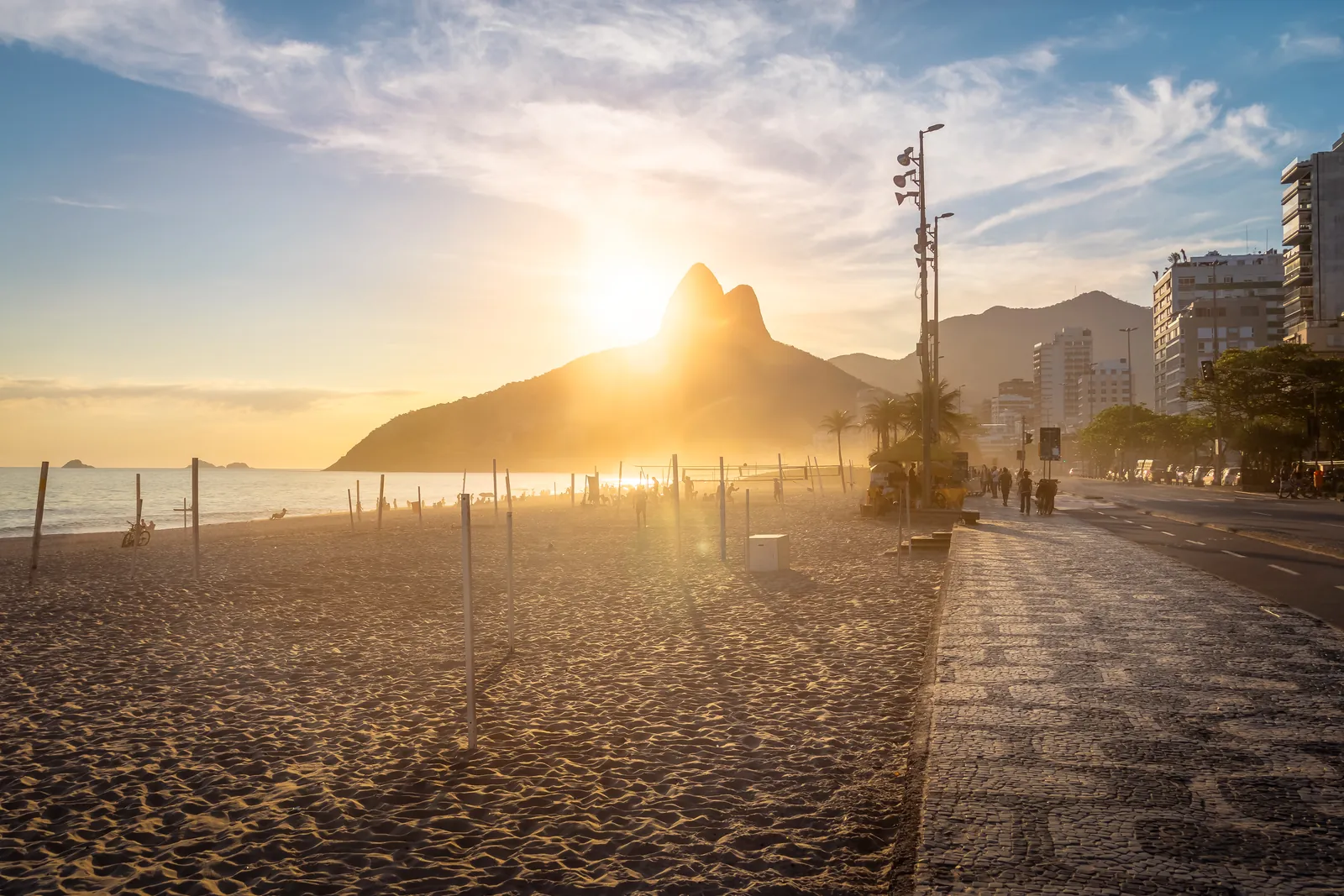
Many of Brazil’s best experiences are free: Copacabana and Ipanema beaches, sunset from Arpoador, the Selarón Steps, the colonial streets of Salvador’s Pelourinho and Paraty, São Paulo’s Avenida Paulista on Sundays, and the beaches of Florianópolis. See our beaches and hiking pages for more ideas, and our top places to visit in Brazil for the country’s highlights.
Visa, island fees and other charges
- E-visa: since 10 April 2025, citizens of the United States, Canada and Australia need a visitor visa, applied for online. It costs US$80.90, allows multiple entries and stays of up to 90 days a year, and takes about 10 business days. Many other nationalities, including UK citizens, can visit without a visa.
- Fernando de Noronha: visitors to Fernando de Noronha pay a daily environmental preservation fee (TPA) to the island’s administration, R$105.79 for one day, R$520.50 for five days and R$672.85 for seven days in 2026, plus the marine national park ticket, R$384 for foreign visitors and valid for 10 days. A week there therefore costs over R$1,050 (about $200) per person in fees alone.
- Bonito: since December 2025, Bonito charges a tourism fee of R$15 per person per day on days with attraction visits, paid online through the town’s official system; tours there are sold at the same price at every agency.
- Jericoacoara: the town charges a sustainable tourism fee, paid online through the municipal portal; check the current amount before you go.
A sample mid-range week
Here is one person’s share of a classic first week, four nights in Rio and three at Iguaçu Falls, staying in mid-range hotels with a partner and using the example day above:
| Item (per person, 7 nights) | Cost |
|---|---|
| Half of a hotel room at about R$431 a night | About R$1,510 |
| Food, at about R$160 a day | About R$1,120 |
| Metro, buses and some taxis, R$30–60 a day | R$210–420 |
| Corcovado train, Sugarloaf cable car and Iguaçu National Park | R$473 |
| Total, before flights and the e-visa | About R$3,310–3,520 ($635–675) |
Add the domestic flight from Rio to Foz do Iguaçu and, for US, Canadian and Australian citizens, the US$80.90 e-visa. A stay over New Year or Carnival costs much more, mainly because of hotel rates in Rio.
Tipping in Brazil
Restaurants usually add a 10% service charge (serviço) to the bill, which counts as the tip; it is optional, but most people pay it. Beyond that, rounding up for taxi drivers and a small tip for guides and hotel staff are appreciated. Our tip calculator works out amounts on the spot.
Money-saving tips for Brazil
- Avoid New Year, Carnival and July. March to June and August to November, outside Easter and long weekends, are the cheapest periods. See our best time to visit Brazil guide.
- Book domestic flights early and compare fares with a checked bag included.
- Eat a big lunch. Set lunches and pay-by-weight buffets are the best-value meals in the country.
- Choose a hotel with breakfast, which most pousadas and hotels include.
- Use public transport in the big cities. A R$5–8 metro or bus ride beats a taxi across Rio or São Paulo.
- Plan free days. Mix paid sights with beaches, viewpoints and free museum days such as MASP on Tuesdays.
- Budget for Noronha separately. Its fees and flights make it the priciest place in the country to visit.
Plan your trip: our free trip planner can build a day-by-day plan for Brazil from our guides, including Rio de Janeiro, Foz do Iguaçu, Salvador, the Pantanal and Lençóis Maranhenses. Then use the Money exchange tool to turn reais into your own currency, and the phrase cards for a few words of Portuguese.
Frequently asked questions
How much money do I need for a week in Brazil?
Using the example days above, seven days on the ground cost roughly R$1,330–2,345 ($255–450) per person on a hostel budget, R$3,325–3,990 ($635–765) mid-range, and from about R$5,845–6,825 ($1,120–1,305) in comfort, before flights and domestic flights. US citizens should add the US$80.90 e-visa.
Is Brazil expensive?
Not by US standards. Brazil scores 43 on our travel cost scale (US = 100), and a simple restaurant meal in Rio costs about R$50 ($10). The expensive parts are domestic flights, peak-season hotels in Rio and special places such as Fernando de Noronha, where daily fees add up.
Do I need cash in Brazil?
Only a little. Cards, including contactless, are accepted almost everywhere in cities, from restaurants to beach kiosks. Carry some reais for street food, small shops, markets and tips, and withdraw from ATMs inside banks or shopping centers.
Do Americans need a visa for Brazil?
Yes. Since 10 April 2025, citizens of the United States, Canada and Australia need a visitor visa, applied for online. It costs US$80.90 and takes about 10 business days, so apply well before your trip.
How much does it cost to visit Christ the Redeemer?
The Corcovado train costs R$134 (about $26) for adults, including the ride up and down through Tijuca National Park and entry to the monument. Official vans from Copacabana, Largo do Machado and Paineiras are an alternative, with prices that vary by day and boarding point.
What is the cheapest month to visit Brazil?
The cheapest periods are March to June and August to November, outside Easter and long holiday weekends. Prices are highest from late December to Carnival and in July. See our best time to visit Brazil guide.