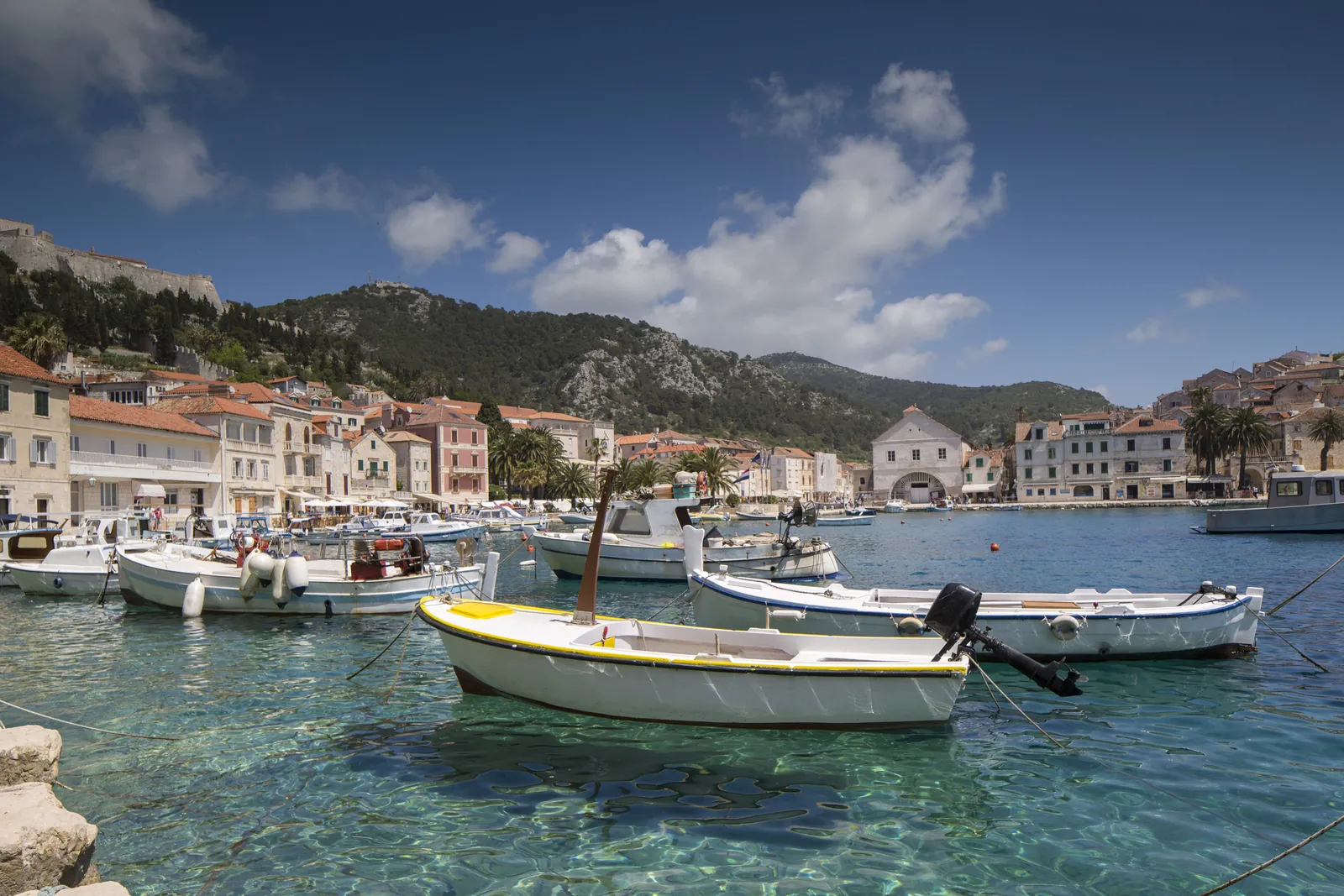
Short answer: On the ground in Croatia, plan on roughly €47–80 (about $55–90) per person per day on a hostel budget, €110–175 (about $125–200) in a mid-range room or apartment shared by two, and €210–295 (about $235–335) in four- and five-star comfort, with July and August at the top of each range. A week therefore costs about €330–560 ($370–635) on a tight budget, €770–1,225 ($870–1,385) mid-range and €1,470–2,065 ($1,660–2,335) in comfort, before flights. For a reality check, Croatia’s national visitor survey found that tourists spent an average of €140 a day, and visitors from the United States €299 a day.
Croatia has used the euro since 2023, and prices on the coast have climbed with its popularity. Inland Croatia and the shoulder months are still good value, while Dubrovnik and Hvar in August are among the priciest places on the Mediterranean. The big variables are where you stay and when, and how many national parks and boat trips you add. This guide breaks down the costs with figures from official sources, so you can build a realistic budget for your trip to Croatia. Dollar figures use about €0.89 to the US dollar (so €1 is about $1.13), the Federal Reserve’s rate in early October 2026; use our Money exchange tool for today’s rate.
Croatia daily costs at a glance
These example days are built from the sourced prices further down this page: one person, one day on the coast in a city such as Split, with a national park day in the sights row. They leave out flights, ferries, boat tours, car rental, shopping and nightlife.
| Per person, per day | Budget | Mid-range | Comfort |
|---|---|---|---|
| Bed | Hostel dorm bed: €20–35 | Half of an €80–130 room or apartment: €40–65 | Half of a five-star room at about €190–220: €95–110 |
| Food | Two inexpensive meals or a fast-food meal: €25–30 | Lunch, half of a €66 dinner for two, coffee and a beer: about €55 | Lunch, half of a €70–180 dinner for two, drinks: €60–115 |
| Local transport | City bus or tram rides: €2–5 | Buses plus a taxi: €5–15 | Taxis: €15–30 |
| Sights | Free old towns and beaches: €0–10 | A museum, or a national park day: €10–40 | Plitvice or Krka in summer: €40 |
| Total | About €47–80 ($55–90) | About €110–175 ($125–200) | About €210–295 ($235–335) |
The dorm and private-room figures are average prices on the hostel booking sites Hostelz and Budget Your Trip; the upper mid-range room is the average Croatian hotel price on the search site HotelsCombined; the five-star range is from the search site KAYAK; restaurant and taxi prices are typical October 2026 prices in Split and Dubrovnik from the crowd-sourced Numbeo index; park tickets are official 2026 prices. Expect more in July and August and on the islands, and add the tourist tax (see below). Treat these as typical ranges, not quotes.
What visitors actually spend in Croatia
Croatia’s Institute for Tourism surveys visitors across the country in its TOMAS survey. Its latest national edition, covering June 2022 to June 2023 and based on more than 14,600 interviews, found that tourists spent an average of €140 per person per day in the destination, not counting the journey there and back, and stayed about eight nights. Almost half (48%) went on accommodation, including meals at the hotel, and 20% on food and drink elsewhere. Spending depended a lot on where people stayed:
| Visitors staying in | Average spending per person per day, 2022–23 |
|---|---|
| Hotels | €195 |
| Private rooms and apartments | €139 |
| Hostels | €90 |
| Campsites | €84 |
| All visitors | €140 |
Visitors from the United States spent the most of any market, €299 a day, ahead of the UK (€232) and Spain (€220). Prices have risen since the survey, so treat these as a floor for 2026.
On our Travel costs by country scale, which compares hotel, restaurant and transport prices with the United States (US = 100), Croatia scores 53 for the economy as a whole, in our “inexpensive” band. That national average includes inland towns and the off-season; the coast in summer costs far more, as the visitor survey shows. Even so, Croatia sits well below Italy (100), Slovenia (91) and Greece (83) on the same scale, and below Montenegro (66).
Accommodation costs
Private rooms and apartments (sobe and apartmani), let by families along the coast and on the islands, are the most popular way to stay in Croatia and often the best value, especially for couples and families who can cook. Hostelz’s 2026 data put the average dorm bed in Croatia at about €20 and the average private room in a hostel at about €81, with higher prices in peak season; Budget Your Trip’s average dorm is about $33 (€29). HotelsCombined’s average for a hotel in Croatia was €133 a night in 2025, and KAYAK’s recent five-star averages run about €190–220.
Rates on the coast swing with the season far more than inland. Dubrovnik, Hvar and Split peak in July and August, while Zagreb, Istria inland and the coast in spring and autumn cost much less. From November to March prices are lowest, but many coastal hotels and island services close.
Tourist tax
Every visitor pays a tourist tax per person per night, set by each town and collected by your host. In Dubrovnik in 2026 it is €2.65 per person per night from April to September and €1.85 the rest of the year; in Zagreb it is €1.86. Children under 12 are exempt, and those aged 12 to 18 pay half. On a week in Dubrovnik in summer, that adds about €18.55 per adult.
Food and drink costs
Numbeo’s October 2026 figures for Split show a meal at an inexpensive restaurant at €15 (range €10–22), a three-course dinner for two at a mid-range restaurant, without drinks, at about €66 (range €50–80), a fast-food combo at €10, a half-liter of local draft beer at about €4.25 and a cappuccino at about €2.50. Dubrovnik costs more: about €17.50 for an inexpensive meal and €70 for a mid-range dinner for two, with a range up to €180. Zagreb is cheaper, at about €11 for an inexpensive meal and €56 for dinner for two. Bakeries, markets, konobas (taverns) away from the seafront and set lunch menus (marenda) keep costs down.
Getting around Croatia
- City transport: Zagreb’s trams and buses cost about €0.53 for a 30-minute ticket. Numbeo’s figures put a single local ticket at about €1.50 in Split and €2.50 in Dubrovnik.
- Taxis: in Split, Numbeo’s figures suggest about €3.30 to start and €1.86 per kilometer; ride-hailing apps also operate in the main cities.
- Ferries and catamarans: Jadrolinija, Krilo and TP Line run the island routes, such as Split to Hvar, Brač and Korčula and the coastal line to Dubrovnik, with more departures on summer timetables. Car ferries cost much more than foot-passenger tickets, so leave the car on the mainland for short island stays.
- Buses: intercity buses link Zagreb, Plitvice, Zadar, Split and Dubrovnik and are the usual way to travel without a car.
Our Croatia itinerary shows how to combine Zagreb, Plitvice, the Dalmatian coast and the islands by bus, ferry or rental car.
National park fees and free things to do
Croatia’s national parks price their tickets by season, so the same visit can cost four times as much in August as in winter.
| Sight (adult, one day, 2026) | Jan–Mar, Nov–Dec | Apr–May, Oct | Jun–Sep |
|---|---|---|---|
| Plitvice Lakes (includes boat and panoramic train) | €10 | €23 | €40 (€25 late afternoon) |
| Krka National Park, all land sites | €7 | €20 | €40 (€30 after 3 p.m.) |
| Biokovo Nature Park, Makarska Riviera | — | €10 (Apr–May, Oct) | €15 |
Children aged 7 to 18 pay less, and under-7s go free at Plitvice and Krka. In Dubrovnik, Lokrum island costs €30 per person including the return boat from the old port, and the city walls cost about €40 for adults in the main season, less in winter.
Much of Croatia’s charm is free: walking the marble streets of Dubrovnik’s old town and Diocletian’s Palace in Split, swimming from public beaches and rocks, the sunset and Sea Organ on Zadar‘s waterfront, and the Upper Town and markets of Zagreb. See our beaches, boat trips and hiking pages for more, and our top places to visit in Croatia for the country’s highlights.
A sample mid-range week
Here is one person’s share of a June week based in Split, with day trips to Krka and Plitvice, staying in a mid-range room or apartment for two and using the example day above:
| Item (per person, 7 nights) | Cost |
|---|---|
| Half of an €80–130 room or apartment | €280–455 |
| Tourist tax, about €1.86–2.65 a night | €13–19 |
| Food, at about €55 a day | About €385 |
| Local buses and some taxis, €5–15 a day | €35–105 |
| Krka and Plitvice day tickets in June | €80 |
| Total, before flights, ferries, tours and car rental | About €795–1,045 ($900–1,180) |
The same week in May or October costs less, mostly because park tickets drop to €20–23 and rooms are cheaper; in August it costs more.
Tipping in Croatia
Tipping is not obligatory. In restaurants, rounding up or leaving about 10% for good service is common, and a small tip for guides and boat crews is appreciated. Our tip calculator works out amounts on the spot.
Money-saving tips for Croatia
- Go in May, June, September or early October. The sea is warm enough from June to October, prices are lower than in August, and park tickets cost about half in spring and October. See our best time to visit Croatia guide.
- Visit Plitvice and Krka late in the day in summer. Afternoon tickets cost €25 at Plitvice and €30 at Krka instead of €40.
- Rent an apartment with a kitchen. Private apartments are Croatia’s best-value stays, and a market breakfast saves money every day.
- Base yourself near, not in, the hot spots. Rooms just outside Dubrovnik’s old town or on the Makarska Riviera cost less than the most famous addresses.
- Travel as a foot passenger on island ferries and catamarans.
- Add an inland stop. Zagreb and inland Istria cost less than the coast and are great in any season.
Plan your trip: our free trip planner can build a day-by-day plan for Croatia from our guides, including Dubrovnik, Split, Hvar, Plitvice Lakes and Krk. Then use the Money exchange tool to turn euros into your own currency, and the Destination weather tool to pick your dates.
Frequently asked questions
How much money do I need for a week in Croatia?
Using the example days above, seven days on the ground cost roughly €330–560 ($370–635) per person on a hostel budget, €770–1,225 ($870–1,385) mid-range and €1,470–2,065 ($1,660–2,335) in comfort, plus the tourist tax and ferries, before flights. Croatia’s visitor survey found an average of €140 per person per day in 2022–23, and €299 a day for visitors from the United States.
Is Croatia expensive?
It depends on where and when. Zagreb, inland Croatia and the coast in spring and autumn are good value, and Croatia scores 53 on our travel cost scale (US = 100). Dubrovnik, Hvar and Split in July and August cost as much as better-known Mediterranean destinations, and national park tickets reach €40 in summer.
Do I need cash in Croatia?
A little. Cards are accepted in most hotels, restaurants and shops, and park tickets can be bought online. Carry some euros for bakeries, markets, small cafés, beach bars, island buses and tips.
How much is the entrance fee to Plitvice Lakes?
In 2026 an adult day ticket costs €10 from January to March and in November and December, €23 in April, May and October, and €40 from June to September, or €25 for a late-afternoon ticket. The ticket includes the electric boat and the panoramic train, and online tickets are tied to an entrance and a time window.
How much is the tourist tax in Croatia?
It is set by each town, per person per night. In Dubrovnik it is €2.65 from April to September and €1.85 the rest of the year in 2026, and in Zagreb €1.86. Children under 12 are exempt and 12- to 18-year-olds pay half. Your host collects it.
What is the cheapest month to visit Croatia?
April, May and October offer low prices with mild weather. From November to March prices are lowest, but many coastal hotels and island services close. See our best time to visit Croatia guide.