Short answer: On the ground in Paris, plan on roughly €65–100 (about $75–115) per person per day on a hostel budget, €155–225 (about $175–255) in a mid-range hotel shared by two, and €385–530 (about $435–600) in five-star comfort. A week therefore costs about €455–700 ($515–790) on a tight budget, €1,085–1,575 ($1,225–1,780) mid-range and €2,695–3,710 ($3,045–4,190) in comfort, before flights and long-distance trains. For a reality check, international tourists spent an average of €760 per stay in France in 2025, according to the French tourism ministry and Atout France.
France is the most visited country in the world, and Paris is one of the most expensive cities on any travel budget, mostly because of hotel prices. The good news is that many costs are fixed and fair: metro tickets, train fares booked early, and museum tickets that are free for everyone under 18. The big variables are where you sleep, how many paid sights you add, and when you go. This guide breaks it all down with figures from official sources, so you can build a realistic budget for your trip to France. Dollar figures use about €0.89 to the US dollar (so €1 is about $1.13), the Federal Reserve’s rate in early October 2026; use our Money exchange tool for today’s rate.
France daily costs at a glance
These example days are built from the sourced prices further down this page: one person, one sightseeing day in Paris, the most expensive place most visitors stay. They leave out flights, long-distance trains, shopping and nightlife.
| Per person, per day | Budget | Mid-range | Comfort |
|---|---|---|---|
| Bed | Hostel dorm bed: €25–45 | Half of a three-star room at about €140–200: €70–100 | Half of a five-star room at about €480–640: €240–320 |
| Food | Two inexpensive meals at about €16: €32 | Lunch, half of a €70 dinner for two, a coffee and a beer: about €60 | Lunch, half of a €90-plus dinner for two, drinks: €75–100 |
| Local transport | Three metro rides at €2.55: about €8 | Metro rides: €8–15 | Taxis: €20–40 |
| Sights | Free sights such as Notre-Dame: €0–16 | One or two museums: €16–50 | The Louvre and the Eiffel Tower summit: €50–70 |
| Total | About €65–100 ($75–115) | About €155–225 ($175–255) | About €385–530 ($435–600) |
The dorm range is the low- and high-season price of a large dorm in Paris from the hostel site Hostelz; the three-star figure is the 2026 average on the price site combien-coute.net (based on hotels.com, top of range €198); the five-star range runs from KAYAK’s Paris average (about €480) to the 2025 average for Paris five-star hotels reported by the hotel consultancy MKG (€638); meal, coffee, beer and taxi prices are 2026 Paris prices from the crowd-sourced Numbeo index; transport and sight prices are official. Add the Paris tourist tax (see below). Treat these as typical ranges, not quotes.
What visitors actually spend in France
France welcomed 102 million international tourists in 2025, who spent 743 million nights in the country, according to the tourism ministry’s annual review published with Atout France in February 2026. International tourism receipts reached a record €77.5 billion, and the average spending per international tourist rose 7% to €760 per stay. Spread over all those nights, that works out at roughly €104 per night, or about 7 nights per visit on average. Those are averages across every visitor, including the many Europeans who drive in and stay with friends or in campsites; visitors who fly in from the United States and stay in Paris hotels usually spend much more. The American market grew by more than 10% in 2025.
On our Travel costs by country scale, which compares hotel, restaurant and transport prices with the United States (US = 100), France scores 111, in our “very expensive” band. That puts it a little above Italy (100) and well above Spain (80), close to the United Kingdom (114) and Belgium (118), and well below Switzerland (161). Everyday living costs in France are lower (77 on the same scale), which is why supermarkets, bakeries and markets are such good value for visitors.
Accommodation costs
Your bed is the biggest line in a France budget, and Paris is where it hurts most. Hostelz puts a bed in a large Paris dorm at about €25–35 in low season and €35–45 in high season. The price site combien-coute.net gives an average of about €139 a night for a three-star hotel in Paris in 2026, with most between €71 and €198. KAYAK’s Paris figures run to about €275 a night for four stars and about €480 for five, and the consultancy MKG put the 2025 average for Paris five-star hotels at €638 and for its palace hotels at €1,328.
Prices swing with events more than with the weather. The hotel data firm CoStar reported an average Paris room rate of about €356 in January 2025, €514 in June 2025, when trade fairs, concerts and fashion week filled the city, and €372 in December. Those averages include the city’s many luxury hotels, so a simple three-star room costs far less, but the pattern holds: book early for June and big-event weeks. Hotel prices are lower in most regional cities, and November to March, outside Christmas and school holidays, is when city hotels are cheapest, as our best time to visit France guide explains.
Tourist tax
Most French towns charge a taxe de séjour per adult per night, added to your hotel or rental bill; under-18s pay nothing. Paris has the highest rates in the country because regional surcharges are added. In 2026 they are:
| Paris, 2026 (per adult, per night) | Tourist tax |
|---|---|
| Palace hotel | €15.93 |
| Five-star hotel | €11.70 |
| Four-star hotel | €8.45 |
| Three-star hotel | €5.53 |
| Two-star hotel | €3.25 |
| One-star hotel, B&B or hostel | €2.60 |
| Unclassified stays such as apartment rentals | 5% of the nightly price per person (plus surcharges), capped at €15.93 |
Elsewhere it is lower: in Nice and the rest of the Métropole Nice Côte d’Azur, for example, the 2026 rate is €2.28 per night in a three-star hotel and €4.69 in a five-star. For two adults spending a week in a Paris three-star hotel, the tax adds about €77.
Food and drink costs
Numbeo’s 2026 figures for Paris show a meal at an inexpensive restaurant at about €16 (range €13–22), a three-course dinner for two at a mid-range restaurant, without drinks, at about €70 (range €60–90), a fast-food combo at €12, a half-liter of draft beer at about €7 and a cappuccino at about €4.40. Nice is similar: about €18 for an inexpensive meal and €80 for a mid-range dinner for two. A fixed-price lunch menu (formule or menu du jour) is usually the best restaurant deal of the day, and a picnic from a bakery, cheese shop and market is one of the great pleasures of travel in France, for little money.
Service is included in French restaurant and café prices by law (service compris), so the price on the menu is what you pay; see the tipping section below.
Getting around France
- Paris metro, RER and trains: a single Métro-Train-RER ticket costs €2.55 in 2026 and is valid for two hours, and a bus or tram ticket €2.05. Paper tickets have been withdrawn, so load tickets onto a Navigo Easy card (€2) or the official app. A special airport ticket to or from Charles de Gaulle or Orly costs €14. The Paris Visite pass costs €30.60 for one day and €78 for five days, and a Navigo Semaine weekly pass, which runs Monday to Sunday, costs €32.40.
- Taxis from the airports: Paris taxis charge fixed fares in 2026: €56 from Charles de Gaulle to the Right Bank and €65 to the Left Bank, and €45 from Orly to the Right Bank and €36 to the Left Bank.
- Other cities: a ride on the bus and tram network in Nice costs €1.70 and the airport tram return ticket €10; in Lyon, a single ticket costs about €2.10 and a 24-hour ticket about €7.10.
- High-speed trains: SNCF’s low-cost OUIGO trains start at €10 for adults and €5 for children on some routes, with extra charges for larger bags; prices rise as trains fill, so book early. Regular TGV INOUI fares also rise closer to departure. If you will take several trains, the Carte Avantage (€49 a year for ages 27 to 59) gives 30% off TGV INOUI and Intercités trains on weekend trips, return trips that include a Saturday night, and any trip with a child.
Our France itinerary shows how to combine Paris, the Loire Valley, Normandy, Provence and the French Riviera by train.
Sightseeing fees and free things to do
France’s famous museums and monuments charge adult prices that have risen recently, especially for visitors from outside the European Economic Area (EEA), but almost all are free for under-18s.
| Sight (adult, 2026) | Entry |
|---|---|
| Louvre Museum | €32 for non-EEA visitors (€22 for EEA residents); free under 18 |
| Eiffel Tower | €36.70 by lift to the top; €14.80 by stairs to the second floor |
| Palace of Versailles Passport | €35 April–October, €25 November–March; free under 18 |
| Musée d’Orsay | €16 online (€14 at the museum) |
| Sainte-Chapelle | €22 for non-EEA visitors |
| Arc de Triomphe rooftop | €22 April–September, €16 October–March |
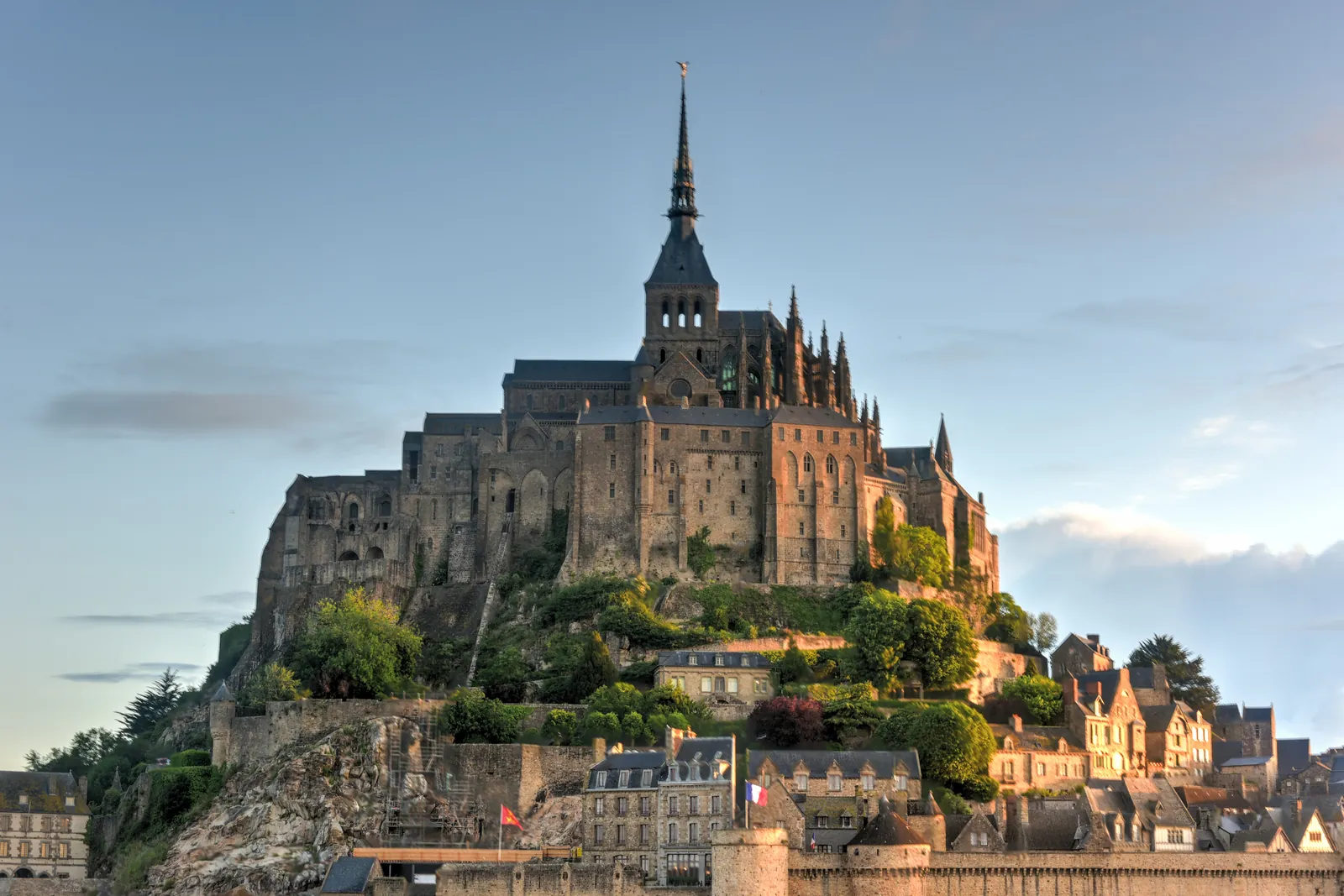
| Mont-Saint-Michel Abbey | €13 October–March, €16 April–September |
| Château de Chambord | €31 (€21 for EEA residents) |
| Notre-Dame de Paris cathedral | Free (towers €16) |
The official Paris Museum Pass costs €85 for 2 days, €105 for 4 days and €125 for 6 days and covers more than 50 museums and monuments. Buying the Louvre, Orsay, Versailles, the Arc de Triomphe in summer and Sainte-Chapelle separately would cost €127, so the 4-day pass pays off if you plan five or more big sights; check the official list of included sites first, and note that the Eiffel Tower is not part of it.
Plenty of France is free: Notre-Dame and Sacré-Cœur, the banks of the Seine, the Champs-Élysées, Paris parks and markets, the cliffs at Étretat, the old towns of Colmar and Strasbourg, and the beaches of the Riviera and Brittany. Several national monuments, including the Arc de Triomphe and Sainte-Chapelle, are free on the first Sunday of January, February, March, November and December. See our top places to visit in France for the highlights.
A sample mid-range week in Paris
Here is one person’s share of a week in Paris with a day trip to Versailles, staying in a three-star hotel room for two and using the example day above:
| Item (per person, 7 nights) | Cost |
|---|---|
| Half of a €140–200 three-star room | €490–700 |
| Paris tourist tax, €5.53 a night | About €39 |
| Food, at about €60 a day | About €420 |
| Navigo Semaine weekly pass | €32.40 |
| Louvre, Orsay, Versailles and the Eiffel Tower summit | About €120 |
| Total, before flights and airport transfers | About €1,100–1,310 ($1,245–1,480) |
The same week from November to March costs less, mostly because hotels are cheaper and the Versailles Passport drops to €25; a week in June costs more.
Tipping in France
Because service is included in the bill, tipping is optional. Many people leave small change for a coffee or round up the bill, and a few euros or up to about 5–10% for very good service at a sit-down meal is generous. Tour guides and hotel porters appreciate a small tip. Our tip calculator works out amounts on the spot.
Money-saving tips for France
- Travel between November and March, outside Christmas, New Year and the February school holidays, when city hotels are at their cheapest.
- Avoid Paris’s big-event weeks. Paris hotel rates averaged about €514 in June 2025 against about €356 in January.
- Eat your main meal at lunchtime. A set lunch menu costs much less than the same food at dinner, and bakeries and markets make cheap picnics.
- Book trains early. OUIGO and TGV fares rise as trains fill; a Carte Avantage pays off quickly for weekend or family trips.
- Do the sums on the Museum Pass, and remember that under-18s get into most national museums and monuments free.
- Base yourself outside Paris for part of the trip. Cities such as Lyon, Bordeaux, Toulouse and Lille have lower tourist taxes and plenty to see.
Plan your trip: our free trip planner can build a day-by-day plan for France from our guides, including Paris, Lyon, Nice, the Loire Valley and Mont-Saint-Michel. Then use the Money exchange tool to turn euros into your own currency, and the Destination weather tool to pick your dates.
Frequently asked questions
How much money do I need for a week in France?
Using the Paris example days above, seven days on the ground cost roughly €455–700 ($515–790) per person on a hostel budget, €1,085–1,575 ($1,225–1,780) mid-range and €2,695–3,710 ($3,045–4,190) in comfort, plus the tourist tax and long-distance trains, before flights. International tourists spent an average of €760 per stay in France in 2025.
Is France expensive?
Paris is, mainly because of hotels: three-star rooms average about €139 a night and five-star rooms several hundred. France scores 111 on our travel cost scale (US = 100), about the same as the UK and above Italy and Spain. Food from bakeries, markets and lunch menus, metro tickets and early-booked trains are good value.
Do I need cash in France?
Very little. Cards and phone payments are accepted almost everywhere, including in the metro, museums and most cafés. Carry a few euros for markets, small bakeries, tips and the occasional rural café.
How much is the tourist tax in Paris?
In 2026 it is charged per adult per night: €2.60 in a hostel or one-star hotel, €5.53 in a three-star, €8.45 in a four-star, €11.70 in a five-star and €15.93 in a palace. Under-18s are exempt, and your hotel adds it to the bill.
Is the Paris Museum Pass worth it?
For a busy museum trip, yes. The 4-day pass costs €105, while the Louvre, Orsay, Versailles, the Arc de Triomphe and Sainte-Chapelle bought separately cost €127 in summer. For one or two museums, or if you are under 18, single tickets are better.
What is the cheapest month to visit France?
January, February (outside school holidays), November and early December, when city hotels are at their cheapest and the Versailles Passport costs €25 instead of €35. See our best time to visit France guide for the weather month by month.