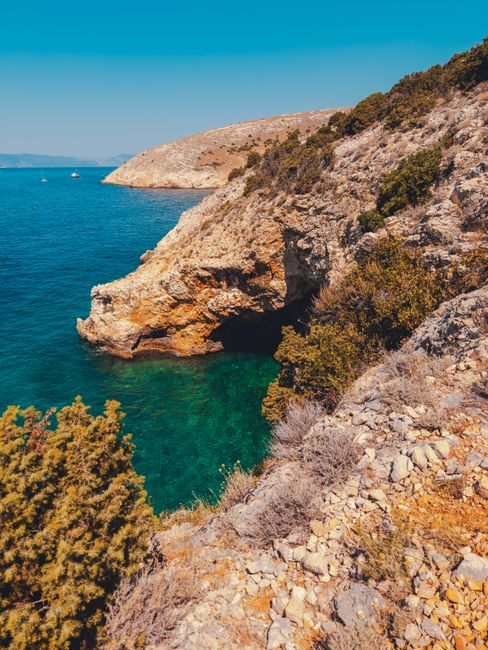
Krk is the largest island in the Adriatic together with Cres, and the easiest Croatian island to reach: a bridge links it to the mainland near Rijeka, so you can drive straight on without waiting for a ferry. It is a green, varied island of stone towns, pebble coves and vineyards in the Kvarner Gulf. Krk Town has Roman walls, a Romanesque cathedral and a Frankopan castle on the harbour; Baška, in the south, has a long beach under bare mountains and the church where the Baška Tablet, one of the oldest texts in the Croatian language, was found; Vrbnik sits on a cliff above the sea and makes the island’s white wine, Žlahtina; and in the bay of Punat a Franciscan monastery fills the islet of Košljun. Krk suits families, drivers and anyone coming from Central Europe by road. Give it three to five days, and come in June or September.
Right now in Krk
- Wed18–22°C64–71°F8 mm rain
- Thu19–22°C67–72°F46 mm rain
- Fri17–19°C62–67°F7 mm rain
Top tours in Krk
See all tours for Krk →
From local operators, with prices and reviews; you check availability and book on Viator, our partner. We may earn a commission at no extra cost to you. How we earn money
Krk at a glance
- Best months: June and September for swimming without the August crowds; May and October for walking and cycling. Mean temperatures at Rijeka, the nearest long-term station, run from about 17 °C in May to 24 °C in July (DHMZ).
- Days needed: 2–3 for Krk Town, Baška and Vrbnik; 4–5 to add Košljun, the Biserujka cave, hikes above Baška and a ferry trip to Cres or Rab.
- Getting there: by road over the toll-free Krk Bridge, about 30 minutes from Rijeka; Rijeka Airport is on the island itself. Car ferries link Krk with Cres (from Valbiska) and, in summer, with Rab.
- Getting around: a car is easiest; buses link the main towns with Rijeka and Zagreb, and there are about 300 km of marked walking and cycling paths.
- Before you go: money, entry rules, the tourist tax and safety are in our Croatia travel guide.
Krk’s towns and who each one suits
- Krk Town: the island’s capital on the west coast, with the old town, the cathedral, a marina and beaches within walking distance. For first visits, couples and anyone without a car.
- Baška: at the southern tip, at the end of a valley, with the long Vela plaža beach, mountain hikes and a lively summer seafront. For families and beach holidays; busy in August.
- Punat: on a sheltered bay with one of the Adriatic’s oldest marinas and boats to Košljun. For sailors and families with small children.
- Vrbnik: a tiny walled town on a cliff on the east coast, famous for its wine. For food, wine and quiet evenings.
- Malinska and Njivice: resort villages in the pine woods of the north-west, with easy beaches and hotels. For families and short stays close to the bridge and the airport.
- Omišalj and Dobrinj: old hilltop villages in the north, near the airport, with views over the Kvarner Gulf and few tourists.
Top things to see on Krk
Prices and hours below are as of October 2026 and come from each site’s own page; small sites change them each season, so check before you go.
Krk Town
The island’s capital was the Roman town of Curicum, and parts of its walls and gates still stand. Inside them, the Cathedral of the Assumption, built on the site of Roman baths and an early Christian basilica, has a Romanesque nave of ancient columns and a tall bell tower topped by an angel. Next to it, the church of St Quirinus, the town’s patron, holds a small treasury. Down by the harbour, the square Frankopan Castle (Kaštel) on Kamplin square recalls the Frankopan princes, the powerful noble family that came from Krk and once ruled much of Croatia; it hosts concerts and events in summer. Walk the lanes from the main square, Vela placa, to the seafront promenade, and swim at the town beaches south of the marina.
Košljun: the monastery island
In the middle of Punat Bay, the wooded islet of Košljun, about 6 hectares in size, belongs to a community of Franciscan friars who have lived there since the 15th century. The monastery church holds a large painting of the Last Judgement, the cloister is a quiet garden, and the friars’ museums show archaeology from Krk, church treasures, a triptych attributed to the Vivarini workshop, and folk costumes and tools collected around the island. Katarina Frankopan, a member of the princely family, is buried here. Boats leave from the Punat seafront; you agree the time and price with the boatmen. Visiting. As of October 2026, the monastery’s own page lists entry at €6 for adults and €4 for children, and opening hours from 1 April to 31 October of 9:30–17:00 Monday to Saturday and 10:30–12:30 on Sundays and holidays (9:30–15:00 on weekdays in winter). Allow about an hour, and cover your shoulders and knees.
Baška and the Baška Tablet
Baška lies at the end of a fertile valley in the south, below the bare limestone ridges of the island’s highest hills. Its main beach, Vela plaža, is a curve of fine pebbles almost 2 km long, with shallow water that suits children. The old village behind the seafront has stone houses and narrow lanes, and boats and walking paths lead to quieter coves on both sides.
A few kilometres inland, in the hamlet of Jurandvor, the Romanesque church of St Lucy is where the Baška Tablet (Bašćanska ploča) was found. Carved around 1100 in the angular Glagolitic script, it records a gift of land by King Zvonimir and is one of the oldest and most important texts in the Croatian language. The original is in Zagreb; a full-size copy stands in its place in the church. As of October 2026, the complex charged €6 for individual visitors, with a short film and a guided look at the church; tickets are sold at the small yellow building below the church. Along the roads around Baška, large stone sculptures of Glagolitic letters make up a walking trail through the valley.
Vrbnik
Vrbnik is a small medieval town perched on a rock about 50 m above the sea on the east coast, looking across to the mainland mountains. Its lanes are so tight that one, Klančić, is often called one of the narrowest streets in the world. The town is known for Vrbnička žlahtina, a crisp white wine grown only on Krk, in the fields behind the town; several family cellars and wine bars in town offer tastings. Come for sunset and dinner, and see our wine tasting guide.
The Biserujka cave
Near the village of Rudine in the north-east, the Biserujka cave (also called Vitezić Cave) is a small show cave with stalactites, stalagmites and calcite formations in a series of halls; bones of cave bears have been found inside. A visit takes about half an hour, and the cave stays at about 15 °C, so bring a layer. As of October 2026, the operator’s page lists €7 for adults and €5 for children aged 3 to 12, with children under 3 free; it opens from April to October, 10:00–15:00 in April and October, 9:00–17:00 in May and June, 9:00–18:00 in July and August, and 10:00–17:00 in September.
Beaches on Krk
Krk has dozens of beaches, mostly pebble, with clear water and pine shade. Vela plaža in Baška is the longest and the most popular with families. Smaller coves east of Baška, such as Vela and Mala Luka, are reached on foot over the hills or by boat in summer. Stara Baška, a village on the south-west coast, has turquoise bays below bare rock. Near Krk Town, the beaches along the promenade and at Portapisana are an easy walk from the old town. In the north, Malinska and Njivice have shallow, sheltered beaches under the pines.
In Soline Bay, between Klimno and Čižići on the north-east coast, the sea is so shallow that you can walk out hundreds of metres in water up to your knees, and the bay is known for its mineral-rich mud, which people smear on in the sun and then wash off in the sea. It is a favourite with families. Water shoes help on most beaches. See our beaches guide.
Other things to do on Krk
Hiking and cycling
The tourist board counts about 300 km of marked walking and cycling paths on the island. The best hiking is around Baška: paths climb from the village onto the bare plateau above, known as the Moon Plateau (Mjesečeva ravan) for its rocky, almost lunar landscape, with views over the Kvarner islands; others drop to hidden coves such as Vela Luka. Start early in summer: there is no shade, and you need plenty of water. Gentler routes link Krk Town, Punat and the vineyards around Vrbnik, and cyclists can loop the island on quiet roads. See our hiking guide and our cycling guide.
Diving, kayaking and boat trips
Dive centres in Krk Town, Punat, Baška and Malinska explore walls, caves and wrecks in the Kvarner Gulf, and Punat has an underwater park for snorkellers and beginner divers. Sea kayaks and stand-up paddle boards can be rented in most resorts. In summer, excursion boats from Baška, Krk Town and Punat sail to quiet coves, to Košljun and across to the islands of Rab, Cres and Plavnik. See our diving guide and our boat trips guide.
Omišalj, Dobrinj and the north
Omišalj, on a cliff above the bay near the bridge, has a small old town with a Romanesque church and, on the shore below, the remains of the Roman settlement of Fulfinum and an early Christian complex at Mirine. Dobrinj, inland, is a hilltop village with views over the island. Both are quiet, rarely crowded and close to the airport, which makes them good for a first or last night.
Food and drink
Try Krk’s own pasta, šurlice, hand-rolled tubes served with a sauce of lamb or goulash, along with lamb from the island’s pastures, sheep’s cheese, prosciutto, olive oil and fresh fish. Kvarner scampi are famous across Croatia. To drink, Žlahtina from Vrbnik is the classic white, served cold with seafood. Many restaurants in the villages cook meat and potatoes under a bell-shaped iron lid (peka), which you often need to order in advance.
Nearby destinations
Getting there and getting around
By road and air
- Krk Bridge: the bridge from the mainland near Kraljevica to Omišalj, opened in 1980, has been free to cross since 15 June 2020, when the toll was abolished. Strong bura winds sometimes close it to some vehicles, and in rare storms to all traffic.
- From Rijeka: about 30 minutes by car to the bridge and under an hour to Krk Town; frequent buses link Rijeka bus station with the island’s towns.
- From Zagreb: about 2 hours 30 minutes by motorway via Rijeka, and direct buses to Krk Town and Baška in summer.
- From Slovenia, Austria and Italy: Krk is about 2 hours by road from Ljubljana and Trieste, which is why it is popular with drivers from Central Europe.
- Rijeka Airport is on Krk itself, near Omišalj, with mostly seasonal flights. The airport runs its own shuttle buses to Rijeka and Omišalj on a timetable published each month.
Ferries to Cres and Rab
- Valbiska – Merag (Cres): a Jadrolinija car ferry crossing of about 25 minutes, all year, roughly every 60–90 minutes in the day. It is the shortest way from Krk to Cres and Lošinj.
- Valbiska – Lopar (Rab): a Jadrolinija car ferry of about 1 hour 30 minutes, with two sailings a day out of season and about four in summer.
Check the timetable on the Jadrolinija website before you travel; strong winds can cancel crossings.
On the island
Distances are short: Krk Town to Baška is about 20 km, and nowhere on the island is more than about an hour’s drive from anywhere else. Buses run between the main towns, more often in summer. Parking in Krk Town and Baška is paid and fills up in July and August, so park at the edge and walk. Bikes and scooters can be rented in every resort.
When to go and how long to stay
Summers on Krk are warm and sunny, and the tourist board puts the island among the sunniest parts of Europe, with about 2,500 hours of sunshine a year. July and August are hot, busy and expensive, with traffic on the bridge at weekends. June and September are the best months, with warm sea and fewer people. Spring and autumn are perfect for hiking and cycling, though October to December is the wettest time of the year. In winter many hotels close and the bura, a cold north-east wind, can blow hard.
| Season | Mean temperature | Days with rain a month | What it’s like |
|---|---|---|---|
| Spring (Mar–May) | 9–17 °C | 10–12 | Green and fresh, good for walking; the sea is still cold; resorts open from Easter. |
| Summer (Jun–Aug) | 21–24 °C | 9–11 | Warm and sunny with occasional storms; peak crowds and prices in July and August. |
| Autumn (Sep–Nov) | 19 °C falling to 10 °C | 10–13 | September is ideal; grape harvest; wet and windy from October. |
| Winter (Dec–Feb) | 6–7 °C | 9–11 | Mild but windy and quiet; many places closed. |
Figures are DHMZ long-term monthly averages for the Rijeka station across the bay (1948–2024), the nearest station with published long-term data; Krk’s own conditions differ a little, and the island is usually drier in summer than the city. They are means over day and night: summer afternoons usually reach 28–30 °C.
3 days on Krk
Day 1: Krk Town, the cathedral, the castle and a swim, then dinner and sunset in Vrbnik. Day 2: Punat and a boat to Košljun in the morning, then Baška, Vela plaža and the church of St Lucy at Jurandvor. Day 3: a morning hike above Baška, or the Biserujka cave and Soline Bay in the north.
5 days on Krk
Add a full day on the trails or on a boat trip to the coves and Rab, a ferry from Valbiska to Cres for its hill town of Lubenice, and a slow day in Omišalj, Dobrinj and the north. From Krk, you can continue to Istria, about 1 hour 30 minutes away by road, or inland to the Plitvice Lakes, about 2 hours 30 minutes away.
Where to stay on Krk
- Without a car: Krk Town, with buses to Rijeka and Baška and everything within walking distance.
- Beach holidays and families: Baška for the big beach, or Malinska and Njivice for calm, shallow water and hotels in the woods.
- Food, wine and quiet: Vrbnik or the villages around it.
- Sailing: Punat, with its marina and boats to Košljun.
- Early flights: Omišalj, a few minutes from the airport.
Campsites are a big part of Krk’s accommodation, from simple pitches to large holiday parks. A tourist tax per person per night is added to most bills; our Croatia guide explains how it works.
Practical tips for Krk
- Book ahead: for July and August, especially in Baška and Krk Town.
- Avoid the bridge rush: traffic queues at weekends in summer, when holiday lets change over; cross early in the morning.
- Wind: the bura can close the bridge to high vehicles and cancel ferries; check the forecast if you have a flight or a ferry to catch.
- Cash: boatmen to Košljun and some small cellars prefer cash.
- Hiking: the hills above Baška have no shade or water; carry at least 2 litres per person.
- Fire risk: the island is dry in summer; never light fires.
- Emergencies: call 112.
What to pack for Krk
Pack summer clothes, a sun hat, sunglasses and high-factor sunscreen, swimwear, a quick-dry towel and water shoes for pebble beaches and sea urchins. A snorkel mask is worth bringing for the clear coves. For hiking above Baška, bring sturdy shoes with good grip, a refillable water bottle and a light windproof layer. In spring and autumn, add a warm layer for the bura and a rain jacket.
Krk travel FAQ
Do you need a ferry to get to Krk?
No. Krk is joined to the mainland by the Krk Bridge near Rijeka, which has been free to cross since June 2020. Ferries only link Krk with the islands of Cres and Rab.
Is the Krk Bridge free?
Yes. The toll was abolished on 15 June 2020, so cars cross for free. In strong bura winds the bridge can be closed to some vehicles, and occasionally to all traffic.
What is the best town to stay in on Krk?
Krk Town if you want history, restaurants and buses; Baška for the long beach and hiking; Malinska or Njivice for families; and Vrbnik for wine and quiet.
Does Krk have sandy beaches?
Mostly no. Krk’s beaches are pebble and rock. Baška’s Vela plaža has fine pebbles and a shallow, gently sloping seabed, and Soline Bay has shallow water over a muddy, sandy bottom.
How do I get to Košljun island?
By boat from the Punat seafront, a short crossing; you agree the price and the return time with the boatmen. As of October 2026, entry to the monastery and its museums cost €6 for adults and €4 for children.
Where can I see the Baška Tablet?
A full-size copy stands in the church of St Lucy in Jurandvor, near Baška, where the tablet was found; entry was €6 as of October 2026. The original is kept in Zagreb.
How many days do you need on Krk?
Two or three days cover Krk Town, Baška, Vrbnik and Košljun. Four or five let you add hikes, the Biserujka cave, a boat trip and a ferry to Cres or Rab.
Is there an airport on Krk?
Yes. Rijeka Airport is on Krk near Omišalj, a few minutes from the bridge. Most flights are seasonal, and the airport runs shuttle buses to Rijeka and Omišalj.
Can you visit Krk from Zagreb or Ljubljana?
Yes. Krk is about 2 hours 30 minutes from Zagreb and about 2 hours from Ljubljana by car, so it is easy to add to a road trip. See our Zagreb guide and our Ljubljana guide.
What is Krk famous for?
The Krk Bridge, Baška’s long beach, the Baška Tablet and Glagolitic heritage, the Frankopan princes, the monastery island of Košljun and Žlahtina white wine from Vrbnik.
Plan your trip
Partner links: TravelerCenter may earn a commission if you book, at no extra cost to you.
🇭🇷 Useful Croatian phrases for Krk
All 38 Croatian phrases: restaurant, hotel, emergencies, romance (printable) →
Sources · last reviewed 4 October 2026
Researched and last reviewed on 4 October 2026. Island facts and paths: the Krk tourist board (krk.hr); Košljun prices and hours: the Franciscan monastery of Košljun; the Baška Tablet and St Lucy’s church: the Jurandvor heritage centre; the Biserujka cave: its operator; the bridge toll: the Croatian Government; the airport and its shuttle: Rijeka Airport; climate: the Croatian Meteorological and Hydrological Service (DHMZ), Rijeka station. Ferry times and frequencies, bus and driving times come partly from secondary sources and are flagged for checking, because the Jadrolinija website could not be read during our review. Prices, timetables and rules change, so check the official sites and operators before you travel. For entry rules, money and the tourist tax, see our Croatia travel guide; for the nearby peninsula, our Istria guide.
Data: Weather: MET Norway (CC BY 4.0) · Sea temperature: NOAA CoastWatch · Rates: ECB · Costs: World Bank ICP and price levels · Wikidata (CC0)