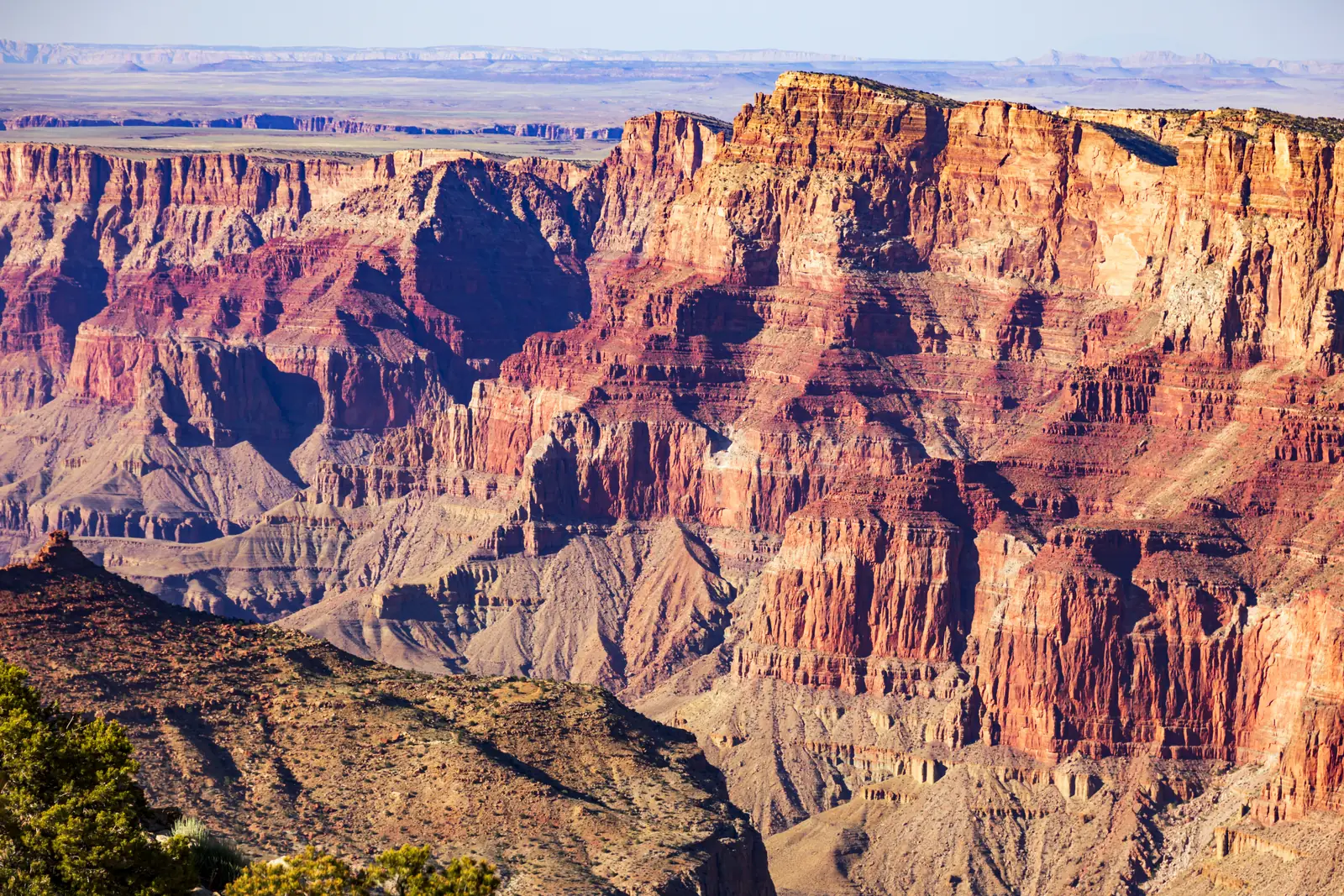
Short answer: For a first trip, the top places to visit in the United States are New York City, the Grand Canyon, San Francisco, Washington, D.C., and Yellowstone National Park. Round out the list with Yosemite, New Orleans, Zion National Park, the Hawaiian island of Maui, and Miami with the Everglades next door.
The United States is a continent-sized country, so no single trip covers it all: most first visits pick one coast or one region and add a national park. The list is ordered the way we would recommend places to a first-time visitor, mixing great cities with the national parks that make the country unique.
1. New York City
Why it made the list: the country’s biggest city is the classic first stop, with the Manhattan skyline, Central Park, Broadway, world-class museums and neighborhoods from Harlem to Brooklyn. It is also the gateway for many international flights.
Best time to go: April to June and September to November. Summer highs reach about 85°F (29°C) in July, and January highs are around 40°F (4°C).
Don’t miss: the ferry to the Statue of Liberty and Ellis Island (adults $26, sold only by Statue City Cruises, the one authorized operator), and the Metropolitan Museum of Art ($30 for adults; free for children 12 and under).
Getting there and how long: three major airports (JFK, LaGuardia and Newark) serve the city; the subway costs $3 a ride, paid by tapping a contactless card or phone. Give it at least four or five days.
Practical note: tickets to the Statue of Liberty’s crown must be reserved in advance and climb 162 steps with no elevator. The 9/11 Memorial is free and open daily from 8 a.m. to 8 p.m. See our New York City travel guide and Statue of Liberty guide.
2. Grand Canyon National Park
Why it made the list: a mile deep and 277 miles (446 km) long, the Grand Canyon is the most famous natural wonder in the country. The South Rim, at about 7,000 ft (2,134 m), receives about 90% of visitors and is open all year.
Best time to go: spring and fall, for mild days on the rim. Summer is busy, and the canyon floor is far hotter than the rim, with average shade highs above 100°F (38°C) at Phantom Ranch from June to August.
Don’t miss: sunrise or sunset from the Rim Trail, the free shuttle along Hermit Road to its viewpoints, and the Desert View Watchtower, 23 miles (37 km) east of the village.
Getting there and how long: the South Rim is 81 miles (130 km) from Flagstaff, 231 miles (372 km) from Phoenix and 278 miles (447 km) from Las Vegas; the Grand Canyon Railway runs daily from Williams. Spend at least one night nearby and two days at the rim.
Practical note: entry is $35 per vehicle for seven days, card only, and non-US residents aged 16 and over pay an extra $100 unless they hold an annual or America the Beautiful pass. After a flash flood in August 2026, the park suspended in-park overnight lodging; the National Park Service expected a phased return of overnight guests around Thanksgiving, so check before you book. See our Grand Canyon National Park travel guide and Las Vegas travel guide.
3. San Francisco
Why it made the list: hills, cable cars, the Golden Gate Bridge, Victorian houses and one of the country’s best food scenes make San Francisco the favorite West Coast city, and it is the gateway to wine country, Big Sur and Yosemite.
Best time to go: September and October, the city’s warmest months. Highs stay around 58–70°F (14–21°C) all year, and summer mornings are often foggy.
Don’t miss: a walk across the Golden Gate Bridge (pedestrians use the east sidewalk), and a tour of Alcatraz (day tour adults $47.95, sold only by Alcatraz City Cruises), which can sell out weeks ahead in summer.
Getting there and how long: BART trains run from San Francisco International Airport to downtown, and a cable car ride costs $9. Stay three or four days, plus a day trip to Muir Woods or Napa.
Practical note: bring layers year-round, as fog and wind can make summer days cool. See our San Francisco travel guide, and for a longer trip our California travel guide.
4. Washington, D.C.
Why it made the list: the nation’s capital lines its National Mall with monuments, memorials and the Smithsonian’s museums, almost all of them free. Few cities give you so much history for so little money.
Best time to go: spring and fall. The cherry blossoms usually peak in the last week of March or the first week of April, according to the National Park Service; July highs are near 90°F (32°C).
Don’t miss: the National Air and Space Museum (free, with timed-entry passes), a sunset walk from the Lincoln Memorial to the Washington Monument, and a free guided tour of the Capitol.
Getting there and how long: Reagan National (DCA) and Dulles (IAD) are both on the Metrorail, and a one-day Metro pass costs $13.50. Give it three or four days.
Practical note: Washington Monument tickets are released online 30 days ahead with a $1 booking fee, and a few free same-day tickets are given out each morning. See our Washington, D.C. travel guide.
5. Yellowstone National Park
Why it made the list: the world’s first national park has more geysers and hot springs than anywhere else on Earth, plus bison, elk, wolves and bears roaming its valleys. It covers about 3,500 square miles across Wyoming, Montana and Idaho.
Best time to go: late May to September, when all roads and lodges are open. In 2026, most park roads close to cars after October 31; in winter, the interior is reached only by snowcoach or snowmobile.
Don’t miss: Old Faithful, which erupts roughly every 68 to 94 minutes, the Grand Canyon of the Yellowstone, and wildlife watching at dawn in the Lamar and Hayden valleys.
Getting there and how long: the nearest airports include Bozeman, Jackson, Cody and Billings; there is no public transport inside the park. Allow at least three days, and five with Grand Teton.
Practical note: stay at least 100 yards from bears and wolves and 25 yards from other animals, and keep to the boardwalks in thermal areas. Entry is $35 per vehicle for seven days. See our Yellowstone National Park travel guide.
6. Yosemite National Park
Why it made the list: granite cliffs, giant sequoias and some of the tallest waterfalls in North America make Yosemite Valley one of the most beautiful places in the country, a classic add-on to San Francisco.
Best time to go: late spring for the waterfalls, and summer and early fall, when the high-country Tioga Road is usually open. Tioga, Glacier Point and Mariposa Grove roads close for winter.
Don’t miss: the views of El Capitan and Half Dome from the valley floor, and the Mariposa Grove, home to more than 500 mature giant sequoias, including the Grizzly Giant.
Getting there and how long: about four to five hours by road from San Francisco, or two hours and 15 minutes from Fresno. Stay two or three nights.
Practical note: no entry reservation was required in 2026, and entry is $35 per vehicle, card only; non-US residents pay the extra $100 unless they hold an annual pass. Climbing the Half Dome cables needs a permit from a lottery. See our Yosemite travel guide.
7. New Orleans
Why it made the list: no American city sounds or tastes like New Orleans: jazz drifting out of French Quarter bars, Creole and Cajun cooking, streetcars under the oaks of St. Charles Avenue, and some of the country’s biggest parties.
Best time to go: February to May, for mild weather and festivals. Carnival season runs from January 6 to Mardi Gras Day, which falls on February 9 in 2027, and Jazz Fest fills two weekends in late April and early May.
Don’t miss: an evening of live music in the French Quarter or on Frenchmen Street, and the National WWII Museum (open daily 9 a.m. to 5 p.m.).
Getting there and how long: taxis from Louis Armstrong International Airport to the French Quarter cost a flat $36 for up to two passengers, and a Jazzy Pass for buses and streetcars costs $3 a day. Stay three or four nights.
Practical note: St. Louis Cemetery No. 1 can be entered only on the official guided tour. Summer is hot and humid, and the hurricane season runs from June 1 to November 30. See our New Orleans travel guide.
8. Zion National Park
Why it made the list: Utah’s most visited park packs towering red and cream cliffs into a canyon you can explore on easy riverside paths or on two of the country’s most famous hikes, Angels Landing and The Narrows.
Best time to go: spring and fall. Summer highs regularly exceed 100°F (38°C), and summer storms bring flash floods to the canyons.
Don’t miss: the free Zion Canyon shuttle up the Scenic Drive, and a walk up the Virgin River into The Narrows, where the walls rise about 1,000 ft (300 m) and the river is 20 to 30 ft wide.
Getting there and how long: Zion is 170 miles from Las Vegas and 49 miles from St. George. Stay two or three nights in or near Springdale, the gateway town.
Practical note: the chains section of Angels Landing needs a permit from a lottery, and The Narrows closes when the river runs high or a flash-flood warning is issued. During shuttle season the Scenic Drive is closed to private cars. See our Zion National Park travel guide.
9. Maui
Why it made the list: Hawaii’s second-largest island has golden beaches, the winding Road to Hāna through rainforest and waterfalls, and the 10,023-ft (3,055-m) summit of Haleakalā, where sunrise above the clouds is one of the great sights in the US.
Best time to go: April to May and September to October for fewer crowds; December to March for humpback whales off the coast.
Don’t miss: sunrise at Haleakalā National Park, and the black-sand beach and sea arch of Waiʻānapanapa State Park on the Road to Hāna.
Getting there and how long: Kahului airport has direct flights from the West Coast. Stay five days or more.
Practical note: Haleakalā sunrise visits (3 to 7 a.m.) need a $1 vehicle reservation, released up to 60 days ahead, plus the park fee of $30 per vehicle; Waiʻānapanapa also needs a timed reservation for out-of-state visitors. Lahaina is still rebuilding after the 2023 wildfire, so respect closed areas. See our Maui travel guide.
10. Miami and the Everglades
Why it made the list: Miami brings Latin American energy, Art Deco hotels on Miami Beach, Cuban food in Little Havana and turquoise water, with the vast wetlands of Everglades National Park less than an hour away and the Florida Keys road trip to the south.
Best time to go: November to April, when it is warm and dry. Highs range from about 76°F (24°C) in winter to 91°F (33°C) in summer, and most of Miami’s rain falls from June to October.
Don’t miss: the beach and Art Deco district of South Beach, and Shark Valley in the Everglades, with a 15-mile loop road and an observation tower halfway along.
Getting there and how long: Metrorail links Miami International Airport with downtown for $2.25, and Brightline trains run to Fort Lauderdale, West Palm Beach and Orlando. Stay four nights, or add the Keys.
Practical note: on the beach, follow the flag system; a purple flag means dangerous marine life. Everglades entry is $35 per vehicle, plus $100 per non-US resident aged 16 and over without an annual pass. See our Miami travel guide, Everglades National Park guide and Florida Keys travel guide.
How to fit them into one trip
Distances are huge, so plan one region per trip and fly between them.
One week: New York City for four days, then Washington, D.C. for three, linked by a train of about three hours. Or San Francisco for three days with two nights in Yosemite.
Ten days: the Southwest loop from Las Vegas: Zion, the Grand Canyon’s South Rim and back to Las Vegas, with a few days in San Francisco or Los Angeles before or after.
Two weeks: combine an East Coast city with a national park region (Yellowstone and Grand Teton in summer, or the Southwest in spring and fall), or New Orleans and Miami for a southern winter trip. Maui works best as a separate trip of a week or more.
Timing changes the route: national parks in the north and high country are summer destinations, the desert Southwest is best in spring and fall, and Florida, New Orleans and Hawaii shine in winter. Our best time to visit the United States guide goes region by region, and our AI trip planner builds the day-by-day plan for your dates.
Plan your trip
Start with our United States travel guide for entry rules, national park passes, costs and getting around. Use the AI trip planner to turn this list into a route, check what to expect on your dates with the Destination weather tool, and work out tips at restaurants and bars with the tip calculator.
Frequently asked questions
What is the most beautiful place in the United States?
Most lists are topped by national parks: the Grand Canyon at sunset, Yosemite Valley with El Capitan and Half Dome, and the red cliffs of Zion. For city views, the Manhattan skyline and the Golden Gate Bridge are hard to beat.
How many days do you need in the United States?
Plan at least a week for one region, such as New York and Washington, D.C., or San Francisco and Yosemite. Two weeks lets you combine a city with a national park region, and covering both coasts needs three weeks or more with domestic flights.
What is the best place in the United States for first-time visitors?
New York City. It has the most international flights, needs no car, and packs famous sights, museums, food and shows into a few days. Washington, D.C. is an easy add-on by train.
Do international visitors pay more at US national parks?
At some of them. As of 2026, non-US residents aged 16 and over pay an extra $100 per person at 11 of the busiest parks, including the Grand Canyon, Yellowstone, Yosemite and Zion, unless they hold an annual or America the Beautiful pass. The non-resident America the Beautiful pass costs $250.
What is the best time of year to visit the United States?
Spring (April to June) and fall (September to October) suit most of the country, with mild weather and fewer crowds. Summer is best for Yellowstone and the northern parks, and winter for Florida, Hawaii and the desert Southwest’s warmer cities.