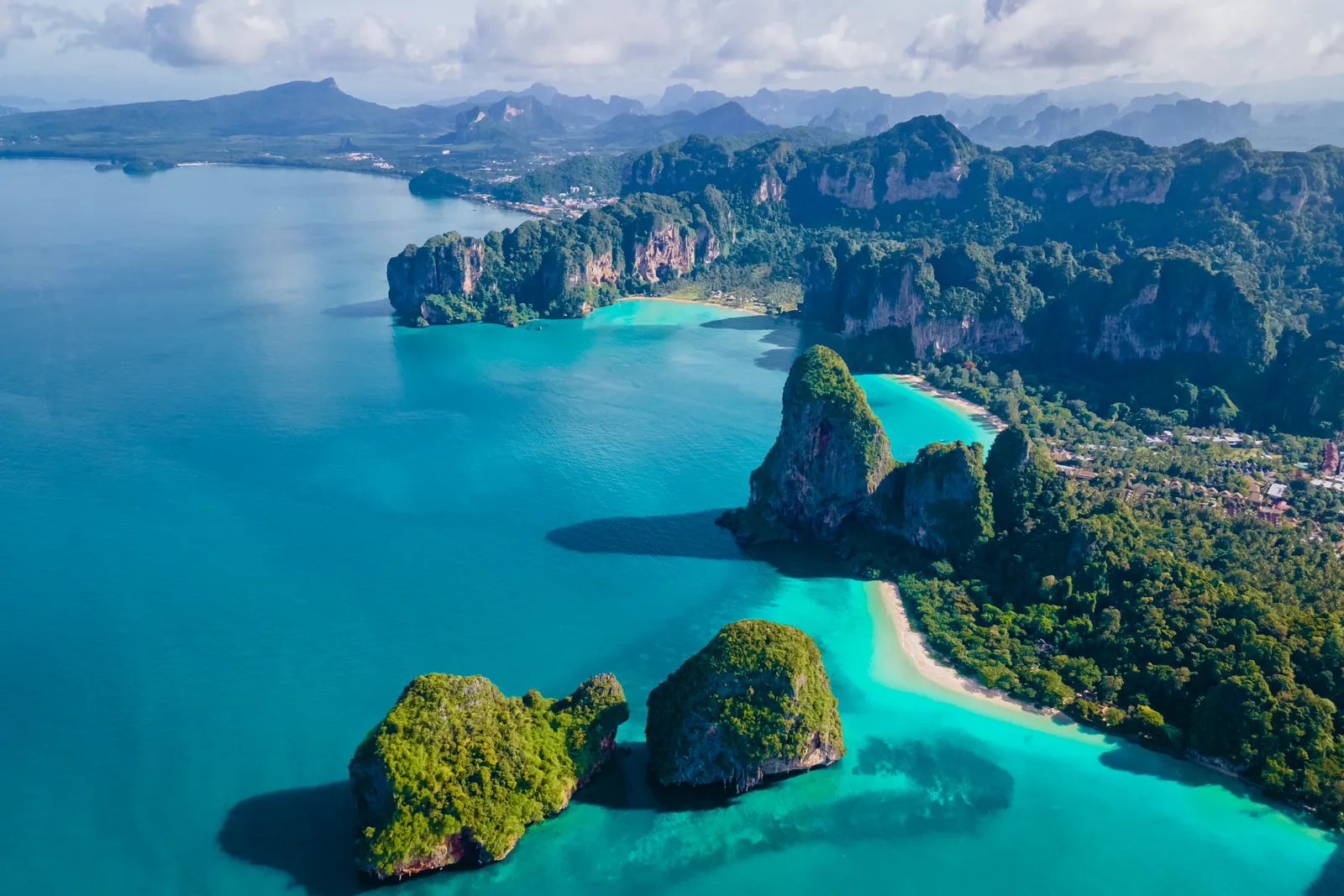
Short answer: with 7 days, spend three nights in Bangkok with a day trip to Ayutthaya, then fly to Chiang Mai for three nights of temples, markets and mountains. With 10 days, add four nights on a beach: Phuket or Ao Nang from November to April, Ko Samui from January to September. With 14 days, add Chiang Rai and finish with Ao Nang and the Phi Phi Islands, or, from June to September, with Ko Samui and Ko Tao. Short domestic flights cover the long legs; ferries link the islands.
This guide turns the sample trips on our Thailand travel guide into day-by-day plans, with travel times between stops and the best area to sleep each night. Thailand’s two coasts have opposite rainy seasons, so check the best time to visit Thailand before you choose your beach, and see our top 10 places to visit in Thailand for the highlights. For a plan built around your dates and interests, use our AI trip planner. Everything was checked as of October 2026.
The three routes at a glance
| Route | Days | Stops (nights) | Best for |
|---|---|---|---|
| Bangkok and the north | 7 | Bangkok 3, Chiang Mai 3 | First trip, temples, food, culture; any month |
| City, mountains and beach | 10 | Bangkok 3, Chiang Mai 3, a beach 3 | A bit of everything; the beach chosen by season |
| North and the Andaman islands | 14 | Bangkok 3, Ayutthaya 1, Chiang Mai 3, Chiang Rai 2, Ao Nang 2, Ko Phi Phi 2 | November to April; limestone islands, snorkeling |
| North and the Gulf islands | 14 | Bangkok 3, Chiang Mai 4, Ko Samui 3, Ko Pha Ngan 1, Ko Tao 2 | June to September; diving, quieter beaches |
Most international flights land at Bangkok’s Suvarnabhumi Airport (BKK); low-cost airlines use Don Mueang (DMK), so check which one your onward flight leaves from. Phuket, Krabi, Chiang Mai and Samui also have international flights, so you can often fly home from the beach instead of returning to Bangkok. Most Western visitors can stay up to 30 days without a visa since September 15, 2026, which covers all of these routes; every traveler must fill in the free Thailand Digital Arrival Card online within three days before arrival.
Travel times between the main stops
Thailand is long, about 1,650 km (1,025 miles) from north to south, so a two-week trip usually includes two or three domestic flights. The State Railway of Thailand (SRT) runs overnight sleepers north to Chiang Mai and south to Surat Thani for the Gulf islands; ferry and speedboat companies link the islands. We could not read SRT’s or most ferry companies’ timetables directly, so times below are approximate and should be checked when you book.
| Leg | How | Time | Source |
|---|---|---|---|
| Bangkok – Ayutthaya | Train | about 1.5–2 h | Secondary |
| Bangkok – Chiang Mai | Flight / overnight sleeper train / bus | about 1 h 15 / about 11–13 h / about 9–10 h | Flight schedules; secondary |
| Bangkok – Phuket, Krabi or Ko Samui | Flight | about 1–1.5 h | Flight schedules |
| Chiang Mai – Chiang Rai | Bus | about 3 h | Secondary |
| Chiang Mai – Pai | Minivan on a winding mountain road | about 3 h | Secondary |
| Krabi airport – Ao Nang | Shuttle bus or taxi | about 30–40 min | Secondary |
| Ao Nang or Krabi – Ko Phi Phi | Ferry | about 1.5–2 h | Our Ko Phi Phi guide |
| Phuket (Rassada Pier) – Ko Phi Phi | Ferry | about 2 h | Our Ko Phi Phi guide |
| Ko Phi Phi – Ko Lanta | Ferry | about 1–1.5 h | Our Ko Phi Phi guide |
| Ko Samui – Ko Pha Ngan – Ko Tao | Lomprayah high-speed catamaran | Samui–Tao about 1.5–2 h (approximate) | Lomprayah departures; durations secondary |
| Bangkok – Ko Tao, Ko Pha Ngan or Ko Samui | Lomprayah joint bus-and-boat ticket | Leaves Bangkok at 06:00 or overnight (21:00–22:00) | Lomprayah |
On the Gulf, Lomprayah’s published schedule (October 2026) shows catamarans from Ko Samui’s Pralarn pier to Ko Tao at 08:00, 11:00 and 12:30, and from Ko Pha Ngan to Ko Tao seven times a day. Ferries on each coast are reduced in its monsoon, and boats are canceled when the sea is rough.
7 days: Bangkok, Ayutthaya and Chiang Mai
The classic first week: the capital’s palaces and street food, the ruins of the old capital, then the cooler, greener north. It works in any month; November to January is the most comfortable, and from about February the north turns hazy with smoke from crop burning.
- Day 1, Bangkok: Arrive, take the Airport Rail Link into town (under 30 minutes to Phaya Thai), then a river ferry at sunset and dinner in Chinatown on Yaowarat Road. Sleep: the riverside, or Silom or Sukhumvit near the Skytrain.
- Day 2, the old town: The Grand Palace and Wat Phra Kaew at 8:30 a.m. opening (500 baht; shoulders and knees covered), the reclining Buddha at Wat Pho, then a ferry across to Wat Arun. Evening at a night market or a rooftop bar. Sleep: same.
- Day 3, Ayutthaya: Train north (about 1.5–2 hours) to the ruined capital of Siam, a UNESCO World Heritage site. Rent a bicycle or a tuk-tuk for Wat Mahathat, Wat Ratchaburana and Wat Chaiwatthanaram at sunset, and train back. Sleep: same.
- Day 4, to Chiang Mai: Morning flight (about 1 hour 15). Afternoon in the moated old city: Wat Phra Singh and Wat Chedi Luang. Sleep: the old city.
- Day 5, Doi Suthep and a cooking class: Up the mountain to Wat Phra That Doi Suthep (more than 300 steps, or a small cable car) in the morning; an afternoon Thai cooking class. Sleep: same.
- Day 6, Doi Inthanon or an elephant sanctuary: A day in Doi Inthanon National Park, with Thailand’s highest peak, waterfalls and the royal pagodas, or an ethical, no-riding elephant sanctuary. Evening at the Night Bazaar, or the Sunday Walking Street if it is Sunday. Sleep: same.
- Day 7, home: Fly back to Bangkok for your international flight, leaving at least three hours between the two.
Swap it: want sand instead of mountains? Replace Chiang Mai with three nights on the beach: Phuket or Ao Nang from November to April, Ko Samui from January to September. Or go by sleeper train on day 4 for the experience (about 11–13 hours overnight). More on each stop: Bangkok, Ayutthaya and Chiang Mai.
10 days: Bangkok, Chiang Mai and a beach
The most popular first trip. Follow the 7-day plan for days 1 to 6, then fly from Chiang Mai to the beach that has the best weather in your month. Some airlines fly direct from Chiang Mai to the beach airports; otherwise connect in Bangkok.
- Days 1–3, Bangkok and Ayutthaya: As above. Sleep: riverside, Silom or Sukhumvit (3 nights).
- Days 4–6, Chiang Mai: Old city temples, Doi Suthep, a cooking class and Doi Inthanon or a sanctuary; or swap a day for Chiang Rai’s White Temple on a long day trip (about 3 hours each way). Sleep: the old city (3 nights).
- Day 7, to the beach: Fly south. Sleep (3 nights): from November to April, Ao Nang (Krabi) or Kata and Karon on Phuket; from January to September, Bophut or Chaweng on Ko Samui.
- Day 8, island day trip: From Ao Nang, long-tail boats to Railay’s cliffs and the four-islands trip; from Phuket, a boat to the Phi Phi Islands or Phang Nga Bay; from Samui, Ang Thong Marine National Park (closed from November 1 in the Gulf monsoon).
- Day 9, the beach: Swim, snorkel, a massage on the sand, sunset seafood.
- Day 10, home: Fly to Bangkok to connect, or fly home direct from Phuket, Krabi or Samui.
Swap it: skip Ayutthaya and add a fourth beach night. Details on the beaches: Ao Nang, Phuket, Ko Samui.
14 days: the north and the Andaman islands (November to April)
The dry season on the west coast is also the best time for the north, so this route fits the peak months well. Book flights and island rooms early for Christmas, New Year and Chinese New Year.
- Days 1–3, Bangkok: The Grand Palace, Wat Pho and Wat Arun; Chinatown; a canal boat ride or the Chatuchak weekend market. Sleep: riverside, Silom or Sukhumvit (3 nights).
- Day 4, Ayutthaya overnight: Train up in the morning, temples by bicycle, and the ruins lit up at night when the tour groups have gone. Sleep: Ayutthaya, near the historical park (1 night).
- Day 5, to Chiang Mai: Back to Bangkok for a flight, or take the overnight sleeper the evening before (trains pass through Ayutthaya). Sleep: Chiang Mai old city (3 nights).
- Days 6–7, Chiang Mai: Doi Suthep, a cooking class, Doi Inthanon or an elephant sanctuary.
- Day 8, to Chiang Rai: Bus north (about 3 hours), the Blue Temple and the night bazaar. Sleep: Chiang Rai town center (2 nights).
- Day 9, Chiang Rai: The White Temple (Wat Rong Khun) early, Baan Dam, and the Golden Triangle on the Mekong.
- Day 10, to Ao Nang: Fly from Chiang Rai to Krabi via Bangkok, then 30–40 minutes to Ao Nang. Sleep: Ao Nang (2 nights).
- Day 11, Railay and the islands: Long-tail boat to Railay and Phra Nang beach, or the four-islands snorkel trip.
- Day 12, to Ko Phi Phi: Ferry (about 1.5–2 hours). Hike to the viewpoint for sunset. Sleep: Ko Phi Phi Don (2 nights).
- Day 13, Phi Phi Leh: An early boat to Maya Bay (boats drop you at a pier on the far side; no swimming in the bay) and Pileh Lagoon, with snorkeling stops.
- Day 14, home: Ferry to Phuket’s Rassada Pier (about 2 hours) and fly from Phuket.
For a calmer finish, swap Phi Phi for Ko Lanta’s long, quiet beaches (about 1–1.5 hours on from Phi Phi). Details: Chiang Rai, Ao Nang, Ko Phi Phi, Ko Lanta.
14 days: the north and the Gulf islands (June to September)
From May to October the southwest monsoon soaks the Andaman coast, but the Gulf islands stay sheltered and are at their best, with calm, clear water for diving off Ko Tao. Bangkok and the north get afternoon storms, green rice fields and lower prices.
- Days 1–3, Bangkok and Ayutthaya: As in the 7-day plan; plan sightseeing for the morning, before the afternoon rain. Sleep: riverside, Silom or Sukhumvit (3 nights).
- Days 4–7, Chiang Mai: Fly north on day 4. Doi Suthep, a cooking class, Doi Inthanon’s waterfalls in full flow, and a long day trip to Chiang Rai’s White Temple. Sleep: the old city (4 nights).
- Day 8, to Ko Samui: Fly to Samui, direct if your dates allow or via Bangkok. Sleep: Bophut or Chaweng (3 nights).
- Day 9, Ang Thong: A full-day boat trip to Ang Thong Marine National Park’s 42 islands and the Emerald Lake viewpoint.
- Day 10, Samui: The Big Buddha, Fisherman’s Village in Bophut, and a beach afternoon.
- Day 11, to Ko Pha Ngan: Short catamaran hop. Quiet beaches on the north coast, or the famous full-moon party if the date fits. Sleep: Ko Pha Ngan (1 night).
- Days 12–13, Ko Tao: Catamaran on to Ko Tao. Snorkel at Shark Bay or Ko Nang Yuan, or start a diving course. Sleep: Ko Tao (2 nights).
- Day 14, home: Catamaran back to Samui for a flight (about 1.5–2 hours), or the Lomprayah boat to Chumphon and a flight or bus to Bangkok.
Avoid this route from October to December, when the northeast monsoon brings the Gulf islands their heaviest rain and Ang Thong is closed from November 1. Details: Ko Samui, Ko Pha Ngan, Ko Tao.
Where to sleep, by stop
| Stop | Best area for a short stay | Why |
|---|---|---|
| Bangkok | The riverside, Silom or Sukhumvit | River ferries to the Grand Palace from the riverside; Skytrain and MRT from Silom and Sukhumvit |
| Ayutthaya | Near the historical park, on the island | Cycle to the ruins; quiet evenings |
| Chiang Mai | Inside or just outside the moated old city | Temples, cafés and markets on foot; Nimman for trendier nightlife |
| Chiang Rai | The town center near the clock tower and night bazaar | Bus station and restaurants within walking distance |
| Krabi | Ao Nang, or Railay for cliffs and climbing | Boats to the islands; Railay is reached only by boat |
| Ko Phi Phi | Ko Phi Phi Don: Tonsai for the pier, quieter bays for rest | Tonsai is lively and loud at night |
| Phuket | Kata or Karon | Family-friendly beaches, quieter than Patong |
| Ko Samui | Bophut or Chaweng | Close to the airport and the ferry piers |
| Ko Tao | Sairee Beach | Dive schools, restaurants and sunsets; near the pier at Mae Haad |
Thailand does not charge a tourist tax on hotel rooms or a tourism entry fee as of October 2026, though one has been discussed for years. Hotels usually add service charge and VAT, and national parks charge foreign visitors an entry fee, often included in boat-tour prices. More on costs is in our Thailand travel guide.
Alternatives by interest
Beach lovers
Make it a beach fortnight with three or four nights in Bangkok and the rest on islands. From November to April, hop Phuket, Ko Phi Phi, Ao Nang and Ko Lanta by ferry; from January to September, Ko Samui, Ko Pha Ngan and Ko Tao. Swim only where lifeguards’ flags allow it: rip currents form on west-facing Andaman beaches from about May to October and on the Gulf’s east-facing beaches from about October to January. See our Ko Lanta and Khao Lak guides for quieter options.
Divers and snorkelers
From November to April, base yourself in Khao Lak for liveaboards and day trips to the Similan Islands, which open from October 15 to May 15. From June to September, Ko Tao is one of the world’s busiest places to learn to dive. Don’t touch or stand on coral, and use reef-safe sunscreen.
Culture and history lovers
Add the old capital of Sukhothai between Ayutthaya and Chiang Mai, and two nights in Kanchanaburi for the Bridge on the River Kwai and the Death Railway. Time the trip for a festival: Songkran, the Thai New Year, on April 13–15, or Loy Krathong and Yi Peng, which fall on November 24 in 2026, best in Chiang Mai, Sukhothai and Ayutthaya.
Nature and slow travel
From Chiang Mai, take the minivan to Pai (about 3 hours of mountain curves) for two or three nights of hot springs, canyon sunsets and rice fields. Near Bangkok, Khao Yai National Park has waterfalls, hornbills and wild elephants. Some mountain trails close in the rainy season, such as Doi Inthanon’s Kio Mae Pan trail from June 1 to October 31.
Tips for planning your route
- Pick the coast by month. Andaman coast (Phuket, Krabi, Phi Phi, Lanta) from November to April; Gulf islands (Samui, Pha Ngan, Tao) from January to September. Both work in January to April.
- Know the park closures. Maya Bay closes every year from August 1 to September 30; the Similan Islands close from May 16 to October 14; Ang Thong closes from November 1.
- Check which Bangkok airport. Low-cost carriers fly from Don Mueang, full-service airlines mostly from Suvarnabhumi; allow at least an hour and a half to cross between them.
- Book sleepers and holiday flights early. SRT sells seats on long-distance trains up to 180 days ahead, and berths fill up in high season and around holidays.
- Dress for temples. Cover shoulders and knees at the Grand Palace and other temples, and take your shoes off before entering a hall.
- Think twice about scooters. Road accidents are the main risk for visitors; ride only with a valid motorcycle license and a helmet, and check that your insurance covers it.
Thailand itinerary FAQ
Is 7 days enough for Thailand?
Yes for two regions: Bangkok with Ayutthaya, plus either Chiang Mai or one beach. To combine the city, the north and the islands without rushing, plan 10 to 14 days.
Should I go to Phuket or Ko Samui?
It depends on the month. Phuket and the Andaman coast are best from November to April; Ko Samui and the Gulf islands from January to September. Samui is the safer choice from June to September, Phuket from October to December.
Should I take the night train to Chiang Mai?
If you enjoy train travel, yes: the overnight sleeper takes about 11 to 13 hours and saves a night’s hotel. If time is short, fly: it takes about 1 hour 15 minutes, and flights are cheap if booked early.
How many days do I need in Bangkok?
Two full days for the Grand Palace, Wat Pho, Wat Arun, Chinatown and a market, plus a third for Ayutthaya. Many travelers add a last night in Bangkok before flying home.
Do I need a car in Thailand?
No. Flights, trains, buses, ferries and ride-hailing apps such as Grab and Bolt cover every stop in these plans. Thailand drives on the left, and road accidents are the main risk for visitors.
Can I visit Thailand in the rainy season?
Yes. Rain usually comes as afternoon storms, prices drop, and the Gulf islands are at their best from June to September. Some boat trips and parks on the Andaman coast close or are canceled in rough weather.
How long can I stay in Thailand without a visa?
Up to 30 days for visitors from the US, Canada, the UK, Australia and most EU countries since September 15, 2026. All visitors must complete the free online Thailand Digital Arrival Card before arriving.
Sources
Researched and last reviewed by TravelerCenter on 8 October 2026. Gulf ferry departures and Bangkok joint tickets come from Lomprayah’s published schedule; train, bus, minivan, ferry and flight durations come from flight schedules, booking sites and general references and are approximate, because the State Railway of Thailand’s timetable pages could not be read. Visa exemptions, the Digital Arrival Card, festival dates and jellyfish and sea-safety advice come from the Tourism Authority of Thailand (TAT) and the Immigration Bureau; park closures from the Department of National Parks; Grand Palace tickets and hours from the Grand Palace; seasons from the Thai Meteorological Department and our best-time guide. Timetables, fares and rules change, so check with the operator before you travel.
Data: Natural Earth (PUBLIC DOMAIN) · © OpenStreetMap contributors (ODBL) · Wikidata (CC0)