Short answer: with 7 days, spend three nights in Berlin and three in Munich, linked by an ICE of about four hours, with a day trip to Neuschwanstein Castle. With 10 days, go north and west instead: Berlin, Hamburg, Cologne with a day on the castle-lined Rhine, and Heidelberg, flying home from Frankfurt. With 14 days, either take the eastern and Bavarian route through Dresden, Nuremberg and Munich to the Alps, or follow the Rhine south to the Black Forest and Lake Constance. Trains link every stop; a car only helps in the Alps.
This guide turns the sample trips on our Germany travel guide into day-by-day plans, with Deutsche Bahn travel times between stops and the best area to sleep each night. May, June and September are the best months: beer gardens open, long days and fewer crowds than in July and August; late November to Christmas is the season for Christmas markets. Our best time to visit Germany guide goes month by month, and our top 10 places to visit in Germany explains each stop. For a plan built around your dates and interests, use our AI trip planner. Everything here was checked as of October 2026.
The three routes at a glance
| Route | Days | Stops | Best for |
|---|---|---|---|
| Berlin and Munich | 7 | Berlin (3 nights), Munich (3 nights) | First trip, history plus beer gardens and castles |
| Berlin, Hamburg, Cologne, the Rhine and Heidelberg | 10 | Berlin (3), Hamburg (2), Cologne (2), Heidelberg (2) | Big cities, river scenery, all by train |
| Berlin, Dresden, Bavaria and the Alps | 14 | Berlin (3), Dresden (2), Nuremberg (2), Munich (3), Füssen (1), Garmisch-Partenkirchen (2) | History, old towns, Alpine scenery; Christmas markets in December |
| The Rhine to Lake Constance | 14 | Cologne (2), Middle Rhine (2), Heidelberg (2), Freiburg and the Black Forest (3), Lake Constance (3), Munich (1) | Castles, forests, lakes and wine; late April to early October |
Germany’s main long-haul airports are Frankfurt and Munich, with Berlin Brandenburg (BER), Hamburg, Düsseldorf and Cologne/Bonn also busy. Book an open-jaw ticket (into Berlin and home from Munich, or into Cologne or Düsseldorf and home from Munich) so you never backtrack. Frankfurt Airport has its own long-distance train station.
Travel times between the main stops
These are the legs used in the plans below. “DB” means the time comes from Deutsche Bahn’s published connection pages on bahn.de (fastest train; many trains take a little longer); anything else is labelled approximate. ICE and IC trains are long-distance; RE and RB are regional trains, covered by the Deutschlandticket.
| Leg | How | Time | Source |
|---|---|---|---|
| Berlin – Munich | ICE, up to 23 direct a day | about 4 h–4 h 25 (fastest 4 h 06) | DB |
| Berlin – Hamburg | ICE, up to 32 direct a day | about 1 h 50–2 h (fastest 1 h 47) | DB |
| Hamburg – Cologne | ICE, up to 22 direct a day | about 3 h 45 direct | DB |
| Cologne – Koblenz (Middle Rhine) | IC/ICE or regional, up to 57 direct a day | about 55 min–1 h 10 | DB |
| Cologne – Heidelberg | ICE, up to 8 direct a day (others change in Mannheim) | about 1 h 50–1 h 55 | DB |
| Frankfurt – Heidelberg | ICE or regional, up to 26 direct a day | about 47 min–1 h by ICE | DB |
| Berlin – Dresden | Eurocity/Railjet, up to 10 direct a day | about 1 h 40 | DB |
| Dresden – Nuremberg | Train, at least one change | about 3 h 10 | DB |
| Nuremberg – Munich | ICE, up to 64 direct a day | about 1 h 10–1 h 20 | DB |
| Nuremberg – Rothenburg ob der Tauber | Regional train, changing at Ansbach and Steinach | about 1 h 15–1 h 30 (approximate) | General reference |
| Munich – Füssen (for Neuschwanstein) | Regional train | about 2 h (approximate) | General reference |
| Munich – Garmisch-Partenkirchen | Regional train | about 1 h 10–1 h 20 (approximate) | Booking sites |
| Heidelberg – Freiburg | Direct train (3 a day) or ICE with one change | about 1 h 40–1 h 55 | DB |
| Freiburg – Konstanz | Train, at least one change | about 2 h 35 fastest | DB |
| Lindau – Munich | Train, up to 6 direct a day | about 2 h 25–2 h 40 | DB |
Germany’s long-distance trains are often late: in September 2026, DB reported that just over half of its long-distance trains arrived within six minutes of schedule. Leave an hour of slack before flights and timed tickets, and use the DB Navigator app for live changes.
7 days: Berlin and Munich
The classic first trip: the capital’s history and museums, then Bavaria’s capital, beer gardens and the castle on the hill. Fly into Berlin and home from Munich.
- Day 1, Berlin: Arrive at BER and take the FEX airport express to the Hauptbahnhof (about 30 minutes). Walk from the Brandenburg Gate along Unter den Linden; book a free slot in advance for the Reichstag dome at sunset. Sleep: Mitte or Prenzlauer Berg (3 nights).
- Day 2, history and museums: Museum Island, the Holocaust Memorial, Checkpoint Charlie and the Berlin Wall Memorial on Bernauer Strasse; evening at the East Side Gallery and in Kreuzberg.
- Day 3, Potsdam or more Berlin: Regional train to Potsdam (under 40 minutes) for Sanssouci Palace and its park, or stay in town for the Tiergarten, the Kulturforum and a neighborhood food market.
- Day 4, to Munich: ICE south (about 4 hours; book a seat). Evening at Marienplatz and a first beer hall dinner. Sleep: the Altstadt or around the Hauptbahnhof (3 nights).
- Day 5, Munich: The Residenz, the Viktualienmarkt, the English Garden with its river surfers and a beer garden under chestnut trees.
- Day 6, Neuschwanstein: Early regional train to Füssen (about 2 hours) and bus to Hohenschwangau for your timed tour of Neuschwanstein Castle; book online well ahead, as same-day tickets sell out early. Walk up to Mary’s Bridge for the classic view.
- Day 7, home: A last morning in Munich and the S-Bahn to the airport.
Swap it: break the long train ride with a night in Nuremberg, which is on the Berlin–Munich line, or trade Neuschwanstein for the lakes and peaks of the Bavarian Alps. More detail is in our Berlin and Munich guides and our Bavaria guide.
10 days: Berlin, Hamburg, Cologne, the Rhine and Heidelberg
Germany’s three biggest cities after Munich, a day among Rhine castles and a romantic university town, all by ICE. Fly into Berlin and home from Frankfurt.
- Days 1–3, Berlin: As in the 7-day plan. Sleep: Mitte or Prenzlauer Berg (3 nights).
- Day 4, to Hamburg: ICE (about 1 h 50). The Speicherstadt’s red-brick warehouses and the Elbphilharmonie’s Plaza (timed ticket) at sunset. Sleep: Altstadt, Neustadt or near the Alster (2 nights).
- Day 5, Hamburg: A harbor tour, the Miniatur Wunderland model railway, ferry 62 down the Elbe to Övelgönne’s beach, and the Sunday fish market if your dates allow.
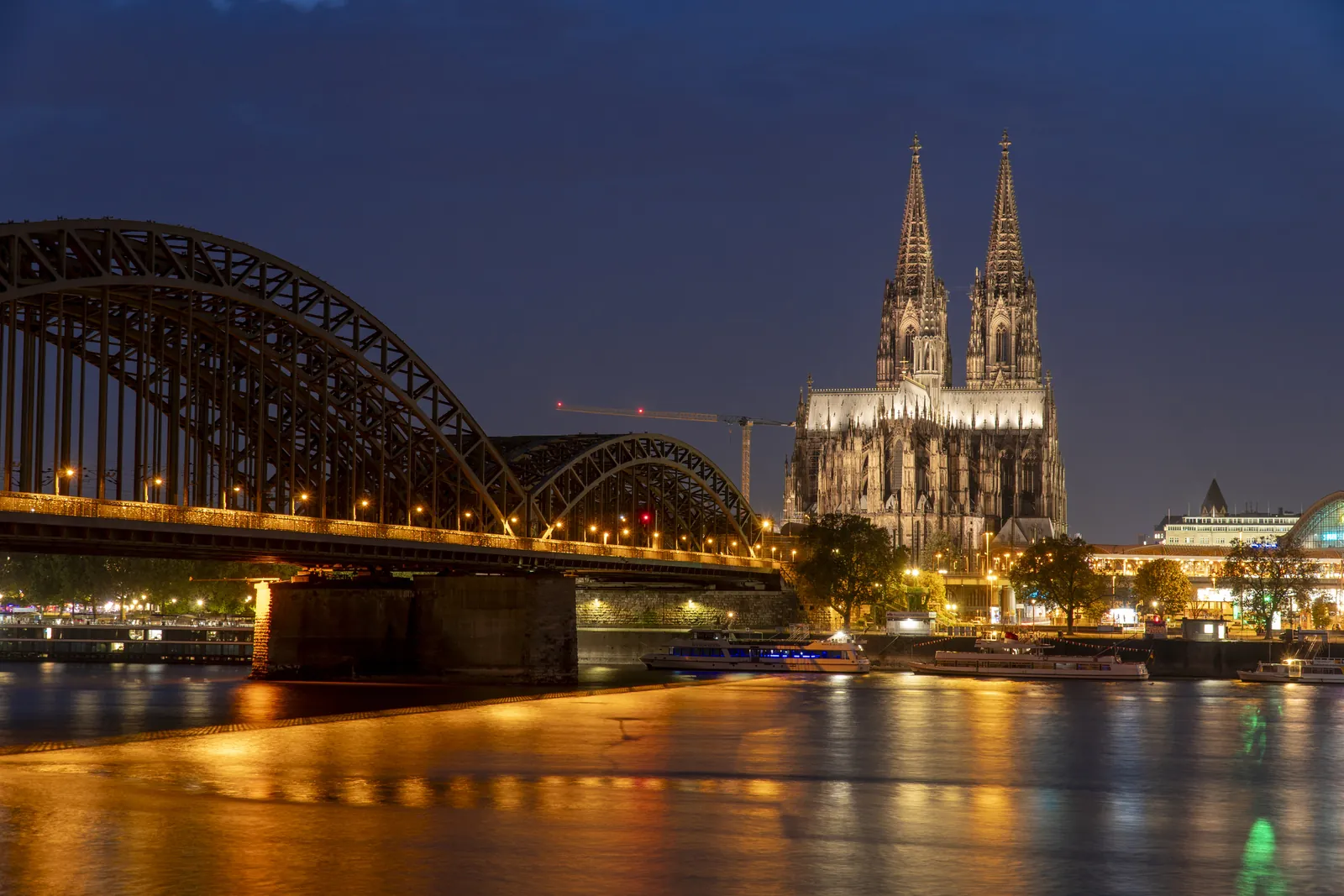
- Day 6, to Cologne: ICE (about 3 h 45). Climb the cathedral’s south tower (533 steps) and walk the Rhine promenade. Sleep: the old town near the cathedral (2 nights).
- Day 7, the Middle Rhine: Early train to Koblenz (about 1 hour), then a KD boat upstream through the Middle Rhine Valley, past the Loreley rock and hilltop castles, to Boppard, St. Goar or Bacharach, and the train back. KD’s main season runs from late April to early October.
- Day 8, to Heidelberg: ICE (about 1 h 50 on direct trains). The castle by funicular, the Old Bridge and the Philosophers’ Walk. Sleep: the Altstadt (2 nights).
- Day 9, Heidelberg: A slower day: the university quarter, a Neckar boat trip, or a day trip to Frankfurt’s Römerberg and riverside museums.
- Day 10, home: Train to Frankfurt (about 1 hour) and the S-Bahn or long-distance train to the airport.
Swap it: in December, swap Hamburg for Dresden and its Striezelmarkt, one of the country’s oldest Christmas markets. More detail: Cologne and Heidelberg.
14 days: Berlin, Dresden, Bavaria and the Alps
East to south: the capital, baroque Dresden, medieval Franconia, Munich and two nights among Alpine peaks. Trains take you to Munich; pick up a hire car there for the Alps. Fly into Berlin and home from Munich.
- Days 1–3, Berlin: As in the 7-day plan. Sleep: Mitte or Prenzlauer Berg (3 nights).
- Day 4, to Dresden: Train (about 1 h 40). The rebuilt Frauenkirche, the Zwinger and the Brühl Terrace above the Elbe. Sleep: the Altstadt or the Neustadt (2 nights).
- Day 5, Saxon Switzerland: S-Bahn to Kurort Rathen and the walk up to the Bastei Bridge in Saxon Switzerland National Park, or the Green Vault treasures in town.
- Day 6, to Nuremberg: Train with a change (about 3 h 10). The Kaiserburg castle and the old town walls. Sleep: the walled Altstadt (2 nights).
- Day 7, Rothenburg: Regional trains to Rothenburg ob der Tauber (about 1 h 15–1 h 30), and the walk around its 4 km of medieval walls.
- Day 8, to Munich: ICE (about 1 h 10). Marienplatz and a beer garden. Sleep: the Altstadt or around the Hauptbahnhof (3 nights).
- Days 9–10, Munich: The Residenz, the Deutsches Museum or the art galleries, the English Garden, and a day trip by train if you like.
- Day 11, Neuschwanstein: Pick up a car and drive to Füssen for your timed castle tour, then a walk around the Alpsee. Sleep: Füssen or Schwangau (1 night).
- Day 12, to Garmisch-Partenkirchen: Drive east past Linderhof Palace, about 30 minutes before Garmisch, and walk the Partnach Gorge. Sleep: Garmisch-Partenkirchen (2 nights).
- Day 13, the Zugspitze: Germany’s highest peak, reached by the cogwheel train (about 75 minutes from Garmisch) and cable car, on a clear day.
- Day 14, home: Drive back to Munich airport (about 1 h 30, approximate).
Swap it: in winter, this becomes a Christmas market trip from late November: Berlin, Dresden’s Striezelmarkt, Nuremberg’s Christkindlesmarkt and Munich; check the Zugspitze, which has short maintenance closures in November. Details: Dresden, Nuremberg and Bavarian Alps.
14 days: the Rhine to Lake Constance
The south-west by train: cathedral city, castle river, university town, dark forests and Germany’s largest lake. Best from late April to early October, when the Rhine boats and lake boats run their full timetables. Fly into Cologne or Düsseldorf and home from Munich.
- Days 1–2, Cologne: The cathedral and its tower, the Roman-Germanic Museum and an evening of Kölsch beer in an old-town brewery. Sleep: the old town near the cathedral (2 nights).
- Day 3, to the Middle Rhine: Train to Koblenz (about 1 hour) and the KD boat upstream to Boppard or St. Goar. Sleep: a Rhine village such as Bacharach, St. Goar or Boppard (2 nights).
- Day 4, castles and vineyards: Marksburg or Rheinfels castle, a stretch of the Rheinsteig trail, and a wine tasting in Bacharach.
- Day 5, to Heidelberg: Regional train along the river to Mainz and on to Heidelberg (about 2 hours with changes, approximate). Sleep: the Altstadt (2 nights).
- Day 6, Heidelberg: The castle, the Old Bridge and the Philosophers’ Walk.
- Day 7, to Freiburg: Train (about 1 h 40–1 h 55). The Münster and the little streams (Bächle) of the old town. Sleep: Freiburg’s old town (3 nights).
- Days 8–9, the Black Forest: Regional trains to Titisee for the lake, and the Black Forest Railway to Triberg’s waterfalls. Many guesthouses in the region give a guest card with free local buses and trains; ask when you book. See our Black Forest guide.
- Day 10, to Lake Constance: Train to Konstanz (about 2 h 35). Evening by the harbor. Sleep: Konstanz (2 nights).
- Day 11, Mainau and Meersburg: Mainau, the flower island (open all year, gardens at their best from spring to mid-October), then the car ferry across the lake to Meersburg’s castle and old town; the ferry runs around the clock.
- Day 12, to Lindau: Move along the lake to Lindau’s island old town. Sleep: Lindau island (1 night).
- Day 13, to Munich: Train (about 2 h 25–2 h 40). An afternoon at Marienplatz and the English Garden. Sleep: Munich (1 night).
- Day 14, home: From Munich airport.
Swap it: wine lovers can add a night on the Moselle from Koblenz. Details: Middle Rhine Valley and Lake Constance.
Where to sleep, by stop
| Stop | Best area for a short stay | Why |
|---|---|---|
| Berlin | Mitte or Prenzlauer Berg | Central for the sights, cafés and S-Bahn/U-Bahn lines |
| Munich | Altstadt, or near the Hauptbahnhof | Walk to Marienplatz; trains to the Alps and the airport |
| Hamburg | Altstadt, Neustadt or near the Alster | Harbor, Speicherstadt and main station close by |
| Cologne | Old town near the cathedral | The station is next to the cathedral |
| Middle Rhine | Bacharach, St. Goar or Boppard | Boat piers and the riverside railway in every village |
| Heidelberg | The Altstadt | Castle, bridge and riverside on foot |
| Dresden | Altstadt or Neustadt | Baroque sights on one bank, cafés and nightlife on the other |
| Nuremberg | Inside the old town walls | Castle and markets on foot, station by the walls |
| Füssen and Garmisch | Füssen or Schwangau; central Garmisch-Partenkirchen | Near the castles; trains and lifts in Garmisch |
| Freiburg | The old town | Trains into the Black Forest leave from the main station |
| Lake Constance | Konstanz; Lindau island | Ferries, boats and trains on the doorstep |
Many German cities add an accommodation tax to hotel bills; details are on our Germany guide. Trade fairs (Messen) can double hotel prices in Frankfurt, Cologne, Munich, Hamburg and Berlin on fair dates, so check before you book.
Alternatives by interest
Christmas market lovers
From late November to just before Christmas, build the trip around markets: Berlin, Dresden, Nuremberg, Munich and Cologne all have famous ones, and Rothenburg is at its most atmospheric. Trains are the best way between them. See our best-time guide for the season’s dates.
Hikers and lake lovers
Give the Alps four or five nights from mid-June to September, based in Garmisch-Partenkirchen or Berchtesgaden for Lake Königssee. Add Saxon Switzerland’s sandstone trails, the Black Forest and the Rheinsteig. For lakes and islands, add Lake Constance or the Baltic island of Rügen in summer.
Food and beer lovers
Munich’s beer gardens and halls, Cologne’s Kölsch breweries, Bamberg’s smoked beer (an easy day trip from Nuremberg), Nuremberg’s grilled sausages and Rhine and Moselle wine villages. Oktoberfest runs in Munich from late September to early October (19 September to 4 October in 2026); book rooms many months ahead.
Families
Fewer bases and shorter train rides: Berlin, then Munich with a day at the lakes, or Hamburg for the Miniatur Wunderland and harbor boats. On DB long-distance trains, children under 6 travel free, and up to four children aged 6 to 14 travel free with any traveler aged 15 or over, as long as they are added when you book.
Tips for planning your route
- Match the season to the route. May, June and September suit every route. July and August are warmest but busiest in the Alps, on the lakes and on the coast, with afternoon thunderstorms. Rhine boats run their main timetable from late April to early October.
- Book ICE tickets early. Saver fares (Sparpreis) on bahn.de tie you to one train but cost much less than flexible tickets; a seat reservation is extra and worth it on busy routes.
- Know the Deutschlandticket. It is a monthly subscription for local and regional trains, buses and trams across Germany, but not ICE or IC trains. It suits the regional legs here (Füssen, Rothenburg, the Black Forest) if you are staying several weeks; cancel by the 10th to stop it at the end of the month.
- Check rail works. Between 30 October and 12 December 2026, construction between Nuremberg and Munich adds about 45 minutes to Berlin–Munich trains.
- Book the big sights. Neuschwanstein tours, the Reichstag dome and the Elbphilharmonie Plaza all use timed or registered entry.
- Hire cars only for the Alps and the countryside. Big-city driving and parking are hard work and trains are faster. Germany has no car tolls, but Austria and Switzerland, a short drive from the Alps, need a vignette.
Germany itinerary FAQ
Is 7 days enough for Germany?
Yes for Berlin and Munich with a day trip to Neuschwanstein, linked by a four-hour ICE. It is not enough to add the Rhine, the Alps and the north without rushing; for that, plan 10 to 14 days.
Should I start in Berlin or Munich?
Either works; pick the cheapest open-jaw flight. Starting in Berlin and ending in Munich puts the Alps and the castles at the end of the trip, near Munich airport.
How long is the train from Berlin to Munich?
About 4 hours on the fastest direct ICE trains (4 h 06 on DB’s connection page), with up to 23 direct trains a day. Between 30 October and 12 December 2026, construction adds about 45 minutes.
Do I need a car in Germany?
No for the cities and the Rhine: trains reach them all, often faster than driving. A car helps for the Bavarian Alps, the smaller Romantic Road villages and the Black Forest’s remote valleys.
Can I visit Neuschwanstein as a day trip from Munich?
Yes. Regional trains to Füssen take about two hours, then a short bus ride. Book your castle tour online in advance and arrive early for the walk up.
Is two weeks enough for Germany?
Two weeks covers Berlin plus one large region well: Bavaria and the Alps, or the Rhine, Black Forest and Lake Constance. Doing both means a lot of time on trains.
What is the best month for a Germany trip?
May, June and September for warm days, open beer gardens and fewer crowds; late November to Christmas for the markets.
Sources
Researched and last reviewed by TravelerCenter on 8 October 2026. Train times come from Deutsche Bahn’s connection pages on bahn.de (Berlin–Munich, Berlin–Hamburg, Hamburg–Cologne, Cologne–Koblenz, Cologne–Heidelberg, Frankfurt–Heidelberg, Berlin–Dresden, Dresden–Nuremberg, Nuremberg–Munich, Heidelberg–Freiburg, Freiburg–Konstanz, Lindau–Munich); punctuality figures and the Nuremberg–Munich works from Deutsche Bahn; Rhine boat seasons from KD; castle and Alpine booking rules, hours and closures from the Bavarian Palace Administration’s Neuschwanstein ticket center, the Zugspitze operator, the Bundestag, the Elbphilharmonie, Mainau and the Konstanz ferry; and seasons from our best-time guide, based on German Weather Service (DWD) data. Munich–Füssen, Munich–Garmisch, Nuremberg–Rothenburg, Rhine–Heidelberg and drive times are approximate, from booking sites and general reference. Timetables, fares and rules change, so check with the operator before you travel.
Data: Natural Earth (PUBLIC DOMAIN) · © OpenStreetMap contributors (ODBL) · Wikidata (CC0)