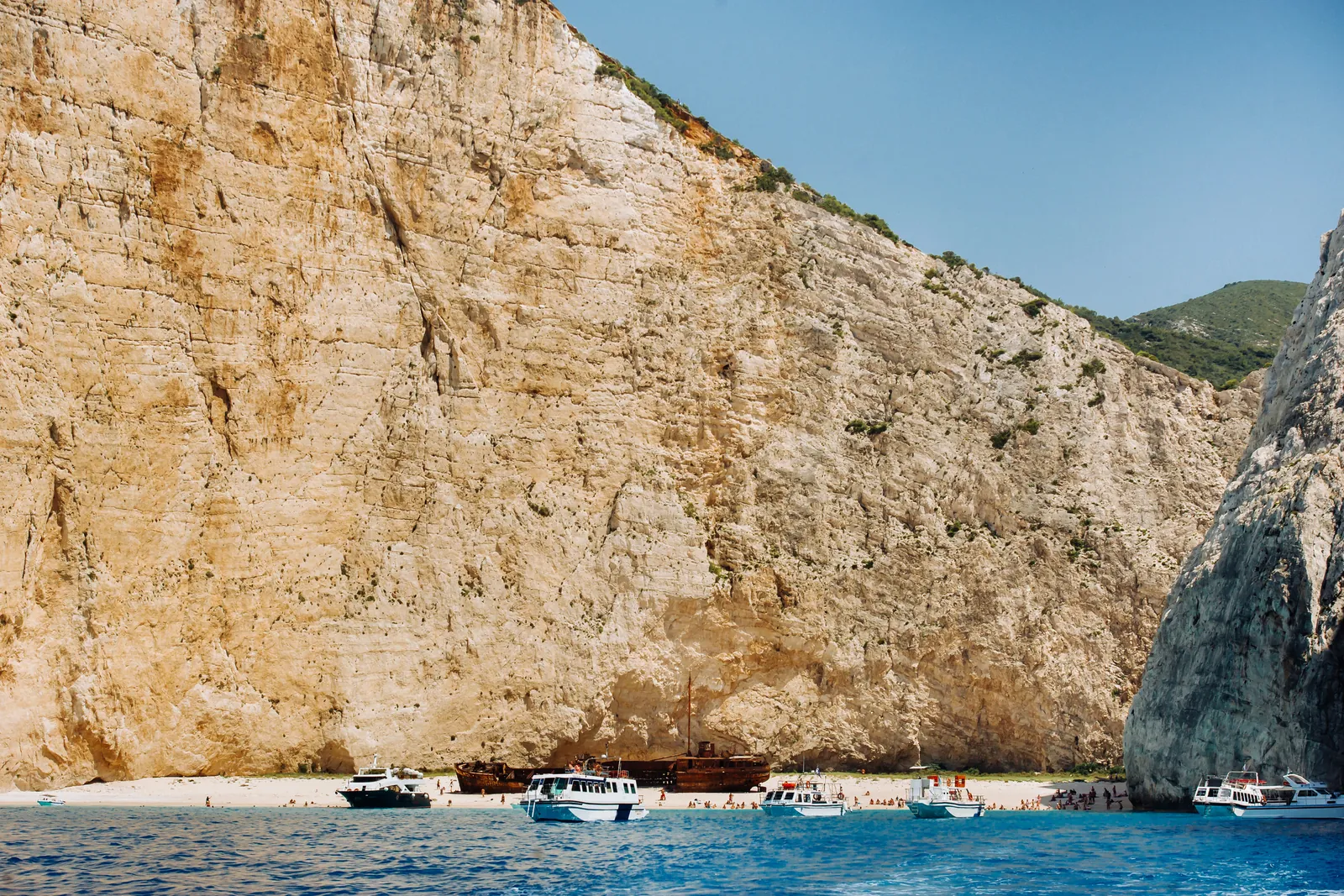
Short answer: On the ground in Greece, plan on roughly €50–100 (about $55–115) per person per day on a hostel-and-gyros budget, €150–215 (about $170–245) in a mid-range hotel shared by two, and about €235–360 (about $265–405) for upscale hotels and restaurant dinners. A week therefore costs about $395–790 on a tight budget, $1,190–1,700 mid-range and $1,860–2,850 in comfort, before flights and ferries. Islands such as Santorini and Mykonos in July and August cost more; Athens and the mainland in spring and autumn cost less.
Greece sits in the middle of the European price range. Tavernas, city transport and site tickets are reasonable, and swimming, hiking and sunsets are free. The big costs are where you sleep, which islands you choose, how many ferries you take and when you travel: the same room can cost far more in August than in April. This guide breaks it all down with figures from official sources, so you can build a realistic budget for your trip to Greece. Prices in dollars are rounded at about €0.89 to the US dollar (so €1 is about $1.13), the Federal Reserve’s rate in early October 2026; use our Money exchange tool for today’s rate.
Greece daily costs at a glance
These example days are built from the sourced prices further down this page: one person, one day in Athens. They leave out flights, ferries, tours, shopping and nightlife.
| Per person, per day | Budget | Mid-range | Comfort |
|---|---|---|---|
| Bed | Hostel dorm bed: €17–30 | Half of an Athens hotel room at the €136–229 average rate: €68–115 | Half of an upscale room at €230–430: €115–215 |
| Food | Three simple meals at €10–15: €30–45 | One simple meal plus half of a €60 dinner for two, a coffee: about €50–60 | Lunch plus half of a €90 dinner for two, drinks: about €75 |
| Local transport | Two 90-minute tickets or a 24-hour ticket: €2–4 | 24-hour ticket, or a 5-day ticket: €4–8 | Taxis: about €15–20 |
| Sights | Free viewpoints, or one site: €0–20 | One major site: €20–30 | Acropolis plus a museum: €30–50 |
| Total | About €50–100 ($55–115) | About €150–215 ($170–245) | About €235–360 ($265–405) |
Hotel figures are Athens hotels’ average daily room rates for early 2025 (€136) and June 2025 (€228.50) from the Athens hotel association; the upper comfort figure reflects five-star rates on Santorini; hostel prices come from a hostel booking site; restaurant prices are typical October 2026 Athens prices from the crowd-sourced Numbeo index. Treat them as typical ranges, not quotes.
What visitors actually spend in Greece
The Bank of Greece tracks what international visitors spend. In the first eight months of 2025, the average visitor spent €613 (about $695) per trip, and visitors from the United States spent the most of any market, €1,080 (about $1,220) per trip; British visitors averaged €758. In all of 2025, Greece welcomed about 38 million visitors and earned €22.6 billion from travel, not counting cruises. These figures cover spending inside Greece, not the flight there.
On our Travel costs by country scale, which compares hotel, restaurant and transport prices with the United States (US = 100), Greece scores 83, in our middle band, “moderate”. In plain words, a hotel night, a meal out or a bus ride costs on average about a sixth less than in the United States, a little more than in Spain (80) and less than in Italy (100).
Accommodation costs
Greek room prices swing hard with the season. The Athens-Attica and Argosaronic Hotel Association reported an average daily rate of about €136 for Athens hotels from January to April 2025, €211 in May and €228.50 in June, with a first-half average of about €170. Island hotels follow the same curve, peaking in July and August. At the top end, five-star hotels on Santorini averaged €426 a night in summer 2019, according to hotel-search data analyzed with the Greek tourism industry’s research institute; that is the latest published figure we found. Mainland cities are cheaper: according to the hotel consultancy GBR Consulting, the average room rate in Thessaloniki passed €100 for the first time only in 2024, while Athens set new records the same year.
Hostels are the cheapest beds: a hostel booking site puts the average Greek dorm bed at about €17 a night, with higher prices on popular islands and in summer. Private rooms and small family-run studios are a good middle ground, especially on islands such as Naxos and Paros.
The climate resilience fee
Greece charges a climate crisis resilience fee per room per night, collected by your hotel or host. The rates are:
| Type of stay | April–October | November–March |
|---|---|---|
| 1- and 2-star hotels, rooms to let | €2 | €0.50 |
| 3-star hotels | €5 | €1.50 |
| 4-star hotels | €10 | €3 |
| 5-star hotels | €15 | €4 |
| Short-term rentals (houses over 80 m²) | €8 (€15) | €2 (€4) |
Cruise passengers also pay a fee per person when they go ashore: €20 on Santorini and Mykonos from June to September, €12 in October, April and May, and €4 from November to March, with lower rates at other ports. Cruise lines collect it, usually within the cruise price.
Food and drink costs
Eating out is good value by Western European standards. Numbeo’s October 2026 Athens figures show a meal at an inexpensive restaurant at about €15 (range €12–25), a three-course dinner for two at a mid-range restaurant, without drinks, at about €60 (range €40–90), a fast-food combo at €10, a half-liter of local draft beer at about €5 and a cappuccino at about €3.70. Expect to pay more in Mykonos, Santorini and beachfront restaurants than in neighborhood tavernas.
Getting around Greece
Athens has cheap, simple public transport. OASA prices are:
| Athens ticket | Price |
|---|---|
| 90-minute ticket (metro, bus, tram) | €1.20 |
| 24-hour ticket | €4.10 |
| 5-day ticket | €8.20 |
| Metro to or from the airport | €9 (return €16) |
| Express airport bus | €5.50 |
| 3-day tourist ticket, including one airport round trip | €20 |
Taxis between Athens airport and the city center charge a fixed fare of €50 by day and €65 at night (midnight to 5 a.m.). On the islands, local buses are cheap: on Santorini, Fira to the port costs €2.70, and the cable car down to the old port costs €10 one way.
Ferries are a key budget item if you island-hop. Conventional ferries are the cheapest option; fares from Piraeus to Santorini start at about €46.50 one way, and high-speed boats cost more. Blue Star Ferries takes from about 5 hours 10 minutes to Mykonos and about 6 hours to Santorini. Our Greece itinerary shows island routes that keep ferry legs short.
Island costs at a glance
Each island has its own mix of buses, sites and boat trips. These official prices give a feel for a typical day on some of the most visited islands:
| Island | Sample costs (adult) |
|---|---|
| Santorini | Bus Fira to the port €2.70; cable car €10 one way; Akrotiri €20 |
| Crete | Knossos €20; Heraklion Archaeological Museum €20; Spinalonga €20; Samaria Gorge €10 |
| Corfu | City bus €1.30 (zone A), day ticket €5; Old Fortress €10; Achilleion €7; Mon Repos estate free |
| Kefalonia | Melissani Cave €10 |
| Naxos | Archaeological Museum in the Kastro: free |
Boat trips, beach sunbeds and car or scooter rental come on top and vary a lot by island and month, so ask locally and compare.
Sightseeing fees and free things to do
| Sight | Adult entry |
|---|---|
| Acropolis of Athens and its slopes | €30 (reduced €15) |
| Acropolis Museum | €20 |
| Ancient Agora of Athens, including the museum | €20 |
| Temple of Poseidon, Sounion | €20 |
| Akrotiri, Santorini | €20 |
| Archaeological Museum of Heraklion, Crete | €20 |
| Acropolis of Rhodes (Monte Smith) | Free |
Under-18s from any country and EU citizens under 25 enter Greek state sites free. Free and cheap ideas: climb Lycabettus or Filopappou Hill for Acropolis views, wander Plaka and Anafiotika, swim from public beaches on any island, and walk the old towns of Nafplio, Corfu and Chania.
Tipping in Greece
Tipping is appreciated but not required. Rounding up the bill or leaving a little for good service in tavernas is common, and many people round up taxi fares. Our tip calculator helps you work out amounts on the spot.
Money-saving tips for Greece
- Avoid July and August. Athens hotels averaged about €136 in early 2025 against €228.50 in June, and island prices peak in midsummer.
- Pick value islands. Naxos, Paros, Milos and Crete usually cost less than Santorini and Mykonos.
- Take conventional ferries instead of high-speed boats when you have time.
- Use the €20 tourist ticket in Athens if you arrive by air and stay three days: it covers the airport round trip too.
- Take the metro from Athens airport. For two people, two €16 metro return tickets cost €32, against €100 for the fixed daytime taxi fare there and back.
- Choose lower-category stays in summer. The climate fee is €2 a night in a 2-star hotel against €15 in a 5-star.
- Time your site visits. Many state sites, including Sounion, are free on the first and third Sundays from November to March and on a few special days such as 6 March and 28 October.
- Eat where Greeks eat. Neighborhood tavernas and bakeries cost far less than beachfront restaurants.
For ideas on where to go, see our top places to visit in Greece, and compare with Italy in Italy vs Greece.
Plan your trip: our free trip planner can build a day-by-day plan for Greece from our guides, including Athens, Santorini, Crete, Naxos and Meteora. Then use the Money exchange tool to turn euros into your own currency, and the Destination weather tool to pick dates when the sea is warm but prices are lower.
Frequently asked questions
How much money do I need for a week in Greece?
Using the example days above, seven days on the ground cost roughly €350–700 (about $395–790) per person on a tight budget, €1,050–1,505 (about $1,190–1,700) mid-range, and €1,645–2,520 (about $1,860–2,850) in comfort, before flights, ferries and tours.
Is Greece expensive?
Not by Western European standards. Greece scores 83 on our travel cost scale (US = 100), so hotels, meals and transport cost on average about a sixth less than in the United States. The famous islands in high summer are the big exception.
Do I need cash in Greece?
Carry some. Cards are widely accepted in cities and hotels, but small tavernas, kiosks, village shops and some island buses work best with cash, so keep a few euros in small notes and coins.
How much does a ferry in Greece cost?
It depends on the route, the boat and the season. Conventional ferries are the cheapest: from Piraeus to Santorini, fares start at about €46.50 one way for a crossing of about 6 hours or more with Blue Star Ferries, while high-speed boats are faster and more expensive. Short hops between neighboring islands, such as Naxos and Paros, cost much less than the long run from Piraeus. Book ahead in July and August, when popular sailings fill up.
Is the climate resilience fee included in my hotel price?
Usually not. It is charged per room per night and collected by the hotel or host: from €2 in a 1- or 2-star hotel to €15 in a 5-star hotel between April and October, and €0.50–4 from November to March. Check whether your booking price already includes it.
What is the cheapest month to visit Greece?
Winter is cheapest, with February usually the lowest-priced month, but most small-island tourism shuts down, so it suits Athens, Thessaloniki and Crete best. For beaches at lower prices, aim for late May, June or September; see our best time to visit Greece guide.