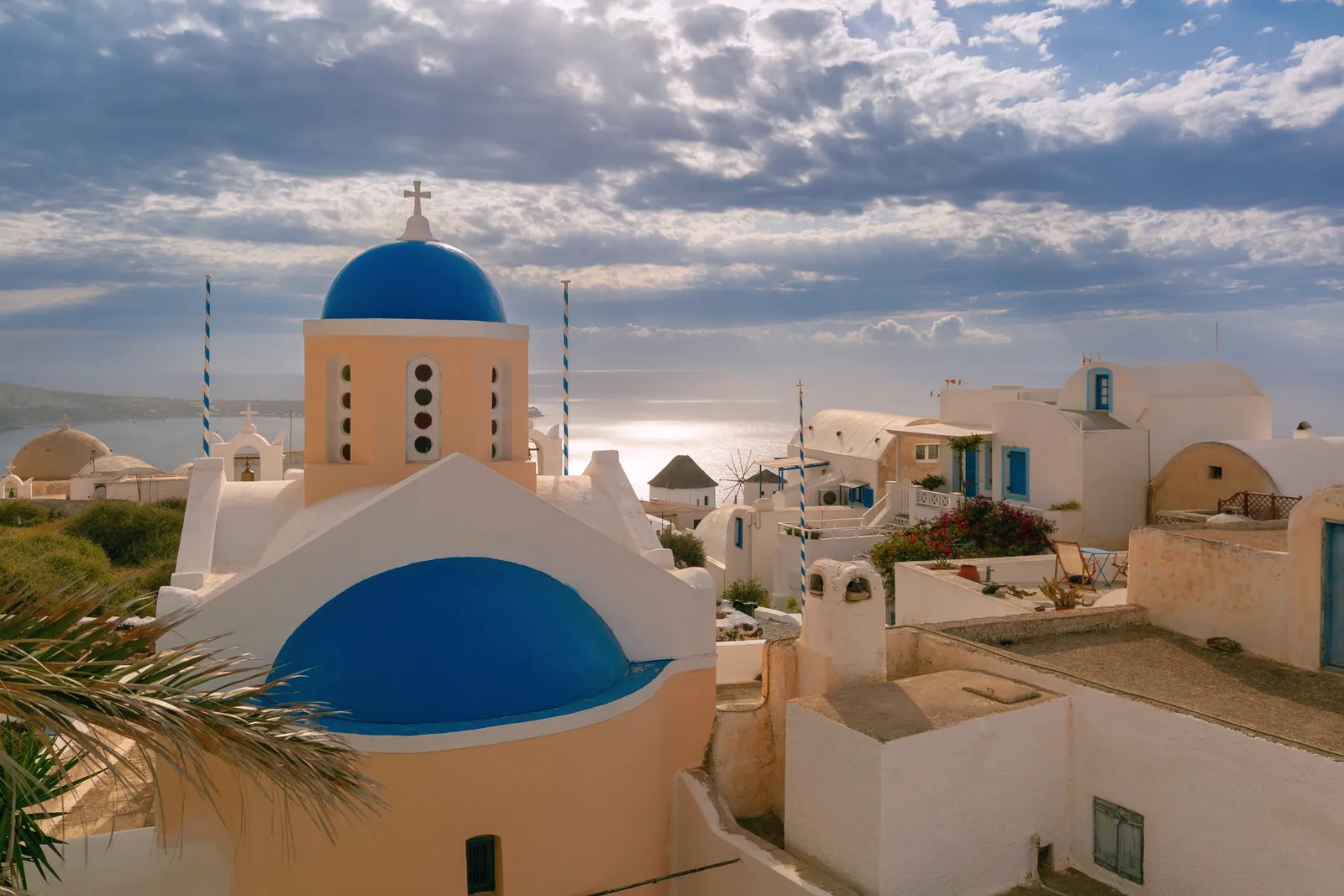
Short answer: the best time to visit Greece is late May, June, September and early October. You get long sunny days, a sea warm enough to swim in, full ferry timetables and fewer crowds and lower prices than in July and August. Midsummer is hottest and busiest, with the windy meltemi in the Aegean, while April and late October suit Athens, the mainland and Crete better than the small islands.
This page explains Greek weather month by month on the mainland and the islands, when ferries, hotels and sites change their seasons, the festivals and holidays to plan around, and the best time for each island group, as of October 2026. For ferries, entry rules, fees and costs, see our Greece travel guide, and plan your days with our AI trip planner.
Best time to visit Greece at a glance
| Goal | Best months | Why |
|---|---|---|
| Best all-round weather | Late May, June, September, early October | Warm and sunny but not at the summer peak; warm sea from about mid-June |
| Island hopping | June and September | Full summer ferry timetables, fewer crowds than July and August |
| Beaches and swimming | July to September | The sea is warmest in August and September |
| Lowest prices | November to March (Athens, Thessaloniki, Crete) | Quiet and good value; most small-island hotels close |
| Fewest crowds with good weather | May, late September, October | Shoulder season: warm enough for sightseeing, with lower hotel rates than in July and August |
| Athens and ancient sites | April to June, September to October | Comfortable sightseeing temperatures; avoid midday heat in summer |
| Hiking (Crete, Meteora, Peloponnese) | April to June, September to October | Wildflowers in spring, cooler weather and open trails; Samaria Gorge opens in spring |
| Easter | 2 May 2027 | Greece’s biggest celebration, with candlelit processions and lamb roasts |
| Skiing | January to March | Mount Parnassus and the northern mountains |
Greece weather month by month
Weather month by month
The climate table shows average daily highs and lows and rain for each month from long-term climate normals for Greek weather stations. Greece has a Mediterranean climate: hot, dry summers and mild, wetter winters, with real cold and snow in the northern mountains. Athens averages about 34 °C (93 °F) on July and August afternoons and 13–14 °C (55–57 °F) in winter; the Cyclades are a few degrees cooler in summer thanks to the wind, and Crete and Rhodes are the mildest in winter. Rain falls mostly from November to March, and in July and August it hardly rains at all on the islands. The west coast and Corfu are the wettest and greenest parts of the country. Recent summers have often been hotter than these averages.
Greece month by month
January
Mild and often sunny in Athens (about 13 °C / 56 °F), cold in Thessaloniki and the north, with snow in the mountains and ski resorts open on Mount Parnassus. Most small-island hotels are closed and ferries run reduced winter timetables. On 6 January, the Epiphany blessing of the waters sees swimmers dive for a cross in harbors across the country. A good, cheap month for Athens museums and Thessaloniki‘s food scene.
February
The wettest, greyest stretch of winter, but almond blossom starts in the south. Carnival (Apokries) builds through the three weeks before Lent, biggest in Patras. Prices are at their lowest.
March
Spring begins, with highs of about 17 °C (63 °F) in Athens and wildflowers on Crete and the ancient sites. Clean Monday (15 March 2027) is a public holiday for kite-flying and picnics, and Independence Day on 25 March brings parades; state archaeological sites close that day. Too cool to swim.
April
Warm days of about 21 °C (70 °F) in Athens, green hills and flowering sites: one of the best months for the mainland, Crete and Rhodes. Island businesses start opening late in the month, and the sea is still cool. The Samaria Gorge can open from 10 April, depending on conditions.
May
A favorite month for walking and sightseeing, with highs of about 26 °C (79 °F) in Athens and 22–24 °C (72–75 °F) on the islands, and a sea that warms up by the end of the month. In 2027, Orthodox Easter falls on 2 May, and Labor Day on 1 May the day before: expect candlelit processions on Good Friday, the midnight service and fireworks on Saturday, lamb roasts on Sunday, busy ferries and short opening hours at sites and museums. Corfu‘s Easter is especially famous.
June
Early summer: warm (about 32 °C / 89 °F in Athens, 26 °C / 79 °F on Naxos), dry, with the sea warm enough for most swimmers from mid-month and the full summer ferry timetable running. The Athens Epidaurus Festival opens in the ancient theaters, and Whit Monday (21 June 2027) is a public holiday. One of the best months for island hopping.
July
Hot, dry and busy. Athens averages 34 °C (93 °F), with heatwaves of 40 °C (104 °F) or more in most recent summers, when the Acropolis and other open-air sites close at midday. The meltemi blows across the Aegean, keeping the Santorini and Mykonos heat bearable but making ferries rough and some boat trips cancel. Peak season prices start.
August
The busiest month, especially around 15 August, the Dormition of the Virgin Mary, when Greeks head to the islands and their home villages and ferries and rooms are full; book well ahead. The sea is at its warmest, and village festivals (panigyria) fill summer nights. Wildfire risk is high, and forests and gorges can close on very high-risk days.
September
Many regulars’ favorite month: still summery (about 30 °C / 86 °F in Athens, 25 °C / 77 °F on Naxos), with the warmest sea of the year, calmer winds and crowds thinning after the first week. Ferries keep their summer timetables for most of the month. Great for beaches on Milos, Paros and Zakynthos.
October
Warm and often sunny early in the month (about 24 °C / 75 °F in Athens), with the sea still around swimming temperature, but the first autumn storms arrive, especially in the west and on Crete. Island hotels and ferries start winding down from mid-month. Ochi Day on 28 October brings parades. Good for Meteora, Nafplio and walking.
November
Rain returns and most small-island tourism shuts down, while Athens, Thessaloniki and Crete stay lively and cheap. The Thessaloniki International Film Festival takes place this month. Highs of about 19 °C (66 °F) in Athens.
December
Mild and wet in the south, cold in the north. Cities light up for Christmas, and 25 and 26 December are public holidays, when state archaeological sites close. Ski resorts open in the mountains. A quiet, good-value time for city breaks.
Best time to visit by region
Athens and the mainland
April to June and September to October. Summer is very hot: visit the Acropolis at opening time, around 8:00, and rest at midday. Winter is mild and quiet. See our guides to Athens, the Acropolis, Nafplio and Meteora, where spring brings the best hiking.
Thessaloniki and Halkidiki
May to June and September to October for the city; July and August for the beaches of Halkidiki, which are mostly seasonal. Winters are colder than in the south. See our Thessaloniki guide.
The Cyclades
Late May, June, September and early October. July and August are windy, crowded and expensive, and from November to March many hotels and restaurants close and ferries are few. See Santorini, Mykonos, Naxos, Paros and Milos.
Crete
The longest season of the Greek islands: May to June and September to October are ideal, spring is best for hiking the gorges and summer brings the meltemi to the north coast. Chania and Heraklion stay open all year. See Crete, Chania and the Samaria Gorge.
The Dodecanese
May to June and September to October, with a long warm season on Rhodes and Kos. Rhodes Town stays open all year.
The Ionian islands
May, June and September. The Ionian is greener and wetter than the Aegean, with less wind in summer; October brings the first heavy rains. See Corfu, Kefalonia, Zakynthos and Lefkada.
The Saronic and Sporades
Hydra is lovely from April to June and in September and October, and stays open in winter; summer weekends are busy with day-trippers and Athenians. Skiathos is a summer island, best in June and September.
Best time for beaches, island hopping, hiking and diving
Beaches and swimming
Mid-June to early October, with the warmest sea in August and September. On meltemi days, choose south-facing beaches. See our beaches guide.
Island hopping and boat trips
June and September, when the full summer ferry timetable runs but boats and rooms are easier to book than in July and August. See our boat trips guide.
Hiking
April to early June and late September to October, when it is cool enough to walk and the countryside is green. Never hike in the midday heat in summer. See our hiking guide.
Diving, snorkeling and sailing
June to October, when the water is warm and clear; in July and August, the meltemi suits sailors and windsurfers but can make the sea rough. See our snorkeling and diving guides.
Seasons to plan around
Heatwaves: heatwaves of 40 °C (104 °F) or more now hit Athens and the mainland most summers. On the worst days, the Ministry of Culture closes the Acropolis and other open-air sites in the middle of the day, typically 12:00 to 17:00, so plan sightseeing for early morning and evening.
Wildfire season (about June to September): the Ministry of Climate Crisis and Civil Protection publishes a daily fire-risk map. On very high-risk days, forests, gorges and parks can close and all outdoor fires are banned. Follow 112 alerts.
The meltemi (mostly July and August): a strong north wind over the Aegean that can cancel small high-speed boats and day cruises. Keep a spare day before international flights.
Winter timetables (November to March): many islands have only a few sailings a week, smaller islands may be linked only via Piraeus, and many island hotels and tavernas close.
Holidays and closures: Easter week and 15 August fill ferries and hotels. State archaeological sites and museums close on 1 January, 25 March, Easter Sunday, 1 May and 25–26 December and open short hours on Good Friday and Holy Saturday. Accommodation charges the climate resilience fee per night at higher rates from April to October than from November to March.
How long to stay
A week covers Athens and two islands; ten days lets you add Crete, Nafplio or Meteora; two weeks gives time for a mainland road trip and slow island days. In the shoulder seasons, check that ferries between your chosen islands are running. Our Greece travel guide has sample 5-, 7-, 10- and 14-day itineraries.
Best time to visit Greece: FAQ
What is the best month to visit Greece?
September: warm sea, sunny days, summer ferry timetables and fewer crowds after the first week. June is a close second.
What is the cheapest time to go to Greece?
November to March, when Athens, Thessaloniki and Crete are quiet and good value. Most small islands close, so plan a city or mainland trip.
What is the rainiest month in Greece?
Usually December or January, with most rain from November to March. Corfu and the west coast are the wettest; the Cyclades get very little rain.
Is October a good time to visit Greece?
Yes, especially early October: warm days, a sea still warm enough to swim and few crowds. From mid-month, island hotels and ferries start closing, and the first storms can arrive.
Is August too hot for Greece?
It can be. Athens averages 34 °C (93 °F) and heatwaves go higher, ferries and islands are at their busiest around 15 August, and the meltemi blows in the Aegean. Islands are more comfortable than the mainland.
When is Greek Easter in 2027?
Sunday 2 May 2027, five weeks after Western Easter. Book ferries and hotels early, and expect short opening hours at sites and museums on Good Friday and Holy Saturday.
Sources · last reviewed 4 Oct 2026
Researched and last reviewed by TravelerCenter on 8 October 2026. Monthly temperatures come from long-term station normals relayed from the National Observatory of Athens, the Hellenic National Meteorological Service and the Aristotle University of Thessaloniki, and are flagged for checking against the original tables. Site closures, holiday opening hours and heat closures come from the Ministry of Culture; the Samaria Gorge season from NECCA; the climate resilience fee from the Independent Authority for Public Revenue; wildfire rules from the Ministry of Climate Crisis and Civil Protection. Easter and holiday dates are calculated from the Orthodox calendar. Ferry timetable seasons, the meltemi, festival months and crowd patterns are general guidance. Check ferries and event dates before you travel.
Also: HNMS normals 1991–2020, Athens Ellinikon (rain: 1955–2010 averages) (climate)
Data: Natural Earth (PUBLIC DOMAIN) · © OpenStreetMap contributors (ODBL) · Wikidata (CC0)