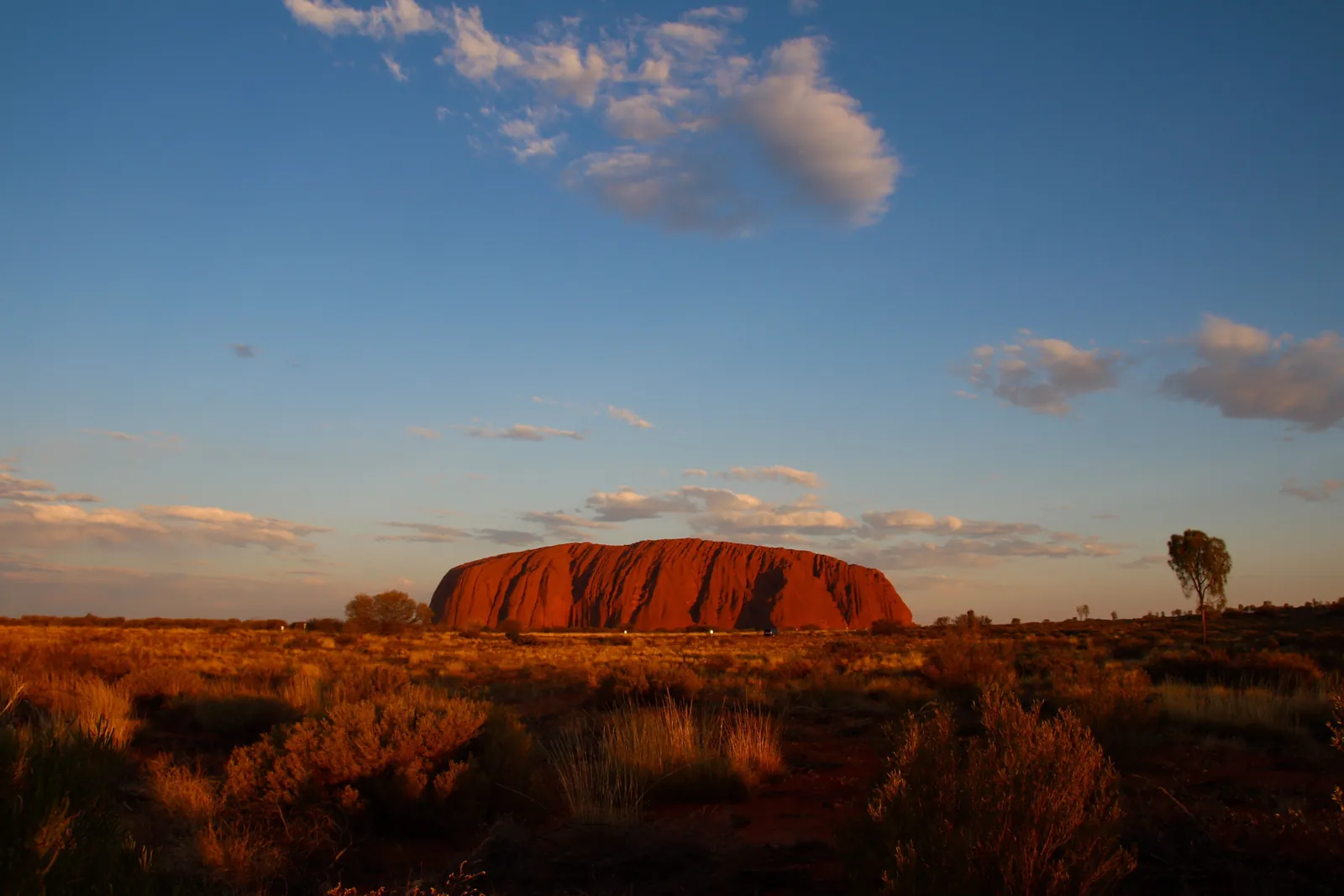
Short answer: with 7 days in Australia, spend three nights in Sydney, with a Blue Mountains day trip, and fly about three hours north to Cairns for three nights on the Great Barrier Reef. With 10 days, add two nights at Uluṟu, which has direct flights from both Cairns and Sydney. With 14 days, either do the classic loop of Melbourne and the Great Ocean Road, Uluṟu, the reef and Sydney (best May to October), or, in the southern summer, pair Sydney and Melbourne with Tasmania. Australia is as big as the mainland United States, so plan on domestic flights between regions, not long drives.
This guide turns the sample trips on our Australia travel guide into day-by-day plans, with flight and train times between stops and the best area to sleep each night. Check our best time to visit Australia guide before you choose a route, because the tropical north and the south have opposite best seasons, and see our top places to visit in Australia for more ideas. For a plan built around your dates and interests, use our AI trip planner. Everything was checked as of October 2026.
The three routes at a glance
| Route | Days | Stops (nights) | Best for |
|---|---|---|---|
| Sydney and the reef | 7 | Sydney 3, Cairns or Port Douglas 3 | First trip, city plus reef, May to November |
| Sydney, the reef and Uluṟu | 10 | Sydney 4, Cairns 3, Uluṟu 2 | The three icons, May to October |
| The classic loop | 14 | Melbourne 3, Great Ocean Road 1, Uluṟu 2, Cairns or Port Douglas 4, Sydney 3 | Seeing the whole country’s range, May to October |
| Sydney, Melbourne and Tasmania | 14 | Sydney 4, Melbourne 3, Great Ocean Road 1, Hobart 3, Cradle Mountain 2 | Southern summer, December to March, hikers and food lovers |
From the United States, most flights land in Sydney, Melbourne or Brisbane. Book an “open-jaw” ticket if you can, into one city and out of another, so you never fly back the way you came. Domestic flights with Qantas, Virgin Australia and Jetstar link all the stops below; book early for school holidays.
Travel times between the main stops
These are the legs used in the plans below. Times marked “official” come from the park authority or the operator; the rest are typical scheduled times and labeled approximate. Remember the time zones: Queensland and the Northern Territory don’t use daylight saving, so from October to early April Sydney and Melbourne are an hour ahead of Cairns and an hour and a half ahead of Uluṟu.
| Leg | How | Time | Source |
|---|---|---|---|
| Sydney Airport – Central | T8 Airport & South Line train | about 15 min | Transport for NSW (official) |
| Sydney (Central) – Katoomba | Blue Mountains Line train | about 2 h | Approximate (timetables vary) |
| Sydney – Cairns | Direct flight | about 3 h | Approximate |
| Sydney – Ayers Rock (Uluṟu) | Direct flight | about 3 h | Parks Australia (official) |
| Melbourne – Ayers Rock | Direct flight | about 2 h 40 | Parks Australia (official) |
| Cairns – Ayers Rock | Direct flight | about 2 h 50 | Parks Australia; Qantas |
| Cairns – Melbourne or Sydney | Direct flight | about 3 h (approximate) | Flight schedules |
| Melbourne – Hobart | Direct flight | about 1 h 15 (approximate) | Flight schedules |
| Cairns – Kuranda | Kuranda Scenic Railway | about 1 h 55 (08:30 → 10:25) | Kuranda Scenic Railway timetable (official) |
| Cairns – outer reef | Fast catamaran | about 1.5–2 h | Approximate (varies by operator) |
| Cairns – Port Douglas | Drive or shuttle | about 1 h (approximate) | Our Cairns guide |
| Melbourne – Twelve Apostles | Drive along the coast | about 4–4.5 h without stops (approximate) | Our Great Ocean Road guide |
| Twelve Apostles – Melbourne | Drive, inland via Colac | about 3 h (approximate) | Our Great Ocean Road guide |
| Ayers Rock Resort – Uluṟu / Kata Tjuṯa | Drive | about 20 min / 45 min | Parks Australia (official) |
| Hobart – Cradle Mountain | Drive | about 4.5 h (approximate) | Our Cradle Mountain guide |
| Hobart – MONA | MONA ferry from Brooke Street Pier | about 30 min | MONA (official) |
The Ayers Rock Airport is about 10 minutes from Ayers Rock Resort, and a free resort shuttle meets flights. There are no taxis or public transport inside the national park, so at Uluṟu you need a rental car (book weeks ahead, as numbers are limited), a tour or a hop-on, hop-off bus pass.
7 days: Sydney, the Blue Mountains and the Great Barrier Reef
The classic first week: one great city and one great natural wonder. Go between May and November for the reef, when the north is in its dry season, outside the main stinger months (about November to May). From September to November Sydney is warm too.
- Day 1, Sydney: Arrive and take the T8 train to Circular Quay. Walk around the Opera House to the Royal Botanic Garden and Mrs Macquarie’s Chair for the classic view of the harbor. Sleep: The Rocks, Circular Quay or the CBD.
- Day 2, the harbor: The Rocks in the morning, a walk across the Harbour Bridge, then the ferry to Manly (about 30 minutes) for the beach and the path to Shelly Beach. Sleep: same.
- Day 3, Blue Mountains: An early train from Central to Katoomba (about 2 hours), then walk or bus to Echo Point for the Three Sisters, and a section of the cliff-top walks toward Leura. Back to Sydney for dinner. Sleep: same.
- Day 4, Bondi and fly north: The Bondi to Coogee coastal walk (about 6 km) in the morning, then an afternoon flight to Cairns (about 3 hours). Sleep: Cairns Esplanade.
- Day 5, the outer reef: A full-day trip on a fast catamaran to an outer-reef pontoon or a smaller snorkel and dive boat (about 1.5–2 hours each way). Your operator collects the Reef Authority’s environmental management charge, $8.50 per person for a full day. Sleep: same.
- Day 6, Kuranda or the Daintree: The Kuranda Scenic Railway (08:30 from Cairns, arriving 10:25) to the rainforest village, or a drive north to Port Douglas, Mossman Gorge and the Daintree. Sleep: Cairns or Port Douglas.
- Day 7, home: A swim in the free Esplanade lagoon, then a 15-minute taxi to Cairns Airport and a flight via Sydney or Brisbane.
Swap it: from mid-December to March, when the north is hot, humid and wet, keep Sydney and swap Cairns for Melbourne and a Great Ocean Road overnight. From 19 August to 1 November 2026, the Skyrail cableway runs only between Kuranda and Barron Falls, Wednesday to Sunday, during upgrade works. More detail is in our Sydney, Blue Mountains, Cairns and Great Barrier Reef guides.
10 days: Sydney, the reef and Uluṟu
This is the route on our Australia guide: three icons, linked by two flights. It is best from May to October, when the Red Centre has days of about 20–24 °C (69–75 °F) and the reef is in its dry season. In midsummer, Uluṟu often passes 40 °C (104 °F) and walks close early in the day.
- Days 1–4, Sydney and the Blue Mountains: As in the 7-day plan: the harbor, Manly, Bondi to Coogee and a Blue Mountains day. Add Taronga Zoo by ferry (about 12 minutes from Circular Quay) for koalas and kangaroos. Sleep: The Rocks, Circular Quay or the CBD (4 nights).
- Day 5, to Cairns: Morning flight north (about 3 hours). Evening on the Esplanade. Sleep: Cairns (3 nights).
- Day 6, the outer reef: A full day on the reef.
- Day 7, rainforest: The Kuranda Scenic Railway, or a day trip to Mossman Gorge, the Daintree River and Cape Tribulation (about 2.5 hours each way, including the Daintree River cable ferry).
- Day 8, to Uluṟu: Direct flight from Cairns to Ayers Rock (about 2 hours 50 minutes; check the days it runs). Buy the 3-day park pass ($38 per adult, under-18s free), then watch sunset at the sunset viewing area. Sleep: Ayers Rock Resort, Yulara (2 nights).
- Day 9, Uluṟu and Kata Tjuṯa: Sunrise at Talinguṟu Nyakunytjaku, the base walk around Uluṟu (start early), the Cultural Centre, and the Walpa Gorge or Valley of the Winds walk at Kata Tjuṯa. The climb closed permanently in 2019.
- Day 10, home: Fly to Sydney (about 3 hours) or Melbourne for your international flight.
Swap it: with a day more, add Kings Canyon and drive the Red Centre Way to Alice Springs (Uluṟu to Alice Springs is 465 km, about 5.5 hours). Prefer the beach to the desert? Spend those two nights in Port Douglas instead and go to the Agincourt Reefs on the outer edge of the reef. See our Uluṟu-Kata Tjuṯa National Park and Port Douglas guides.
14 days: Melbourne, the Great Ocean Road, Uluṟu, the reef and Sydney
The classic two-week loop, flying south to north and finishing in Sydney. It works best from May to October; in May and September to October, Melbourne and the Great Ocean Road are mild too. Fly into Melbourne and home from Sydney.
- Day 1, Melbourne: SkyBus into the city (about 30 minutes). Explore the laneways, Federation Square and the riverside; trams are free in the Free Tram Zone. Sleep: Melbourne CBD (2 nights).
- Day 2, Melbourne: Queen Victoria Market, the Royal Botanic Gardens, and dinner in Fitzroy or Carlton.
- Day 3, Great Ocean Road: Pick up a hire car and drive via Torquay (about 1.5 hours) and Bells Beach to Lorne and Apollo Bay; look for koalas at Kennett River. Sleep: Apollo Bay or Port Campbell (1 night).
- Day 4, the Twelve Apostles: The Apostles and Loch Ard Gorge early, before the day tours arrive, then back to Melbourne on the faster inland road (about 3 hours). Sleep: near Melbourne Airport or in the city (1 night).
- Day 5, to Uluṟu: Direct flight from Melbourne (about 2 hours 40 minutes). Sunset at Uluṟu. Sleep: Ayers Rock Resort (2 nights).
- Day 6, Uluṟu and Kata Tjuṯa: Sunrise, the base walk and the Cultural Centre; Kata Tjuṯa in the afternoon.
- Day 7, to Cairns: Direct flight to Cairns, under three hours (check the days it runs). Sleep: Cairns or Port Douglas (4 nights).
- Days 8–10, reef and rainforest: An outer-reef day, a day in the Daintree and at Mossman Gorge, and a free day for Kuranda, Green Island (about 45 minutes by boat) or Palm Cove.
- Day 11, to Sydney: Flight south (about 3 hours). Sleep: The Rocks, Circular Quay or the CBD (3 nights).
- Days 12–13, Sydney and the Blue Mountains: The harbor and Manly one day, the Blue Mountains the next.
- Day 14, home: The Bondi to Coogee walk if your flight is late, then the train to the airport.
Don’t fly within the recommended interval after diving on the reef, usually at least 18 to 24 hours. Details for each stop: Melbourne, Great Ocean Road.
14 days: Sydney, Melbourne and Tasmania
From December to March, the north is in its wet season and stinger season, but the south is at its best: long, mild days in Tasmania, warm beaches in Sydney and summer festivals in Melbourne. This route stays in the south. Book early, because Christmas and January are Australia’s summer school holidays.
- Days 1–4, Sydney: The harbor, Manly, Bondi to Coogee and the Blue Mountains, as above. Swim only between the red and yellow flags. Sleep: The Rocks, Circular Quay or the CBD (4 nights).
- Day 5, to Melbourne: A short flight south. Laneways and a rooftop bar. Sleep: Melbourne CBD (2 nights).
- Day 6, Melbourne: Markets, galleries and a day at St Kilda, or a trip to the Yarra Valley wineries (about 1 hour).
- Days 7–8, Great Ocean Road: Drive the coast with a night in Apollo Bay or Port Campbell, then return to Melbourne inland. Sleep: Apollo Bay or Port Campbell (1 night), then a night near Melbourne Airport.
- Day 9, to Hobart: Flight to Hobart (about 1 hour 15 minutes). Battery Point and the waterfront. Sleep: Hobart waterfront or Battery Point (3 nights).
- Day 10, Hobart: Salamanca Market (Saturdays), then the MONA ferry from Brooke Street Pier (about 30 minutes; MONA opens Thursday to Monday, timed entry).
- Day 11, Port Arthur or Bruny Island: Drive to the Port Arthur convict site (about 1.5 hours) or take the ferry from Kettering to Bruny Island.
- Day 12, to Cradle Mountain: Drive north (about 4.5 hours), with a stop at Lake St Clair, Australia’s deepest lake. You need a Tasmanian Parks Pass. Sleep: near the Cradle Mountain visitor center (2 nights).
- Day 13, Dove Lake: The shuttle to Dove Lake and the lake circuit (6 km, 2–3 hours), or the Crater Lake walk; climbing Cradle Mountain itself is a full, hard day.
- Day 14, home: Drive to Launceston (about 2–2.5 hours) or Devonport (about 1 hour 15 minutes) and fly to Melbourne or Sydney.
Tasmanian weather changes fast, with snow possible on the mountains even in summer, so pack layers. See our Hobart and Cradle Mountain-Lake St Clair National Park guides.
Where to sleep, by stop
| Stop | Best area for a short stay | Why |
|---|---|---|
| Sydney | The Rocks, Circular Quay or the CBD | Walk to the Opera House, ferries from Circular Quay, trains to the airport and Katoomba |
| Blue Mountains (overnight) | Katoomba or Leura | Near the station and the cliff-top walks |
| Cairns | The Esplanade and city center | Walk to the reef fleet terminal and the lagoon |
| Port Douglas | Near Macrossan Street and Four Mile Beach | Reef boats from the marina, closer to the Daintree |
| Uluṟu | Ayers Rock Resort (Yulara) | The only place to stay near the park; free shuttle around the resort |
| Melbourne | CBD, inside the Free Tram Zone | Free trams, SkyBus to the airport |
| Great Ocean Road | Apollo Bay or Port Campbell | Halfway point, or close to the Twelve Apostles at dawn |
| Hobart | The waterfront, Salamanca or Battery Point | Walk to the market, restaurants and the MONA ferry |
| Cradle Mountain | Near the park visitor center | The Dove Lake shuttle starts here |
Australian hotel rates include 10% GST. Prices jump over Christmas, January, Easter and the school holidays in late September and early October.
Alternatives by interest
Beach lovers
Swap Cairns for the Whitsunday Islands, with Whitehaven Beach, Hill Inlet and reef trips from Airlie Beach or Hamilton Island, which has direct flights from Sydney, Melbourne, Brisbane and Cairns. In the southern summer, add the Gold Coast and Byron Bay, or fly to Perth for city beaches and Rottnest Island. In the tropics, wear a stinger suit from about November to May.
Hikers
Stay a night or two in the Blue Mountains instead of a day trip, and walk the Grand Cliff Top Walk from Wentworth Falls to Katoomba. Add Kings Canyon to Uluṟu between May and September. In summer, Tasmania is the place: Cradle Mountain, Freycinet and, for experienced walkers, the Overland Track (booked, with a fee from October to May).
Food and wine lovers
Give Melbourne three or four nights and add the Yarra Valley. Fly to Adelaide for the Barossa and McLaren Vale, each within about an hour, or to Perth for Margaret River, about three hours south. Hobart’s waterfront and Bruny Island’s oysters and cheese round off a Tasmanian week. Book a tour or a driver for tasting days: drink-driving limits are strict and random breath tests are common.
Wildlife and the outback
Between May and September, fly to Darwin for Kakadu National Park, about three hours’ drive away, for rock art, billabongs and crocodiles; check Parks Australia’s access report, as some roads are 4WD only. On the east coast, K’gari has dingoes and rainforest on sand, and humpback whales pass from about June to November.
Families
Use fewer bases: Sydney (with Taronga Zoo and the Manly ferry) and one beach base such as the Gold Coast, near Brisbane, where all Translink public transport costs a flat 50 cents. For the reef, a big pontoon trip from Cairns or a day on Green Island is easier with children than a small dive boat.
Tips for planning your route
- Pick your season by region. The north (Cairns, the reef, Uluṟu, Darwin) is best from May to October; the south (Sydney, Melbourne, Tasmania) from September to May. September to November and April to May suit routes that combine both.
- Fly, don’t drive, between regions. Sydney to Cairns is about three hours by air and well over 2,000 km by road. Keep driving for the Great Ocean Road, Tasmania and the Red Centre.
- Check the flight days to Uluṟu. Direct flights from Cairns don’t run every day; plan the route around them.
- Apply for your ETA. US citizens apply in the Australian ETA app (service charge AUD20) before flying; declare all food on arrival under Australia’s strict biosecurity rules.
- Drive on the left. You can usually drive on a valid US license for up to three months. In the outback, avoid driving at dawn, dusk and night because of animals on the road, and check your rental agreement for unsealed roads.
- Mind the clocks. Daylight saving runs from 4 October 2026 to 4 April 2027 in New South Wales, Victoria, the ACT, Tasmania and South Australia, but not in Queensland, the Northern Territory or Western Australia.
Australia itinerary FAQ
Is 7 days enough for Australia?
It is enough for two regions: Sydney with the Blue Mountains, and Cairns with the Great Barrier Reef, joined by a flight of about three hours. Adding Uluṟu or Melbourne needs 10 days or more.
How many days do you need in Australia for a first trip?
Two weeks lets you see Sydney, the reef, Uluṟu and Melbourne or the Great Ocean Road without rushing. Three weeks adds Tasmania, the Whitsundays or Perth.
Should I start in Sydney or Melbourne?
Start wherever your international flight is cheapest, then plan the route so you don’t backtrack. On a two-week loop, flying into Melbourne and home from Sydney (or the reverse) saves a domestic flight.
Is Uluṟu worth it on a short trip?
Yes, with two nights: one sunset, one sunrise, the base walk and Kata Tjuṯa. Direct flights from Sydney (about 3 hours), Melbourne (about 2 hours 40 minutes), Brisbane and Cairns make it possible. Avoid midsummer, when temperatures often pass 40 °C (104 °F).
Cairns or the Whitsundays for the Great Barrier Reef?
Cairns and Port Douglas have the most reef trips, with the outer reef within about two hours, plus the rainforest next door. The Whitsundays combine the reef with islands, sailing and Whitehaven Beach. Both are best from May to October.
Do I need a car in Australia?
Not in Sydney, Melbourne or Cairns, where trains, trams, buses and tours cover the sights. You do need one, or a tour, for the Great Ocean Road, Tasmania and Uluṟu, where there is no public transport in the park.
Can I visit Australia in December?
Yes, for the south: Sydney’s beaches, Melbourne and Tasmania are at their summer best, though busy and pricey over Christmas and New Year. The tropical north is hot and wet, with stingers in the sea, so choose the southern route.
Sources
Researched and last reviewed by TravelerCenter on 8 October 2026. Flight times to Ayers Rock, park passes, drive times in the park and the climb closure come from Parks Australia; the Cairns–Ayers Rock flight time is also from Qantas; the Kuranda Scenic Railway timetable and Skyrail works from the operators; Sydney airport train times from Transport for NSW; the reef charge from the Great Barrier Reef Marine Park Authority; MONA ferry and opening days from MONA; Cradle Mountain shuttle and Overland Track rules from Tasmania Parks and Wildlife Service; the ETA from the Department of Home Affairs; daylight saving dates from the NSW Government; seasons from our best-time guide, based on Bureau of Meteorology normals. Other flight times, the Blue Mountains train and drive times are typical figures and approximate. Schedules and rules change, so check with the airline or operator before you travel.
Data: Wikidata (CC0)