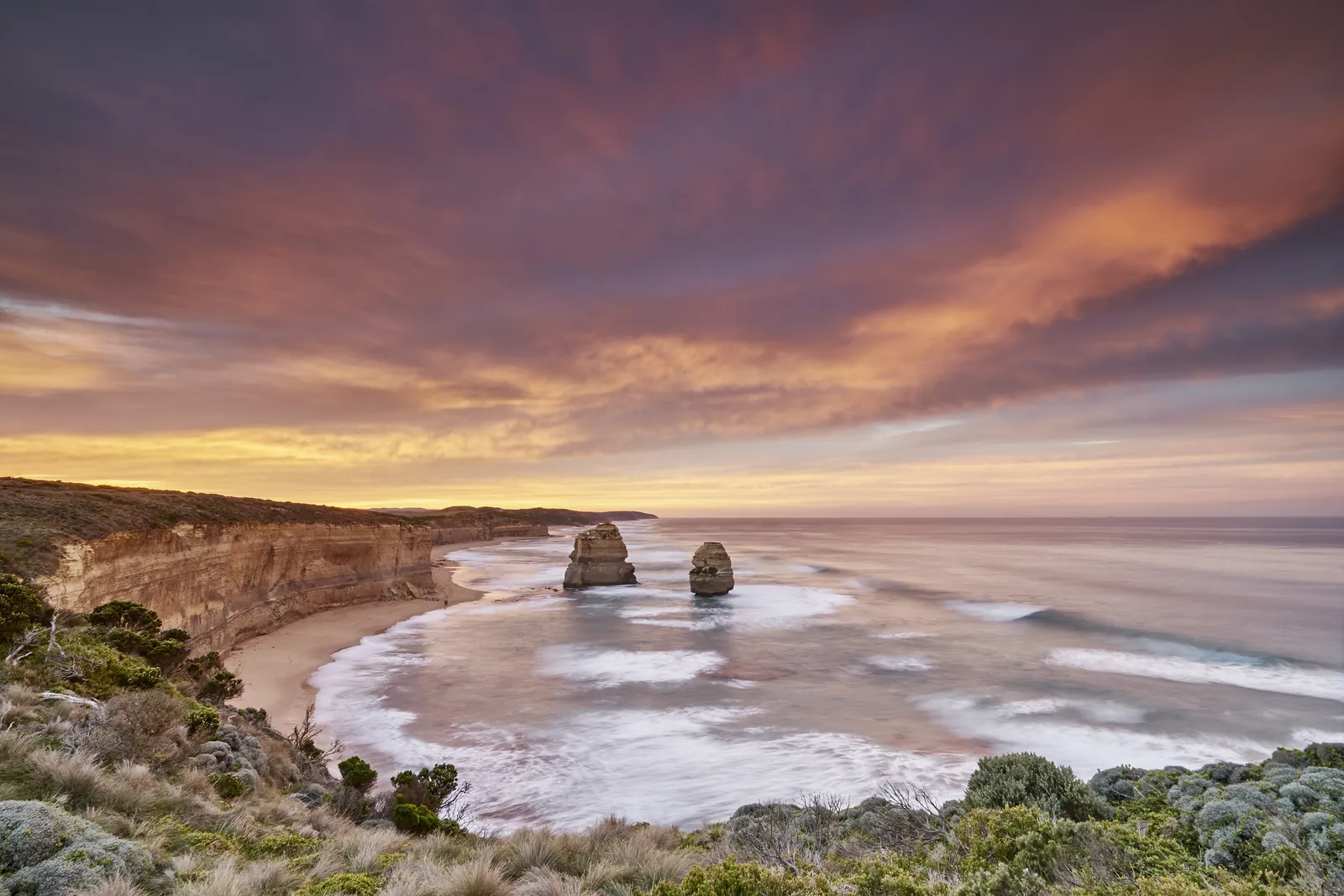
Short answer: the best time to visit Australia is spring (September to November) or autumn (March to May), when Sydney, Melbourne and the south are warm but not hot, and the tropical north and Uluṟu are dry. For the Great Barrier Reef, Cairns, Darwin and the Red Centre, May to October is best. December to February is peak beach season in the south, but also the hottest, busiest and most expensive time, and the wet season in the north.
Australia is the size of the mainland United States, with deserts, tropics and cool temperate islands, so the best time depends on where you go. This guide covers the weather, crowds and events in every month as of October 2026, region by region, with the best seasons for the reef, wildlife, hiking and skiing. For entry, costs and getting around, see our Australia travel guide, and plan your days with our AI trip planner.
Best time to visit Australia at a glance
| Goal | Best months | Why |
|---|---|---|
| One trip covering south and north | September to November, or April to May | Mild in the south, dry in the north and the Red Centre |
| Sydney, Melbourne and city breaks | March to May and September to November | Warm, settled days without summer heat waves |
| Great Barrier Reef, Cairns and the Whitsundays | May to October; often calmest September to November | Dry season, lower humidity and no stinger peak |
| Uluṟu and the Red Centre | May to September | Days of about 20–24 °C (69–75 °F); summer often passes 40 °C (104 °F) |
| Darwin and Kakadu | May to September | Dry season, when park roads and swimming holes open |
| Southern beaches | December to March | Summer heat and the warmest sea |
| Fewest crowds and lower prices | May, June and August in the south; the wet season in the north | Outside summer and school holidays |
| Whale watching | About June to November | Humpbacks migrate along the east and west coasts |
| Wildflowers | August to November | Western Australia’s wildflower season |
| Skiing | June to early October | The New South Wales and Victorian Alps |
| Tasmania | December to March | Long, mild days; autumn colors in late April |
Australia weather month by month
Weather month by month
The climate table above shows average highs, lows and rain by month for Sydney (Observatory Hill), from the 1991–2020 climate normals that the Bureau of Meteorology (BoM) submitted to the World Meteorological Organization. The summary below gives average daily highs, from the BoM’s 1991–2020 climate statistics for one station per destination, the same figures as in our country guide: Sydney (Observatory Hill), Melbourne Airport, Cairns Aero, Darwin Airport, Yulara Airport for Uluṟu, Perth Airport and Hobart (Ellerslie Road). Remember that Australia’s seasons are the reverse of North America’s and Europe’s: summer is December to February and winter June to August. The north’s rain falls almost entirely between November and April, while Perth and Adelaide get most of theirs in winter.
| Average high, °C (°F) | Sydney | Melbourne | Cairns | Darwin | Uluṟu | Perth | Hobart |
|---|---|---|---|---|---|---|---|
| Jan | 27 (81) | 27 (81) | 32 (89) | 32 (90) | 38 (101) | 32 (90) | 23 (73) |
| Feb | 28 (82) | 27 (80) | 32 (89) | 32 (89) | 37 (99) | 32 (90) | 22 (72) |
| Mar | 26 (80) | 24 (76) | 31 (88) | 32 (90) | 34 (94) | 30 (86) | 21 (69) |
| Apr | 24 (75) | 21 (69) | 30 (85) | 33 (91) | 30 (86) | 26 (80) | 18 (64) |
| May | 22 (71) | 17 (62) | 28 (82) | 32 (90) | 24 (76) | 22 (72) | 15 (60) |
| Jun | 18 (65) | 14 (57) | 27 (80) | 31 (88) | 20 (69) | 20 (67) | 13 (55) |
| Jul | 18 (65) | 13 (56) | 26 (79) | 31 (88) | 21 (69) | 18 (65) | 13 (55) |
| Aug | 20 (67) | 15 (58) | 27 (81) | 32 (89) | 24 (75) | 19 (66) | 14 (57) |
| Sep | 22 (71) | 17 (63) | 29 (84) | 33 (92) | 29 (84) | 21 (69) | 16 (60) |
| Oct | 24 (74) | 20 (68) | 30 (86) | 34 (93) | 32 (90) | 24 (75) | 18 (64) |
| Nov | 25 (77) | 23 (73) | 31 (88) | 34 (93) | 35 (95) | 27 (81) | 19 (67) |
| Dec | 27 (80) | 25 (77) | 32 (89) | 33 (91) | 36 (98) | 30 (86) | 21 (70) |
| Rain a year | 1,150 mm (45 in) | 516 mm (20 in) | 1,961 mm (77 in) | 1,832 mm (72 in) | 278 mm (11 in) | 699 mm (28 in) | 565 mm (22 in) |
Australia month by month
January
High summer in the south: Sydney averages about 27 °C (81 °F), Perth 32 °C (90 °F), and heat waves can push Melbourne and Adelaide above 40 °C (104 °F). It is the middle of the Australian school summer holidays (in New South Wales, 18 December 2026 to 27 January 2027), so beaches, the coast and Tasmania are full and prices high. The Australian Open runs at Melbourne Park from 11 to 31 January 2027, and Australia Day, 26 January, is a national holiday. In the north it is the wet season, with Darwin averaging about 470 mm (18.5 in) of rain.
February
Still hot and humid in the east, with the wettest weeks of the year in Cairns and on the Gold Coast, and cyclones possible in the tropics. Crowds thin once schools go back. The Adelaide Fringe opens on 19 February 2027, starting Adelaide’s “Mad March” festival season, and Hobart and Tasmania have their warmest, most settled weeks.
March
Autumn begins: the south cools to pleasant highs of about 24–26 °C (76–78 °F) in Sydney and Melbourne, and the sea is still warm. The Sydney Gay and Lesbian Mardi Gras parade is on 6 March 2027, the Adelaide Fringe runs to 21 March, and Easter falls early in 2027, with Good Friday on 26 March and Easter Monday on 29 March. Easter weekends are busy and prices rise.
April
One of the best months in the south, with settled, sunny weather and the vineyard harvest around Adelaide and Margaret River. The Formula 1 Australian Grand Prix runs at Albert Park in Melbourne from 1 to 4 April 2027, with the race on 4 April. Anzac Day, 25 April, is a national holiday with dawn services. In Tasmania, the deciduous beech turns gold in late April. New South Wales school holidays run from 12 to 23 April 2027.
May
The dry season begins in the north, the Red Centre cools to about 24 °C (76 °F), and the south has crisp, clear days. Humpback whales start moving north along the coasts. Prices are moderate outside long weekends.
June
Winter in the south: Sydney averages about 18 °C (65 °F) and is mostly sunny, Melbourne about 14 °C (57 °F) and gray. Vivid Sydney lights up the harbor from 28 May to 19 June 2027. The ski season usually opens in the New South Wales and Victorian Alps, and the north is in its peak season, with clear skies and low humidity.
July
Peak season in the tropical north, at Uluṟu and on the reef, when hotels and tours in Cairns and the Whitsundays fill early, especially during the July school holidays (5 to 16 July 2027 in New South Wales). Humpbacks calve in the Whitsundays from about July to September. In the south, cities are quieter and cheaper, apart from school holidays; nights at Uluṟu drop to around freezing.
August
Still dry and sunny in the north, with Darwin’s festival and Airlie Beach and Hamilton Island race weeks. Wildflower season starts in Western Australia. The south remains cool, and August is often good value. Ski resorts are in full swing.
September
Spring: warming days in Sydney (about 22 °C / 71 °F), wildflowers around Perth and in Kings Park, and the AFL and NRL grand finals at the end of the month. In the north it is still dry, but the build-up of heat and humidity begins in Darwin. Spring school holidays start in late September (27 September to 8 October 2027 in New South Wales).
October
A strong all-round month: warm in the south, the reef often calmest and clearest from September to November, and jacarandas starting to bloom in Sydney and Brisbane late in the month. Uluṟu is heating up, with highs around 32 °C (90 °F). In the Top End, the hot, humid build-up brings afternoon storms. The ski season usually ends in early October.
November
Late spring in the south, with long days and the start of beach season. The Melbourne Cup, on the first Tuesday of November (3 November 2026; 2 November 2027), is a public holiday in Victoria. In the tropics, the wet season and the marine stinger season begin, and turtles start nesting on the southern Great Barrier Reef.
December
Summer and the start of the long school holidays from mid-December. Christmas and New Year are the most expensive weeks on the coast, and Sydney’s New Year’s Eve fireworks fill the harbor foreshore by midday. The Sydney to Hobart Yacht Race starts on 26 December. In the north, it is hot and humid, with monsoon rains and cyclones possible.
Best time to visit by region
Sydney, the Blue Mountains and Byron Bay
March to May and September to November for warm, settled weather; December to February for the beach, with humid spells and storms. The ocean is warmest from January to April. See our guides to Sydney, the Blue Mountains (cool in winter, with occasional snow) and Byron Bay, where August to October is often the sunniest stretch.
Melbourne and the Great Ocean Road
Autumn (March to May) is often Melbourne’s most settled season; summer brings warm days with occasional hot northerlies, and winter is cool and gray. Drive the Great Ocean Road from December to April for the best weather, or in winter for stormy cliffs and whales. See our Melbourne guide.
Brisbane, the Gold Coast, the Sunshine Coast and K’gari
The subtropical southeast is pleasant all year. Winter (June to August) is dry and sunny at about 21–22 °C (70–72 °F); summer is hot and humid with afternoon storms, and February and March are the wettest months. See Brisbane, the Gold Coast, the Sunshine Coast and K’gari, best for driving and walking from June to October.
Cairns, Port Douglas and the Great Barrier Reef
May to October, the dry season, with the calmest seas often from September to November; June to August can be windy. The wet season, December to April, brings heavy rain, cyclone risk and stingers, but reef trips still run on most days and the rainforest waterfalls are at their best. See Cairns, Port Douglas and the Great Barrier Reef.
The Whitsunday Islands
August to October is often the sweet spot: dry, sunny and calmer, with whales until about September. The sea is warmest, about 28 °C (82 °F), from January to March. See our Whitsunday Islands guide.
Darwin and Kakadu
May to September, when skies are clear, humidity is low and Kakadu’s roads, walks and swimming holes open after rangers’ checks. From about November, monsoon rain floods the plains and closes unsealed roads, sometimes until May or June; check Parks Australia’s daily Kakadu Access Report. See Darwin and Kakadu National Park.
Uluṟu and the Red Centre
May to September, with sunny days around 20–24 °C (69–75 °F) and cold nights, often near freezing at dawn. Summer highs average 36–38 °C (97–101 °F), with flies and occasional storms that send waterfalls down the rock. See our Uluṟu-Kata Tjuṯa National Park guide.
Perth and Margaret River
Spring (September to November) for wildflowers and warm days, and autumn (March to May) for calm, warm weather and the harvest. Summer is hot and dry, about 30–32 °C (86–90 °F) in Perth; winter is mild and wet. See Perth and Margaret River.
Adelaide
March and April, for harvest in the wine regions and the tail of the festival season, or spring. Summer is hot and dry, with heat waves; winter is cool and damp. See our Adelaide guide.
Hobart, Cradle Mountain and Tasmania
December to March, for mild days around 21–23 °C (70–73 °F) and long evenings; late April for golden beech in the mountains. Winter brings snow on kunanyi/Mount Wellington and at Cradle Mountain, where weather can change from sun to snow in any season. See our Hobart guide.
Best time for snorkeling, whales, hiking and beaches
Snorkeling and diving the reef
May to October for dry weather, and September to November for the calmest, clearest water. Water ranges from about 23 °C (73 °F) in winter to about 29 °C (84 °F) in summer in the north. From November to May, wear a stinger suit. See our snorkeling and diving guides.
Whales, turtles and wildflowers
Humpback whales migrate along the east and west coasts from about May to November. Turtles nest on the southern Great Barrier Reef from about November to January, and hatchlings emerge from about January to March. Western Australia’s wildflowers bloom from about August to November.
Hiking
Spring and autumn in the south and Tasmania, and May to September in the north and the Red Centre, where summer heat makes long walks dangerous. See our hiking guide.
Beaches and surfing
December to March for swimming in the south; the subtropical Gold Coast and Sunshine Coast are good from September to May. See our beaches and surfing guides.
Skiing
The ski season in the New South Wales and Victorian Alps usually runs from June to early October, depending on the snow.
Seasons to plan around
The tropical wet season and cyclones
In the tropical north, the wet season runs from about November or December to April, with heat, humidity, monsoon rain and the risk of tropical cyclones from about November to April. Unsealed roads and some national park sites close, and tours can be canceled in bad weather. Storms usually build in the afternoon, so plan outdoor activities for the morning.
Marine stingers
Box jellyfish and Irukandji are most common in tropical Queensland and Northern Territory waters from about November to May. Swim in stinger nets at patrolled beaches and wear a stinger suit on reef trips.
Bushfire season
Bushfires are most likely in spring and summer in the south and in the dry season in the north. Check the fire danger rating and local alerts before driving or hiking in the bush.
School holidays and long weekends
Australian school holidays fill the coast, the reef and Tasmania. In New South Wales they run from 18 December 2026 to 27 January 2027, 12 to 23 April, 5 to 16 July and 27 September to 8 October 2027; other states differ by a week or so. Christmas, New Year and Easter are the busiest of all, and restaurants often add a public-holiday surcharge.
How long to stay
Plan at least 10 days for a first trip and two to three weeks for the classic circuit of Sydney, Melbourne, Uluṟu, Cairns and the reef, flying between regions. Our Australia travel guide has 10-day, 14-day and three-week itineraries; the 10-day Sydney, reef and Uluṟu route works best from May to October.
Best time to visit Australia: FAQ
What is the best month to visit Australia?
October and April are the best all-round months: warm in Sydney and Melbourne, dry on the reef and pleasant at Uluṟu. May and September are close behind.
What is the cheapest time to fly to Australia?
Fares and hotel rates are usually lowest outside the December to January summer holidays and Easter, especially in May, June and August. The north’s wet season is the low season there.
What is the rainiest month in Australia?
It depends on the region. In the tropical north, January to March are the wettest months, with about 470 mm (18.5 in) of rain in January in Darwin. Perth and Adelaide get most of their rain in winter, around June and July.
When is cyclone season in Australia?
Tropical cyclones can affect northern Australia from about November to April, mostly in Queensland, the Northern Territory and northern Western Australia.
Is July a good time to visit Australia?
July is ideal for the reef, Cairns, Darwin, Kakadu and Uluṟu, which are dry and sunny. The south is cool, quieter and cheaper, except during school holidays.
Sources · last reviewed 8 Oct 2026
Researched and last reviewed by TravelerCenter on 8 October 2026. Temperatures and rainfall come from the Bureau of Meteorology’s 1991–2020 climate statistics, as used in our country and destination guides. Kakadu seasonal closures come from Parks Australia. Event dates come from the organizers and official tourism sites: the Australian Open from Melbourne Park, Vivid Sydney from Destination NSW’s sydney.com, the Mardi Gras parade from Sydney Gay and Lesbian Mardi Gras, the Adelaide Fringe from the festival, and the 2027 Australian Grand Prix from published race calendars. Melbourne Cup and Easter holidays come from Business Victoria, and school holidays from the NSW Department of Education. Whale, turtle, wildflower, stinger, cyclone, bushfire and ski seasons are general references from our country guide, flagged for checking. Weather varies year to year, so check the BoM forecast and the organizers before you travel.
Also: Bureau of Meteorology normals 1991–2020, Sydney (Observatory Hill) (climate)
Data: Wikidata (CC0)