Short answer: with 7 days, spend two nights in Madrid, then take the fast train south to Córdoba, Seville and Granada, and fly home from Málaga. With 10 days, start with three nights in Barcelona and follow the same route. With 14 days, add four nights on an island: Mallorca from May to October, or Tenerife in winter. High-speed trains link every mainland stop in under three hours; you only need a car for the white villages and the islands.
This guide turns the sample trips on our Spain travel guide into day-by-day plans, with journey times from Renfe’s timetable and the best area to sleep each night. Inland Andalusia is very hot in July and August, so check the best time to visit Spain before you choose your dates, and see our top 10 places to visit in Spain for the highlights. For a plan built around your dates and interests, use our AI trip planner. Everything was checked as of October 2026.
The three routes at a glance
| Route | Days | Stops (nights) | Best for |
|---|---|---|---|
| Madrid and Andalusia | 7 | Madrid 2, Córdoba 1, Seville 2, Granada 1 | First trip, art, Moorish palaces, flamenco |
| Barcelona, Madrid and the south | 10 | Barcelona 3, Madrid 2, Seville 2, Granada 2 | The big four cities, all by train |
| Mainland plus an island | 14 | Barcelona 3, Madrid 2, Seville 2, Granada 2, Mallorca or Tenerife 4 | Cities and a beach finish |
Book flights “open-jaw”: into Madrid or Barcelona and out of Málaga, Seville or the island, so you never travel back the same way. Madrid-Barajas and Barcelona-El Prat have the most long-haul flights; Málaga is the main gateway to Andalusia, with a train from the airport to the city.
Travel times between the main stops
Times are the fastest direct Renfe trains in its published timetable for mid-October 2026. Ouigo and Iryo also run on Madrid–Barcelona, Madrid–Valencia and Madrid–Córdoba–Seville and Málaga, often more cheaply, with similar times. Since the Adamuz rail accident in January 2026, temporary speed limits have added time to many high-speed journeys; the times below already include them, but delays are more common than before.
| Leg | Train | Time | Source |
|---|---|---|---|
| Barcelona Sants – Madrid Atocha | AVE, about 35 Renfe trains a day | about 3 h 00–3 h 15 | Renfe |
| Madrid Atocha – Córdoba | AVE | about 1 h 45 | Renfe |
| Córdoba – Seville | AVE, Avlo or Avant, very frequent | about 52–57 min | Renfe |
| Madrid Atocha – Seville | AVE | about 2 h 40 | Renfe |
| Seville – Granada | Avant (four a day) | about 2 h 40 | Renfe |
| Córdoba – Granada | AVE | about 1 h 40 | Renfe |
| Granada – Málaga | Avant (three a day) | about 1 h 30 | Renfe |
| Madrid Atocha – Málaga | AVE | about 2 h 45 | Renfe |
| Madrid Atocha – Toledo | Avant | about 34 min | Renfe |
| Madrid Chamartín – Segovia | AVE or Avant | about 25–30 min | Renfe |
| Madrid Chamartín – Valencia | AVE | about 1 h 55 | Renfe |
| Barcelona – Valencia | Euromed | about 2 h 50 | Renfe |
| Seville – Cádiz | Alvia or regional train | about 1 h 40 | Renfe |
| Málaga or Barcelona – Palma (Mallorca) | Flight | about 1–1.5 h (approximate) | Flight schedules |
| Madrid – Tenerife | Flight | about 2.5–3 h (approximate) | Our Spain guide |
At big stations, bags go through an X-ray scanner before boarding, so arrive 20 to 30 minutes early. Visitors who live outside Spain can buy Renfe’s Spain Pass, valid for 4 to 10 single journeys within a month on its long- and medium-distance trains.
7 days: Madrid, Córdoba, Seville and Granada
The classic first week: Madrid’s museums, then the three great cities of Al-Andalus. Best from March to June and in September and October; in July and August, Seville and Córdoba regularly pass 40 °C, so sightsee early and late.
- Day 1, Madrid: Arrive and take the Metro or train into town. The Puerta del Sol, Plaza Mayor and the Royal Palace, then tapas in La Latina. Dinner starts at 21:00 or later. Sleep: Sol, Huertas or the Barrio de las Letras.
- Day 2, the Art Walk: The Prado in the morning (book a time slot), a picnic or row boat in the Retiro, and Picasso’s Guernica at the Reina Sofía. Sleep: same.
- Day 3, to Córdoba: AVE from Atocha (about 1 hour 45). The Mosque-Cathedral (€15), the Jewish Quarter, and the flower-filled patios in the evening. Sleep: the old town near the Mezquita.
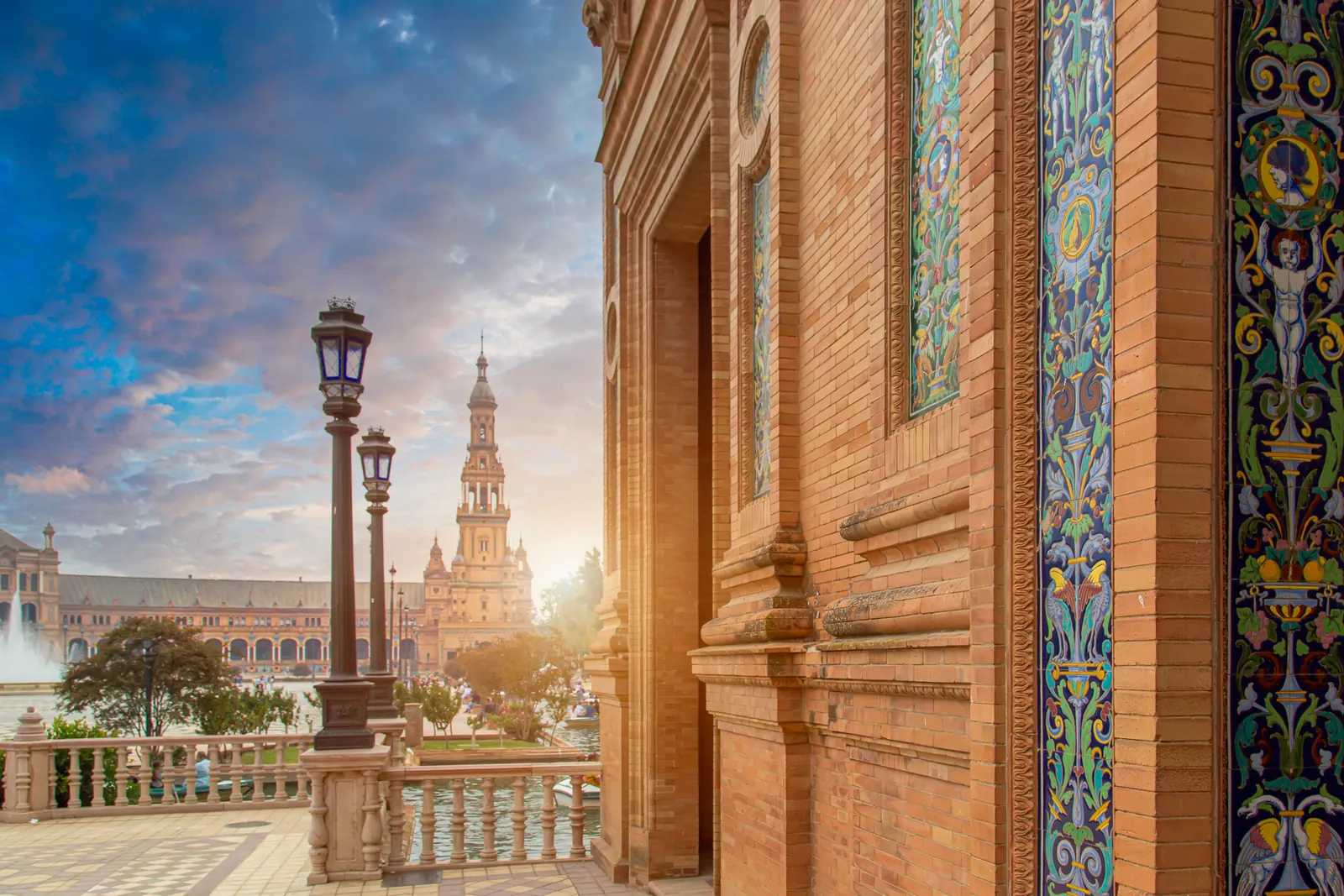
- Day 4, to Seville: Train in under an hour. Afternoon at the Plaza de España and the María Luisa Park; flamenco in the evening. Sleep: Santa Cruz or the Centro.
- Day 5, Seville: The Royal Alcázar at opening (€15.50; book ahead), the cathedral and the Giralda, then sunset across the river in Triana. Sleep: same.
- Day 6, to Granada: Morning Avant (about 2 hours 40). Free tapas with each drink, and the Mirador de San Nicolás at sunset for the view of the Alhambra. Sleep: the Centro near the cathedral, or the Albaicín.
- Day 7, the Alhambra and home: The Alhambra at opening, with your fixed time for the Nasrid Palaces (€22.27 for the full ticket; book weeks ahead), then the Avant to Málaga (about 1 hour 30) and the train to the airport for an evening flight. Or fly from Granada.
Swap it: add a morning in Toledo (34 minutes from Madrid) on day 2, or replace Córdoba with a long stop on the train between Madrid and Seville. More on each stop: Madrid, Córdoba, Seville and Granada.
10 days: Barcelona, Madrid and the south
The big four: Gaudí and the sea in Barcelona, art in Madrid, then Andalusia. Fly into Barcelona and home from Málaga. Book the Sagrada Família and the Alhambra as soon as you have dates: both sell timed tickets that run out.
- Day 1, Barcelona: Arrive; the Gothic Quarter, the cathedral and the Born, dinner in the old town. Sleep: the Eixample or the Gothic Quarter (3 nights).
- Day 2, Gaudí: The Sagrada Família (from €26 with the audio guide app), whose central tower was completed in 2026, then Casa Batlló or Casa Milà on the Passeig de Gràcia.
- Day 3, Park Güell and the beach: Park Güell on a timed ticket in the morning, the Boqueria market, and an afternoon at Barceloneta beach or up Montjuïc.
- Day 4, to Madrid: Morning AVE (about 3 hours). Evening in the Plaza Mayor and La Latina. Sleep: Sol, Huertas or the Barrio de las Letras (2 nights).
- Day 5, Madrid: The Prado, the Retiro, the Royal Palace; or a day trip to Toledo or Segovia.
- Day 6, Córdoba and on to Seville: AVE to Córdoba (about 1 hour 45), leave bags at the station or a luggage locker, see the Mezquita and the Jewish Quarter, then the train to Seville (under an hour). Sleep: Santa Cruz or the Centro (2 nights).
- Day 7, Seville: The Royal Alcázar, the cathedral, the Plaza de España and Triana.
- Day 8, to Granada: Avant (about 2 hours 40). The Albaicín and sunset at San Nicolás. Sleep: Centro or Albaicín (2 nights).
- Day 9, the Alhambra: The palaces and the Generalife gardens; tea and baths in the old town afterwards.
- Day 10, Málaga and home: Avant to Málaga (about 1 hour 30), the Alcazaba or the Picasso Museum if time allows, and fly home.
Swap it: Valencia fits between Barcelona and Madrid (about 2 hours 50 from Barcelona, 1 hour 55 on to Madrid) if you trade a Barcelona night for it; in warm months, trade a city night for the beach in Málaga or Cádiz. Details: Barcelona, Valencia, Málaga.
14 days: mainland plus Mallorca or Tenerife
Follow the 10-day route through Granada, then fly to an island for four nights instead of going home. Choose by season: Mallorca and the Balearics for warm sea from May to October; Tenerife and the Canaries, warm all year, for winter sun from November to April.
- Days 1–3, Barcelona: As above. Sleep: Eixample or Gothic Quarter (3 nights).
- Days 4–5, Madrid: Museums, the Retiro, Toledo or Segovia. Sleep: Sol or Huertas (2 nights).
- Days 6–7, Córdoba and Seville: Córdoba as a stop, then Seville. Sleep: Seville (2 nights).
- Days 8–9, Granada: The Alhambra and the Albaicín. Sleep: Granada (2 nights).
- Day 10, to the island: Train to Málaga and fly to Palma (about 1 to 1.5 hours) or to Tenerife (some direct flights; otherwise via Madrid). Sleep: Palma old town or a north-coast town such as Sóller; on Tenerife, the south coast for sun or Puerto de la Cruz in the north (4 nights).
- Day 11, Mallorca: Palma, or Tenerife: Teide: Palma’s cathedral and old town; or, on Tenerife, the cable car and trails in Teide National Park (the final path to the summit crater needs a booked slot and costs €15 for visitors from outside the Canaries).
- Day 12, the mountains: On Mallorca, the 1912 wooden train to Sóller and walks in the Serra de Tramuntana; on Tenerife, the Anaga or Teno mountains and the village of Masca.
- Day 13, the sea: Cove-hopping by boat or the Coves del Drach on Mallorca; whale and dolphin watching off southwest Tenerife.
- Day 14, home: Fly from Palma or Tenerife, direct to many European cities, or via Madrid or Barcelona.
Food lovers can finish in the north instead: fly from Seville or Málaga to Bilbao for the Guggenheim and go on to San Sebastián, about an hour away, for three nights of pintxos and La Concha beach; the north is best in summer, when it is warm but not hot. Details on the islands: Mallorca, Tenerife, Bilbao.
Where to sleep, by stop
| Stop | Best area for a short stay | Why | Tourist tax (as of Oct 2026) |
|---|---|---|---|
| Barcelona | The Eixample or the Gothic Quarter | Gaudí on foot, Metro everywhere; the Eixample is quieter at night | €6–12 per person per night, from 17, max 7 nights |
| Madrid | Sol, Huertas or the Barrio de las Letras | Walk to the Prado, the palace and the tapas bars | None |
| Córdoba | The old town near the Mezquita | Patios and the Jewish Quarter on the doorstep | None |
| Seville | Santa Cruz or the Centro | The Alcázar and cathedral on foot; Triana across the river | None |
| Granada | The Centro, or the Albaicín for views | Buses up to the Alhambra; the Albaicín is steep but beautiful | None |
| Mallorca | Palma old town or Santa Catalina; Sóller for the mountains | Buses and the train; restaurants | €1–4 plus VAT from May to October, lower in winter |
| Tenerife | The south coast, or Puerto de la Cruz | Sun and beaches, or a real town in the green north | None |
Spain has no national tourist tax; Catalonia and the Balearic Islands charge regional ones, added to your bill, and Barcelona adds a city surcharge. Hotels must record guests’ identity details by law, so you will be asked for your passport at check-in. More on costs is in our Spain travel guide.
Alternatives by interest
Food lovers
Give San Sebastián and Bilbao four nights, with a day in the Rioja wine country; eat paella at lunchtime in Valencia; try free tapas with each drink in Granada; and finish with fried fish in Cádiz, about 1 hour 40 from Seville by train. Remember Spanish hours: lunch from 14:00, dinner from 21:00.
Beach lovers
From June to September, swap Madrid for more coast: the Costa Brava’s rocky bays near Girona, the Costa del Sol around Málaga, the wild Atlantic beaches of Cádiz, or a week on Menorca, Ibiza or Formentera. In winter, the Canaries are the only reliable beach option.
Hikers and road trippers
Hire a car in Seville or Málaga for Andalusia’s white villages and Ronda‘s gorge, and walk in the Sierra Nevada above Granada. In summer, head north to the Picos de Europa or the Pyrenees; in spring, autumn and winter, Mallorca’s Tramuntana and the Canaries. Most big cities have low-emission zones, so pick up and drop off the car outside the centers.
Families and slow travelers
Use two bases: Madrid with day trips to Toledo and Segovia, then Seville or Málaga with the beach nearby. Valencia’s City of Arts and Sciences and long city beach make it a good family alternative to Barcelona.
Tips for planning your route
- Book the big sights early. The Alhambra, the Sagrada Família, Park Güell and the Royal Alcázar sell timed tickets that run out weeks ahead in spring and autumn.
- Compare train companies. Renfe, Ouigo and Iryo compete on the main lines; the cheapest fares go early, and low-cost fares charge for big bags.
- Leave a margin before flights. High-speed trains run more slowly and less punctually in 2026 because of temporary speed limits.
- Match the route to the season. April to June and September to October for the cities and Andalusia; July and August for the north coast and the islands; the Canaries for winter sun.
- Take the heat seriously. In July and August, sightsee in the morning and evening in Seville, Córdoba and Granada, and rest in the hottest hours, as locals do.
- Remember the Schengen days. Days in Spain count toward the same 90 days in any 180 as the rest of the Schengen area.
Spain itinerary FAQ
Is 7 days enough for Spain?
Yes for Madrid and Andalusia, or for Barcelona and Madrid. Barcelona, Madrid and the south together need about 10 days, and two weeks lets you add an island or the north coast.
Should I start in Madrid or Barcelona?
Start in Barcelona if you are heading south: Madrid is on the way to Andalusia, and you can fly home from Málaga or Seville. Start in Madrid for a one-week Madrid-and-Andalusia trip.
How long is the train from Madrid to Barcelona?
About 3 hours to 3 hours 15 minutes on Renfe’s fastest AVE trains in October 2026, slower than before 2026 because of temporary speed limits. Ouigo and Iryo also run on the route.
Do I need a car in Spain?
No for the cities in these plans, which are linked by fast trains. A car helps for Andalusia’s white villages, the north coast and the islands; avoid driving into city centers, which have low-emission zones.
Seville or Granada: which needs more time?
Seville has more to see, so give it two or three nights; Granada needs one full day for the Alhambra plus an evening in the Albaicín. Córdoba works as one night or a long stop.
Can I combine Spain and Portugal?
Yes. Seville is about two hours by road from the Algarve, and Madrid–Lisbon is a short flight. See our Portugal itinerary for the other half.
What is the best month for a Spain itinerary?
May, June, September and October: warm, sunny and cheaper than July and August, with the sea swimmable by June and in September.
Sources
Researched and last reviewed by TravelerCenter on 8 October 2026. Train times come from Renfe’s published high-speed and long-distance timetable data for mid-October 2026; flight times are approximate. The 2026 speed limits come from press reports on Adif’s restrictions; sight prices and booking rules from the Alhambra, the Sagrada Família, the Royal Alcázar and the Mosque-Cathedral of Córdoba; tourist taxes from the Official Gazette (BOE), the Catalan government and the Balearic government; seasons from AEMET’s climate normals and our best-time guide. Timetables, fares and rules change, so check with the operator before you travel.
Data: Natural Earth (PUBLIC DOMAIN) · © OpenStreetMap contributors (ODBL) · Wikidata (CC0)