Short answer: the best time to visit Italy is April to June and September to October. These months bring warm, mostly dry weather from the Alps to Sicily, long days, swimmable seas in the south from June to early October, and fewer crowds than high summer. July and August are the hottest, busiest and most expensive months on the coasts and lakes, while November to March is quiet and good value in the cities.
Italy is long and mountainous, so the right month depends on where you go: Milan’s winter is foggy and cold while Palermo’s is mild, and the Dolomites have their own summer and ski seasons. This page covers the weather, crowds, prices, holidays and festivals month by month and region by region, as of October 2026. For trains, entry rules and costs, see our Italy travel guide, and plan your days with our AI trip planner.
Best time to visit Italy at a glance
| Goal | Best months | Why |
|---|---|---|
| Best weather overall | April–June, September–October | Warm, mostly dry, comfortable for walking |
| Fewest crowds | November–March (outside Christmas and Carnival) | Quiet cities and museums |
| Lowest prices | November–February | Low season in the cities |
| Beaches and swimming | June and September (July–August if you don’t mind crowds) | Sea warm enough from June to early October |
| Hiking (Dolomites) | Mid-June–late September | Huts and cable cars open |
| Skiing | December–early April | Dolomites and Alpine resorts |
| Food and wine harvests | September–November | Grape and olive harvests, truffle fairs |
| Festivals | February, Easter, July–September, December | Venice Carnival, Holy Week, Siena’s Palio, Venice regattas, Christmas markets |
Italy weather month by month
Weather month by month
The table shows average daily highs and lows and monthly rain for Italy, from the long-term climate normals of the Italian Air Force Meteorological Service (Aeronautica Militare). As a guide, Rome’s highs average about 12–13 °C (54–55 °F) in winter, 15–23 °C (59–73 °F) in spring, 27–31 °C (81–88 °F) in summer and 27 °C (81 °F) falling to 16 °C (61 °F) in autumn. Milan is colder in winter (5–8 °C, 41–46 °F, often foggy) and Palermo milder (15–16 °C, 59–61 °F). These are long-term averages: recent summers have often brought heatwaves of 35–40 °C (95–104 °F) to Rome and Florence.
Italy month by month
January
Cold in the north, mild in the south, and the quietest month in the cities after Epiphany (6 January), a national holiday. Museums in Rome and Florence are at their least crowded and hotel prices at their lowest. It is high ski season in the Dolomites. The Carnival of Venice begins on 23 January 2027.
February
Carnival month: the Carnival of Venice runs until Shrove Tuesday, 9 February 2027, with masks, costumes and packed bridges, and Viareggio in Tuscany holds its float parades. Outside Venice, February is cheap and quiet, with Sicily’s almond blossom and mild days in the south.
March
Spring arrives, with highs around 15 °C (59 °F) in Rome, but showers are common. Easter falls early in 2027: Holy Week processions fill Sicily and the south, the Pope celebrates Mass in St. Peter’s Square, and Florence’s Scoppio del Carro is on Easter Sunday, 28 March. Easter Monday (29 March) is a holiday, and Rome and Florence are very busy that week.
April
One of the best months: flowers in the countryside, comfortable sightseeing and the coastal ferries and beach hotels reopening around Easter. Milan Design Week fills Milan‘s hotels in April. The 25 April holiday (Liberation Day) makes a long weekend when Italians travel, so book Rome, Florence and Venice ahead.
May
Warm, sunny and green, with highs in the low 20s °C (low 70s °F). Ideal for Tuscany, the Cinque Terre and the Amalfi Coast before the summer rush. 1 May is a national holiday. Late in the month the first high lifts in the Dolomites open, but many trails still have snow.
June
Early summer: long evenings, sea warm enough to swim in the south and the islands, and mountain huts opening from mid-June. Crowds and prices rise through the month. The 2 June Republic Day holiday, Florence’s feast of San Giovanni on 24 June with the Calcio Storico, and Rome’s feast of Saints Peter and Paul on 29 June are highlights.
July
Hot and dry: Rome averages only about two rainy days, and highs of 30 °C (86 °F) or more are normal in the cities. It is peak season on the coasts, lakes and islands. Siena’s Palio horse race is run on 2 July, opera fills Verona‘s Roman arena all summer, and Venice’s Festa del Redentore fireworks are on the third weekend of July.
August
The hottest and busiest month by the sea. Around Ferragosto (15 August, a national holiday) Italians head to the beaches and mountains en masse, and some city restaurants and shops close for a week or two. Siena’s second Palio is on 16 August. Book coast and island hotels and ferries months ahead, and plan city sightseeing for early mornings.
September
Many regular visitors’ favorite month: the sea is at its warmest, the heat eases, and crowds thin once Italian holidays end. The Venice Film Festival runs on the Lido from late August, the Regata Storica boat parade fills the Grand Canal on the first Sunday of September, and the grape harvest begins. Dolomites huts close toward the end of the month.
October
Warm in the south, mild in the north, with autumn rain becoming more likely late in the month. It is harvest and truffle season, with the white truffle fair in Alba, and swimming is still possible in Sicily and Sardinia early in the month. Since 2026, 4 October, the feast of St. Francis of Assisi, is a national holiday again. Coastal ferries and beach hotels start to close at the end of the month.
November
Usually the wettest month in Rome, Florence and Naples, with about ten rainy days in Rome, but also quiet and cheap. Chestnut festivals fill the hill towns, and the art Biennale in Venice runs until 22 November 2026. All Saints’ Day, 1 November, is a holiday. Most Amalfi Coast and island hotels are closed from about November to Easter.
December
Cool and festive. Christmas markets open in Bolzano, Merano and Trento, nativity scenes fill Via San Gregorio Armeno in Naples, and La Scala’s opera season opens in Milan on 7 December, Milan’s patron saint’s day. 8, 25 and 26 December are holidays. The ski season usually opens in late November or early December, and prices rise from Christmas to New Year.
Best time to visit by region
Rome
Rome is best from April to June and in September and October. Winter is mild, around 12–13 °C (54–55 °F), and the quietest time for the Vatican and the Colosseum, while July and August are hot. Easter week and the spring holidays are the busiest times.
Florence and Tuscany
Florence is best in April, May, September and October; in summer it is one of Italy’s hottest cities. The countryside of Tuscany is greenest in May and golden at the September and October harvests, and Siena is liveliest, and most crowded, for the Palio on 2 July and 16 August.
Venice
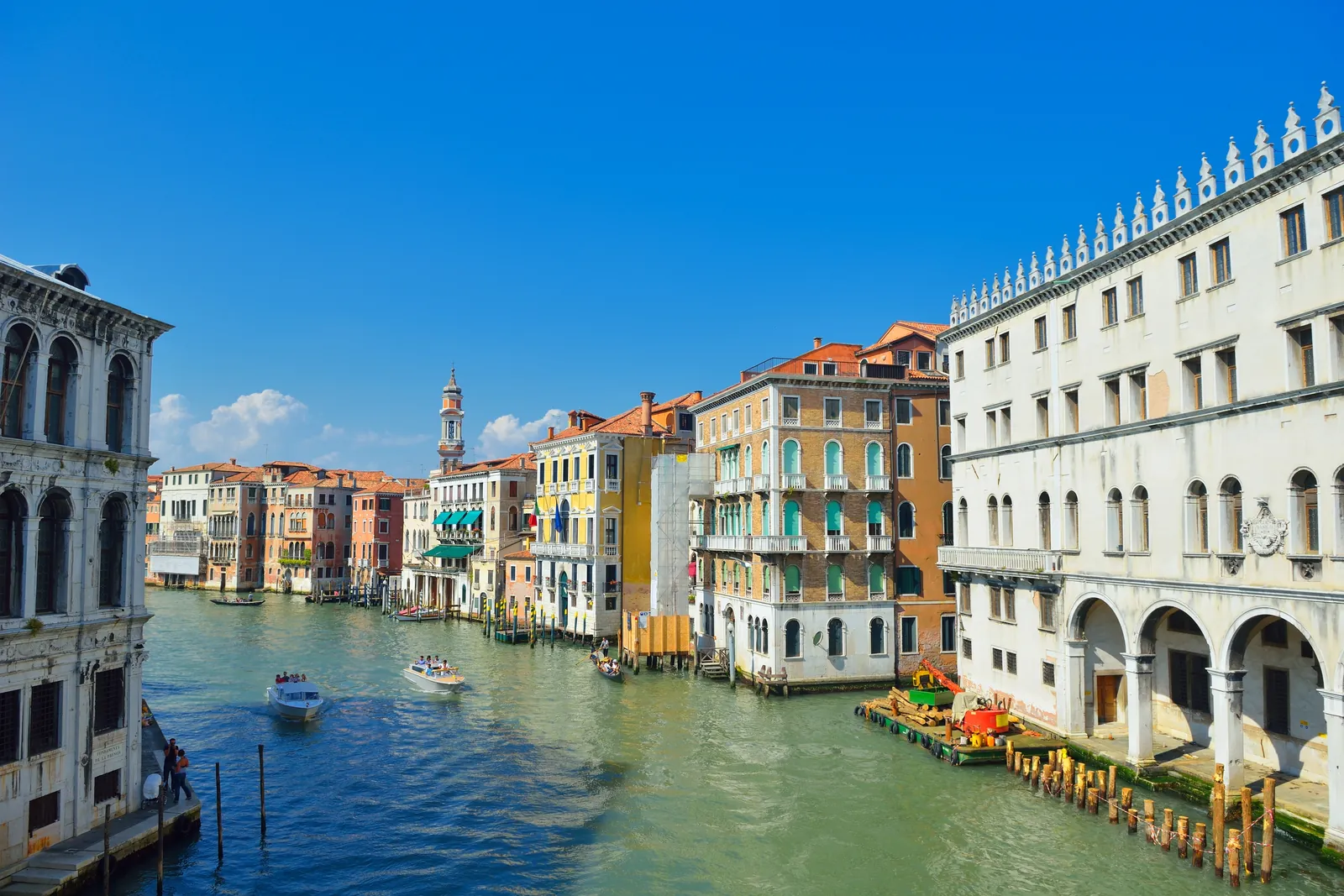
Venice is loveliest in April to June and September to October, and most atmospheric on quiet winter days, when mist and high tides may come and go. Carnival (23 January to 9 February 2027) is spectacular but packed. In 2026, day-trippers paid an access fee on 60 busy days between April and July; the 2027 calendar has not been published yet.
Milan and the lakes
Milan is best from April to June and in September and October; its winters are cold and foggy. Lake Como and Lake Garda are most beautiful in May, June and September, when the villa gardens are open and the ferries run full timetables without the August crowds.
The Dolomites
The Dolomites and Cortina d’Ampezzo have two seasons. Mid-June to late September for hiking, when huts and cable cars are open; high trails are 10–15 °C cooler than the valleys. December to early April for skiing, with the Dolomiti Superski season expected to run from 28 November 2026 to 11 April 2027.
Naples and the Amalfi Coast
The Amalfi Coast, Capri and Sorrento are best in May, June and September, when the boats are running and the sea is warm but the crowds are lighter than in July and August. From about November to Easter, many hotels and ferries close. Naples and Pompeii are good all year, and best out of the summer heat.
The Cinque Terre
The Cinque Terre are best in April, May, September and October for walking the coastal paths; summer is hot and crowded, and winter storms can close trails.
Puglia and Matera
Puglia is among Italy’s sunniest, driest regions: May, June and September are ideal for Alberobello, Lecce and the beaches of the Salento, and Matera is best in spring and autumn.
Sicily and Sardinia
Sicily has the mildest winters, around 15–16 °C (59–61 °F) in Palermo, and is good from April to June and September to October; Easter brings its famous processions. Sardinia is a summer island: June and September give warm seas and fewer people than August on the Costa Smeralda.
Best time for beaches, hiking, skiing and food
Beaches
June and September for warm water without the August crowds. The sea is warm enough to swim from June to early October in the south and on the islands; coastal ferries and beach clubs run mainly from Easter to October.
Hiking
Spring and autumn for coastal and hill walks in the Cinque Terre, Amalfi and Tuscany; mid-June to late September for the Dolomites.
Skiing
December to early April, with the most reliable snow from January to March. Christmas, New Year and the February school holidays are the busiest.
Food and wine
September to November for the grape harvest, new olive oil, mushrooms, chestnuts and Alba’s white truffles.
Festivals
Venice Carnival (23 January to 9 February 2027), Easter week (21–28 March 2027), Siena’s Palio (2 July and 16 August), the Redentore (third weekend of July), the Regata Storica (first Sunday of September) and Christmas markets in the Alps.
Seasons to plan around
- Summer heat: July and August regularly bring 35–40 °C (95–104 °F) to Rome and Florence. Sightsee early and late, and rest at midday.
- Ferragosto (15 August): beaches, mountains and trains are packed, and some city restaurants and shops close for one or two weeks around it.
- Off-season closures: from about November to Easter, many Amalfi Coast, Capri and island hotels and the coastal ferries close.
- Autumn storms: short, heavy rain anywhere from October to November; Venice can have high tides (acqua alta) in the cooler months.
- National holidays: 1 November, 8, 25 and 26 December, 1 and 6 January, Easter Monday (29 March 2027), 25 April, 1 May, 2 June, 15 August and 4 October. Banks and offices close and transport runs a holiday timetable; Easter and the spring holidays bring big crowds to Rome, Florence and Venice.
- Strikes: transport strikes can happen in any month; check the Ministry of Infrastructure and Transport’s strike calendar before you travel.
How long to stay
Five days covers Rome and Florence; a week adds Venice; ten days lets you add the lakes or Naples and the Amalfi Coast; two weeks gives time for Sicily, Puglia or Sardinia. In summer, swap a city for the Cinque Terre or the Dolomites. Our Italy travel guide has sample 5-, 7-, 10- and 14-day itineraries.
Best time to visit Italy: FAQ
What is the best month to visit Italy?
May and September are the best all-round months: warm weather, long days, open coastal ferries and smaller crowds than in July and August.
What is the cheapest time to go to Italy?
November to February, outside Christmas, New Year and Venice’s Carnival. Cities are quiet and hotels cheapest, though many coastal resorts are closed.
What is the rainiest month in Italy?
November is usually the wettest month in Rome, Florence and Naples, with about ten rainy days in Rome. In the north, rain is spread through the year.
Is August a good time to visit Italy?
For beaches and mountains, yes, if you book early and don’t mind crowds. For cities, it is very hot, and some restaurants close around Ferragosto (15 August).
Is it warm enough to swim in Italy in October?
In early October, yes, in the south, Sicily and Sardinia. By late October the water cools and many beach facilities close.
Is winter a good time to visit Italy?
Yes, for cities, museums, food and skiing: Rome and Sicily are mild, crowds are small and prices low. It is not the season for the Amalfi Coast or the islands.
Sources · last reviewed 4 Oct 2026
Researched and last reviewed by TravelerCenter on 8 October 2026. Temperatures and rainy days come from the climate normals of the Italian Air Force Meteorological Service (Aeronautica Militare); Venice Carnival dates from the official Carnevale di Venezia site; the Venice access fee and Regata Storica from the City of Venice; the Biennale dates from La Biennale di Venezia; Siena’s Palio from the City of Siena; Dolomites lift and ski season dates from lift companies, tourism boards and trade press; national holidays from Italian law and the calendar. Festival months, closures and price seasons are general references. Check official sites before you travel.
Also: Aeronautica Militare normals 1991–2020, Rome Ciampino (airport) (climate)
Data: Natural Earth (PUBLIC DOMAIN) · © OpenStreetMap contributors (ODBL) · Wikidata (CC0)