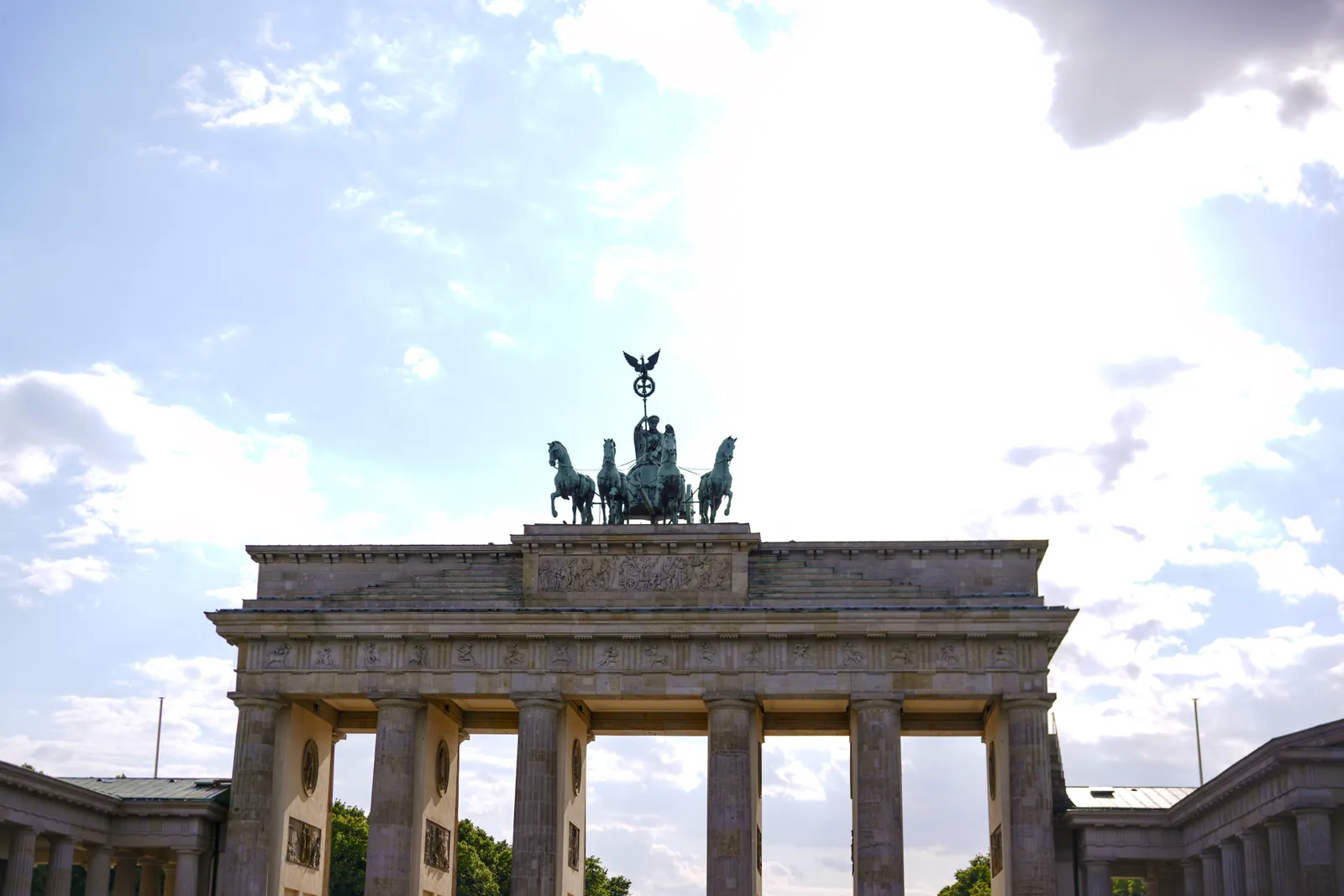
Short answer: the best time to visit Germany is May, June and September: warm enough for beer gardens, river cruises and hiking, with long days and fewer crowds than in July and August. July and August are the warmest months, but also the busiest in the Alps, on the lakes and on the coast, and the rainiest, with afternoon thunderstorms. Late November to Christmas is the season for Christmas markets, and late September to early October for Oktoberfest in Munich.
This page explains Germany’s weather and seasons month by month and region by region, with festivals, Christmas market dates, school and public holidays and the weeks that book up first, as of October 2026. For trains, the Deutschlandticket, entry rules and costs, see our Germany travel guide, and plan your days with our AI trip planner.
Best time to visit Germany at a glance
| Goal | Best months | Why |
|---|---|---|
| Best overall | May, June, September | Mild to warm weather, long days, beer gardens open, fewer crowds |
| City breaks | April to October; December | Pleasant weather for walking, or Christmas markets in December |
| Fewest crowds and lowest prices | January to March | Quiet museums and cheap city hotels, except during trade fairs |
| Christmas markets | Late November to December 23 | Most markets open in the last week of November and close on December 23 or 24 |
| Oktoberfest | Late September to early October | September 18 to October 3, 2027 in Munich |
| Hiking | June to September; May and October lower down | Alpine trails and huts open in summer; forests and vineyards in spring and fall |
| Rhine and river cruises | April to mid-October | Boats run their full timetables; the harvest from September |
| Lakes and the Baltic and North Sea coasts | July and August | The warmest water and longest days, but school holidays fill resorts |
| Skiing | January to March | The most reliable snow in the Bavarian Alps |
| Carnival | February | Rose Monday parades in Cologne, Düsseldorf and Mainz on February 8, 2027 |
Germany weather month by month
Weather month by month
The climate table shows average daily highs and lows, monthly rain and sunshine at the Berlin-Tempelhof station, calculated from the German Weather Service’s (DWD) official 1991–2020 monthly records. Berlin has highs of about 4 °C (38 °F) in January, with nights just below freezing, and 25 °C (77 °F) in July, and gets only about 570 mm (22 in) of rain a year. Unlike southern Europe, Germany gets most of its rain in summer, often in short, heavy thunderstorms: July is Berlin’s wettest month, with about 72 mm (2.8 in), and April its driest, with about 29 mm (1.2 in). The south is wetter: München-Stadt averages about 121 mm (4.8 in) in June, and Garmisch-Partenkirchen in the Alps about 1,370 mm (54 in) a year. The Rhine valley and the south-west are the warmest parts of the country, with July highs of about 27 °C (80 °F) in Freiburg, while Hamburg, by the North Sea, peaks at about 23 °C (74 °F).
Germany month by month
January
Cold and grey, with highs of about 4 °C (39 °F) in Munich and Berlin, frost on most nights and days that are dark by about 16:30. It is the cheapest month for city hotels, except during big trade fairs, and museums, concert halls and opera houses are in full season. Ski resorts in the Bavarian Alps have their most reliable snow. New Year’s Day is a national holiday, and Epiphany (January 6) is a holiday in Bavaria and Baden-Württemberg.
February
Still cold, but it is carnival time: in 2027, Rose Monday falls on February 8, with parades in Cologne, Düsseldorf and Mainz, and the street carnival begins the Thursday before. Berlin hosts the Berlinale film festival from 10 to 21 February 2027, with its first public Audience Days on February 20 and 21. Skiing continues in the Alps.
March
Changeable, with highs of about 9–10 °C (48–50 °F) and the first blossom in the warm south-west. In 2027, Easter falls on March 28, so Good Friday (March 26) and Easter Monday (March 29) are national holidays, and Easter markets appear in many towns. Late March is still ski season in the Alps.
April
Spring proper: highs of about 15 °C (59 °F), fruit trees in blossom around Lake Constance and in the Heidelberg area, and the Rhine and lake boats starting their season. April is the driest month in Berlin. Asparagus season (Spargelzeit) starts, and beer gardens open on the first warm days.
May
One of the best months: highs of about 19–20 °C (66–68 °F), long, light evenings and green countryside. Labour Day (May 1), Ascension Day (May 6, 2027) and Whit Monday (May 17, 2027) are national holidays, and Corpus Christi (May 27, 2027) is a holiday in the Catholic south and west, so trains and hotels fill on those long weekends. Hamburg celebrates its harbor birthday from 6 to 9 May 2027, and Bavarian villages put up maypoles.
June
Warm, with highs of about 23 °C (74 °F) and daylight until about 22:00 in Hamburg and Berlin. Asparagus season ends on June 24, Kiel Week fills the Baltic port with sailing in late June, and the first school summer holidays begin. Thunderstorms become more frequent, especially in the south.
July
The warmest month, with highs of about 25 °C (77 °F) in Berlin and Munich and heatwaves above 30 °C (86 °F) in recent summers. It is also one of the wettest, with afternoon storms in the Alps and Bavaria. Lakes, beaches on Rügen and Sylt and Alpine trails are at their busiest, and Rhine in Flames fireworks light up the Middle Rhine on summer weekends. Big cities can be quieter as locals go away.
August
Much like July: warm, with storms on some afternoons, busy resorts and full mountain huts, and the warmest sea on the North Sea and Baltic coasts. School summer holidays are staggered by state between late June and mid-September, so the coast and mountains stay busy for a long time. The Assumption (August 15) is a holiday in parts of Bavaria and the Saarland.
September
Many travelers’ favorite month: highs of about 20 °C (68 °F), settled weather and fewer crowds once most schools are back. The grape harvest begins along the Rhine and Moselle, with wine festivals in villages, and the Berlin Marathon takes place in September. Oktoberfest starts in Munich in the second half of the month, running from September 18 to October 3 in 2027; hotels there are at their most expensive.
October
Mild and golden, with highs of about 14 °C (57 °F), beech forests turning color and the last wine festivals. The Day of German Unity (October 3) is a national holiday. Rhine boats wind down from mid-October, and some mountain lifts close between seasons. Fog becomes common over Lake Constance and the river valleys.
November
Grey, damp and quiet, with highs of about 8 °C (46 °F) and dark afternoons; one of the cheapest months to travel. St Martin’s lantern parades take place on November 11, the same day Cologne’s carnival season officially opens at 11:11. Christmas markets begin to open in the last week of the month, many after Totensonntag, which falls on November 22 in 2026.
December
Cold and dark early, with highs of about 4–5 °C (39–41 °F), but this is Christmas market season. In 2026, Cologne’s cathedral market runs from 16 November to 23 December, Munich’s Christkindlmarkt from 20 November to 24 December, Dresden’s Striezelmarkt from 25 November to 24 December and Nuremberg‘s Christkindlesmarkt from 27 November to 24 December. Christmas Day and St Stephen’s Day (December 25 and 26) are national holidays, and most markets close by December 23 or 24.
Best time to visit by region
Berlin
May to September for parks, lakes, beer gardens and open-air events; April and October are often bright and mild. Winter is cold and grey but full of culture, with Christmas markets and New Year’s Eve at the Brandenburg Gate. See our Berlin guide.
Munich and the Bavarian Alps
May to June and September for Munich; late September to early October for Oktoberfest; late June to September for Alpine hiking; January to March for skiing. Summer brings frequent thunderstorms in the mountains, where Garmisch-Partenkirchen averages about 192 mm (7.6 in) of rain in August. See our Munich and Bavarian Alps guides.
Hamburg and the north coast
June to September, when the North Sea and Baltic are warm enough for beach days and the evenings are long; September is often sunny and quieter. Winter is windy and grey, with Christmas markets in December. See our Hamburg, Sylt and Rügen guides.
Cologne and the Rhine
April to October for river cruises, with the harvest and wine festivals in September and October; February for carnival; December for the cathedral Christmas market. See our Cologne, Middle Rhine Valley, Düsseldorf and Frankfurt guides.
Heidelberg, the Black Forest and Lake Constance
April to October; spring comes early in the Rhine valley, summer is warm and sunny, and fall brings wine festivals. The high Black Forest keeps snow on the Feldberg into April. See our Heidelberg, Black Forest, Lake Constance and Stuttgart guides.
The Romantic Road and Franconia
April to June and September to October bring mild weather and fewer people in Rothenburg ob der Tauber; Advent brings Nuremberg’s Christkindlesmarkt and Rothenburg’s Reiterlesmarkt. Come early or stay the night to avoid the day-trip crowds. See our Nuremberg guide.
Dresden, Leipzig and Saxon Switzerland
May to September for the Elbe meadows and the sandstone hiking trails of Saxon Switzerland; late November to December 24 for the Striezelmarkt. See our Dresden and Leipzig guides.
Best time for hiking, river cruises, beaches, skiing and festivals
Hiking and cycling
May, June, September and early October in the hills, forests and vineyards; late June to September in the Alps, when huts and high trails are open. Start Alpine hikes early to avoid afternoon storms. See our hiking and cycling guides.
River cruises and boat trips
April to mid-October on the Rhine, Moselle and Elbe and on Lake Constance; September and October add the grape harvest. See our boat trips guide.
Beaches and lakes
July and August, when the North Sea, Baltic and Bavarian lakes are warmest; June and September are quieter. See our beaches guide.
Skiing
January to March in the Bavarian Alps, where snow is most reliable; Christmas, New Year and the February holidays are the busiest weeks.
Festivals and Christmas markets
February for carnival and the Berlinale, May for Hamburg’s harbor birthday, late September for Oktoberfest and Stuttgart’s Cannstatter Wasen, September and October for wine festivals, and late November to December for Christmas markets.
Seasons to plan around
Summer school holidays: each state sets its own dates between late June and mid-September, so lakes, mountains and the coast stay busy for a long time, especially at weekends. Book beach and Alpine accommodation well ahead.
Public holidays: nine are national, and states add their own. On holidays, almost all shops close, as on Sundays, and buses and trains run a Sunday timetable. Holidays that fall on a weekend are not moved to a Monday. Ascension Day, Whit Monday and Corpus Christi create long weekends in May and June.
Trade fairs and Oktoberfest: big fairs (Messen) can double hotel prices in Frankfurt, Cologne, Munich, Hamburg and Berlin; check the fair calendar before booking. Munich is at its dearest during Oktoberfest.
Summer storms and heat: July and August bring afternoon thunderstorms, heaviest in the south and the Alps, and heatwaves above 30 °C (86 °F) are more frequent than the long-term averages suggest.
Short winter days: in December, it is dark by about 16:30, and some mountain lifts, river boats and castle tours close or shorten their hours between late October and Easter.
How long to stay
Five days covers Berlin with Potsdam or Dresden; a week covers Berlin and Munich; ten days adds Hamburg, Cologne and the Rhine; two weeks makes a grand tour. Our Germany travel guide has sample 5-, 7-, 10- and 14-day itineraries.
Best time to visit Germany: FAQ
What is the best month to visit Germany?
June or September: warm, long days, open beer gardens and fewer crowds than in July and August.
What is the cheapest time to go to Germany?
January to March, outside trade fairs and the ski resorts, when city hotels are cheapest. November is also quiet before the Christmas markets open.
What is the rainiest month in Germany?
Summer is the wettest season. In Berlin, July is the wettest month, with about 72 mm (2.8 in); in Munich, June, with about 121 mm (4.8 in), according to DWD’s 1991–2020 averages. Most of it falls in short thunderstorms.
When are the Christmas markets in Germany in 2026?
Most open in the last week of November and close on December 23 or 24. Cologne’s cathedral market opens on November 16, Munich’s on November 20, Dresden’s on November 25 and Nuremberg’s on November 27.
When is Oktoberfest in 2027?
From September 18 to October 3, 2027, on the Theresienwiese in Munich, according to the City of Munich.
Is October a good time to visit Germany?
Yes: mild, golden weather, wine festivals and the end of Oktoberfest early in the month, with fewer crowds. Days get shorter and some boats and lifts close from mid-October.
Does it snow in Germany in winter?
Regularly in the Alps, the Black Forest and the other mountains from December to March; in the lowland cities, snow comes and goes, and winters are more often grey and damp.
Sources · last reviewed 4 Oct 2026
Researched and last reviewed by TravelerCenter on 8 October 2026. Monthly highs, lows, rain and sunshine come from the German Weather Service’s (DWD) official 1991–2020 monthly records for Berlin-Tempelhof, München-Stadt, Hamburg-Fuhlsbüttel, Freiburg and Garmisch-Partenkirchen; Christmas market dates from the cities and organizers, as listed in our Germany guide; Oktoberfest 2027 dates from the City of Munich; the Berlinale dates from the festival; Hamburg’s harbor birthday dates from the city; public holidays from federal and state law, with 2027 Easter dates calculated. Festival months, school holiday patterns and crowd and price patterns come from our country and destination guides and are general. Check event dates before you travel.
Also: DWD normals 1991–2020, Berlin-Tempelhof (climate)
Data: Natural Earth (PUBLIC DOMAIN) · © OpenStreetMap contributors (ODBL) · Wikidata (CC0)