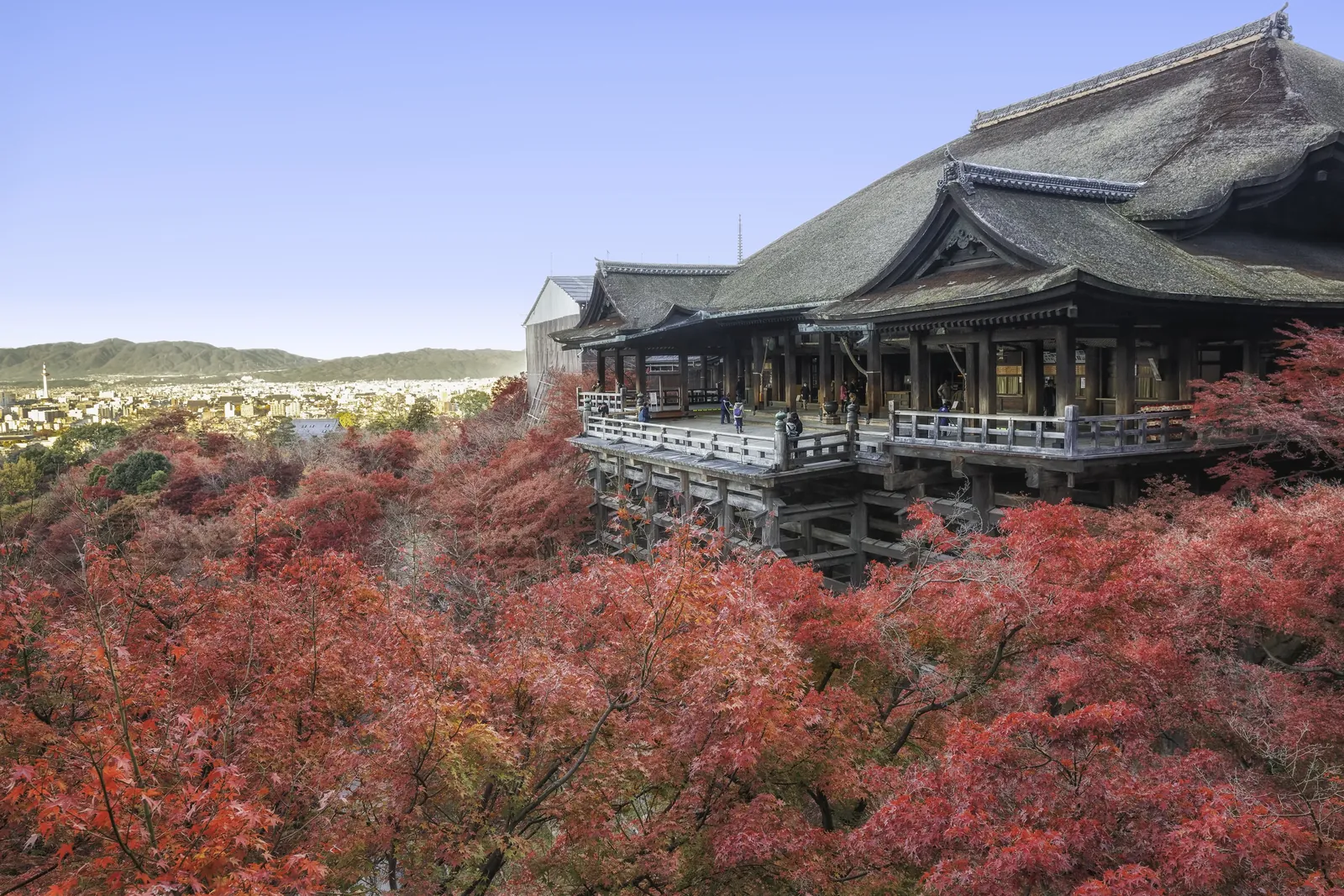
Short answer: the best time to visit Japan is late March to May and October to early December. Spring brings cherry blossoms and mild, sunny days; fall brings clear skies and red maples, with the colors peaking in Tokyo and Kyoto in late November. The trade-off is crowds: the blossom weeks, Golden Week (April 29 to May 5) and Kyoto in November are the busiest and most expensive times of the year.
This page goes through Japan’s weather, crowds, prices and festivals month by month, region by region and activity by activity, as of October 2026. Japan stretches from snowy Hokkaido to subtropical Okinawa, so the “best” month depends on where you go and what you want to do. For where to go, money and transport, see our Japan travel guide; once you have your dates, plan your days with our AI trip planner.
Best time to visit Japan at a glance
| Goal | Best months | Why |
|---|---|---|
| Best weather overall | April–May, October–November | Mild days, cool nights, mostly dry and sunny |
| Cherry blossoms | Late March–early April (Tokyo, Kyoto); early May (Sapporo) | Full bloom lasts about a week in each city |
| Fall colors | October (Hokkaido, mountains); late November–early December (Tokyo, Kyoto) | Maples and ginkgos turn from north to south |
| Fewest crowds | January (after the New Year), February outside Hokkaido, June | Low season on the main islands |
| Lowest prices | Mid-January–February, June, early December | Least demand from both visitors and Japanese travelers |
| Skiing and snow | December–March (February for the Snow Festival) | Hokkaido and the Japan Alps get reliable powder |
| Beaches (Okinawa) | April–June, September–November | Warm sea; fewer typhoons than in August |
| Hiking and Mount Fuji | July–early September for Fuji; May–June and October for lower trails | Fuji’s trails open only in summer |
| Summer festivals | July–August | Gion Matsuri, Obon dances and fireworks, despite the heat |
Japan weather month by month
Weather month by month
The table shows average daily highs and lows and monthly rain for Japan, from the 1991–2020 climate normals of the Japan Meteorological Agency (JMA). As a guide for the main tourist route, Tokyo averages highs of about 10 °C (50 °F) in January, 19 °C (67 °F) in April, 31 °C (88 °F) in August and 17 °C (62 °F) in November. Sapporo is about 10 °C (18 °F) colder in winter, Kyoto a degree or two hotter in summer, and Naha in Okinawa is about 20 °C (68 °F) even in January.
Japan month by month
January
Cold, dry and very sunny in Tokyo and Kyoto, with Tokyo averaging about 60 mm (2.4 in) of rain and highs near 10 °C (50 °F). The New Year holiday (about December 29 to January 3) fills trains and closes many shops and restaurants for a few days, but after that it is one of the quietest, cheapest months. It is peak ski season in Niseko, and Shirakawa-go holds its winter light-up on January 11, 17, 24 and 31, 2027, by advance booking only. Okinawa’s pink winter cherry blossoms open in mid-January.
February
The coldest month, but with clear air and the best Mount Fuji views of the year. The Sapporo Snow Festival runs from February 4 to 11, 2027, and is the one time Hokkaido is busier than Tokyo; book months ahead. Plum blossoms appear in the cities late in the month. Elsewhere, hotel prices are low, though Chinese New Year can bring busy weeks to Tokyo, Osaka and Hokkaido.
March
Mild and changeable, with highs around 14 °C (57 °F) in Tokyo. The JMA’s normal first-bloom dates for cherry blossoms are March 22 in Fukuoka, March 24 in Tokyo and March 26 in Kyoto, so late March is when prices jump and hotels fill. Japanese spring break also starts in March. The spring ski season continues in Hokkaido and the Alps.
April
Warm days, cool nights and the peak of the blossom season: normal full bloom is March 31 in Tokyo and April 4 in Kyoto, Osaka and Nara, and later in the mountains and the north. Takayama‘s spring festival is held every April 14–15. Golden Week starts on April 29 (Showa Day), so the last days of the month are among the busiest of the year for domestic travel.
May
Many people’s favorite month: warm, green and usually sunny, with Tokyo highs around 24 °C (74 °F). Golden Week’s public holidays fall on May 3, 4 and 5 in 2027, so book trains and hotels well ahead for the first week; after that, crowds drop and prices are good. Hokkaido’s cherry blossoms bloom in early May (normal first bloom in Sapporo is May 1), and Okinawa’s rainy season usually begins around May 10.
June
The rainy season (tsuyu) starts in early June on most of Honshu and Kyushu: around June 7 in the Tokyo region and June 6 in Kansai, by the JMA’s normals. Expect grey, humid days and frequent showers rather than constant rain; temples look lovely with hydrangeas and irises, crowds are light and prices are low. Hokkaido, which has no official rainy season, is at its best, and Okinawa’s rains usually end around June 21.
July
The rainy season normally ends around July 19, and then it turns hot and humid, with highs near 30 °C (86 °F) in Tokyo and more in Kyoto. Mount Fuji’s trails open in early to mid-July (July 1 on the Yoshida and Subashiri trails in 2026). Kyoto’s Gion Matsuri fills the whole month, with its great float procession on July 17, and Osaka’s Tenjin Matsuri is on July 24–25. Japanese school holidays start around July 20, so prices rise from then.
August
The hottest month, averaging 31 °C (88 °F) in Tokyo and 34 °C (93 °F) in Kyoto, and the peak of the typhoon season in Okinawa. Obon, around August 13–16, is when families travel home: trains, flights and hotels are packed and expensive. In return, August is the month of fireworks and Obon dances, and Kyoto lights its mountain bonfires on August 16. Hokkaido is the coolest escape.
September
Still hot early in the month, and the main typhoon month for Honshu: Tokyo’s September rain averages about 225 mm (8.9 in). Fuji’s climbing season ends on September 10. Crowds are moderate, but the “Silver Week” holidays in late September (Respect for the Aged Day and the autumn equinox, September 20 and 23 in 2027) bring a short domestic rush.
October
Comfortable, with Tokyo highs around 22 °C (72 °F), and usually drier and clearer as the month goes on, though early October can still bring typhoons and autumn rain (on average it is Tokyo’s wettest month). Fall colors start in Hokkaido and the mountains, Takayama’s autumn festival is held every October 9–10, and Hakodate and Sapporo are crisp and golden. Prices rise toward the end of the month.
November
Crisp, sunny and dry, with Tokyo highs around 17 °C (62 °F) and under 100 mm (3.9 in) of rain. The JMA’s normal maple-coloring dates are November 21 in Nara, November 22 in Hiroshima and November 28 in Tokyo, and Kyoto’s hillside temples often peak in the last two weeks of the month. That makes late November Kyoto’s busiest and priciest time; book early or stay in Osaka. Kanazawa ties up its garden trees against the snow from November 1.
December
Cold and dry, with highs around 12 °C (54 °F) in Tokyo. Late maples hang on in Kyoto, Osaka and Fukuoka into early December, winter illuminations light up the cities, and the ski season opens in Hokkaido (Niseko’s main areas open on November 28, 2026). Early and mid-December are quiet and good value until the New Year rush begins around December 28.
Best time to visit by region
Tokyo and around
Tokyo is best from late March to May and in November. Winter is cold but bright and good for sightseeing; summer is hot and humid. Day trips follow the same calendar: Kamakura is famous for June hydrangeas and fall maples, and Nikko, higher up, colors in October, a few weeks before the city.
Mount Fuji and Hakone
For views of Fuji from the Fuji Five Lakes or Hakone, come between November and February, when the air is clearest; in summer the mountain often hides in haze and cloud. Climbers must come in the official season, from early or mid-July to September 10. Spring blossoms and fall colors at Kawaguchiko are beautiful but busy.
Kyoto, Osaka and Nara
Kyoto is best in early April and late November, which are also its most crowded weeks; for gardens without the crush, try May, early June or early December. Kyoto summers are among the hottest in Japan. Osaka and Nara follow the same pattern, and Osaka makes a cheaper base when Kyoto is full.
Hiroshima and Miyajima
Hiroshima and the island of Miyajima are best from late March to May and in November, when Miyajima’s Momijidani maple valley turns red. Winter is the season for Hiroshima oysters. Note that Hiroshima Castle’s keep has been closed since March 2026.
The Japan Alps: Takayama, Shirakawa-go and Kanazawa
Takayama is at its liveliest during its festivals on April 14–15 and October 9–10. Shirakawa-go is magical under snow from January to February, but winter roads need care and the light-up evenings sell out. Kanazawa is lovely all year; its garden looks best in spring, in fall and when snow sits on the ropes of the trees.
Hokkaido
Hokkaido has two best seasons. December to March is for powder snow in Niseko, the Snow Festival in Sapporo and the snow-lit canal in Otaru. June to September is cool and green, with no rainy season and lavender fields in July, when the rest of Japan is sweltering. Fall colors arrive in early October.
Kyushu
Fukuoka, Nagasaki and Beppu warm up first in spring (Fukuoka’s cherry trees open around March 22) and keep their maples latest, into early December. Winter is mild and ideal for Beppu’s hot springs. The rainy season runs from about June 4 to July 19, and typhoons are more frequent here than in Tokyo.
Okinawa and the southern islands
Okinawa Island, Miyakojima and Ishigaki are best for the beach in April to early May and September to November. The rainy season runs from about May 10 to June 21, and the region sees about eight typhoons a year, most in August. Winter is mild, around 20 °C (68 °F), and good for whale watching, though too cool for most swimmers.
Best time for cherry blossoms, fall colors, skiing and hiking
Cherry blossoms
Aim for the last week of March to the first week of April for Tokyo, Kyoto and Osaka, and early May for Hokkaido. Dates move by a week or more each year (Tokyo’s first blossoms opened on March 19 in 2026, five days early), so keep a few flexible days and watch the JMA’s flowering announcements.
Fall colors
Early to mid-October in Hokkaido and the high mountains, early November around Nikko and the Alps, and the last week of November to the first week of December in Tokyo, Kyoto, Nara and Fukuoka.
Skiing and snow
Late December to February has the deepest, driest powder in Hokkaido and the Alps. In Niseko, the 2026–27 season runs from November 28, 2026 to as late as May 5, 2027 at Grand Hirafu and Annupuri, with lift prices highest from December 24 to February 28.
Hiking
May, early June and October suit most trails, from Kamakura’s hills to the Kumano Kodo. High Alpine routes and Mount Fuji open only in summer, and Yakushima‘s cedar forest is green and wet all year, with the most rain in summer.
Beaches, snorkeling and diving
Okinawa’s beaches are warm enough from about April to October. For calm seas and fewer storms, choose late April to early May, late June to July, or late September to October.
Festivals
Summer is festival season: Hakata’s Yamakasa in early July, Kyoto’s Gion Matsuri in July, Osaka’s Tenjin Matsuri on July 24–25 and Obon dances in mid-August. Winter has the Sapporo Snow Festival, and spring and fall have Takayama’s two float festivals.
Seasons to plan around
- Rainy season (tsuyu): about early June to mid-July on Honshu and Kyushu, and about May 10 to June 21 in Okinawa, by the JMA’s normals. Pack an umbrella and plan indoor options; heavy rain at the end of the season can disrupt trains.
- Typhoons: possible from May to November. According to the JMA, about 12 come close to Japan each year and about 3 make landfall, mostly in August and September. A typhoon can stop flights, ferries and trains for one to three days, so leave slack in your plans and follow JMA updates.
- Summer heat: July and August regularly top 33 °C (91 °F) in Kyoto; sightsee early and late, and use the JMA’s heatstroke alerts.
- New Year (about December 29 to January 3): many shops, restaurants and some sights close; trains are full on the first and last days.
- Golden Week (April 29 and May 3–5 in 2027): Japan’s biggest travel week; book trains and hotels early.
- Obon (around August 13–16): packed trains, highways and flights.
- Repair works: Himeji Castle has scaffolding on parts of the grounds from July 2026 to July 2027; see our Himeji guide.
How long to stay
Seven days covers Tokyo, a night in Hakone or by the Fuji lakes, and Kyoto with Nara. Ten days adds Osaka and Hiroshima with Miyajima, and two weeks lets you reach Fukuoka, the Alps or Hokkaido. In the blossom and maple seasons, add a spare day or two so you can follow the color. Our Japan travel guide has sample 7-, 10- and 14-day itineraries, plus a winter week and a beach week.
Best time to visit Japan: FAQ
What is the best month to visit Japan?
April for cherry blossoms and November for fall colors, both with mild, mostly dry weather. May and October are almost as good and a little less crowded, outside Golden Week.
What is the cheapest time to go to Japan?
Mid-January to February (outside Hokkaido and Chinese New Year), June and early December usually have the lowest demand and the best hotel rates. Avoid the New Year, the blossom weeks, Golden Week, Obon and late November in Kyoto.
What is the rainiest month in Japan?
It depends on the region. In Tokyo, September and October are the wettest months, with about 225–235 mm (9 in) each, from typhoons and autumn rain; June and early July bring the most rainy days during tsuyu. In Okinawa, the wettest period is May to June.
When is typhoon season in Japan?
Typhoons can come from May to November, but most reach Japan from July to October, especially in August and September. Okinawa sees the most.
Is June a good time to visit Japan?
Yes, if you don’t mind showers. It is the rainy season on most of Honshu, but crowds and prices are low, gardens are green and full of hydrangeas, and Hokkaido is at its best.
Is winter a good time to visit Japan?
Yes. Tokyo and Kyoto are cold but sunny and quiet, Fuji views are at their clearest, and Hokkaido has world-class skiing and the Sapporo Snow Festival (February 4–11, 2027). Avoid the New Year days if you want shops and restaurants open.
When should I book for cherry blossom season?
As early as you can, ideally several months ahead, especially for Kyoto. Choose refundable rooms, since the bloom can arrive a week early or late.
Sources · last reviewed 5 Oct 2026
Researched and last reviewed by TravelerCenter on 8 October 2026. Temperatures, rain, rainy-season dates, typhoon statistics and the normal cherry blossom and maple dates come from the Japan Meteorological Agency (JMA) 1991–2020 normals and phenology records; 2027 public holidays from the Cabinet Office; Sapporo Snow Festival dates from the festival’s organizers; Fuji climbing seasons from the official Mount Fuji climbing site; Niseko lift dates and prices from Niseko United; Takayama festivals from the City of Takayama; Shirakawa-go light-up dates from the Shirakawa-go Tourist Association; Himeji and Hiroshima castle works from the cities. Some festival dates and the timing of school holidays and price seasons are general references. Check official sites before you travel.
Also: JMA normals 1991–2020, Tokyo (climate)
Data: Natural Earth (PUBLIC DOMAIN) · © OpenStreetMap contributors (ODBL) · Wikidata (CC0)