Short answer: On the ground in Spain, plan on roughly €55–105 (about $60–120) per person per day on a hostel-and-tapas budget, €115–175 (about $130–200) in a three- or four-star hotel shared by two, and about €255–325 (about $290–365) in five-star hotels. A week therefore costs about $435–830 on a tight budget, $910–1,385 mid-range and $2,015–2,570 in luxury, before flights. For a reality check, international tourists spent an average of €202 a day in Spain in August 2026, according to Spain’s statistics office.
Spain is one of Western Europe’s better-value countries. Fixed-price lunch menus, cheap city transport and free museum hours stretch a budget a long way, and the beaches, plazas and old towns cost nothing. What changes your total most is the season, the city and your hotel: Spain’s own statistics show hotel rates in August running about 45% above January. This guide breaks the costs down with figures from official sources, so you can build a realistic budget for your trip to Spain. Prices in dollars are rounded at about €0.89 to the US dollar (so €1 is about $1.13), the Federal Reserve’s rate in early October 2026; use our Money exchange tool for today’s rate.
Spain daily costs at a glance
These example days are built from the sourced prices further down this page: one person, one day in a big city such as Madrid or Seville. They leave out flights, long-distance trains, shopping and nightlife.
| Per person, per day | Budget | Mid-range | Comfort |
|---|---|---|---|
| Bed | Hostel dorm bed: €22–42 | Half of a three-star room in January (€90) to a four-star room in August (€177): €45–88 | Half of a five-star room at €266–358: €133–179 |
| Food | Three simple meals at €10–16: €30–45 | One simple meal, half of a €60 dinner for two, a coffee: about €50 | Lunch, half of a €100 dinner for two, drinks: about €75 |
| Local transport | Two metro or bus rides on a 10-trip ticket: €2–3 | A few rides or a short taxi: €3–7 | Taxis: about €15–20 |
| Sights | Free museum hours, or one paid sight: €0–15 | One or two museums: €15–30 | About €30–50 |
| Total | About €55–105 ($60–120) | About €115–175 ($130–200) | About €255–325 ($290–365) |
Hotel rates are the national average daily rates per occupied room measured by Spain’s National Statistics Institute (INE) for January and August 2026; hostel prices come from a hostel booking site’s Madrid guide; restaurant prices are typical October 2026 Madrid prices from the crowd-sourced Numbeo index. Treat them as typical ranges, not quotes. Barcelona, Madrid in peak season and the Balearic Islands cost more; inland cities such as Salamanca or Granada usually cost less.
What visitors actually spend in Spain
Spain’s INE surveys international tourists every month. In August 2026, the average tourist spent €1,455 (about $1,645) per trip and €202 (about $230) per day, over an average stay of 7.2 days. These figures include the trip to Spain as well as spending there, so for a long-haul visitor they include part of the flight. In all of 2025, international tourists spent €134.7 billion in Spain, a record.
Spending varies a lot by region. In August 2026, INE’s figures by main destination were:
| Main destination, August 2026 | Per tourist, per trip | Per day | Average stay (days) |
|---|---|---|---|
| Madrid region | €1,774 | €334 | 5.3 |
| Balearic Islands | €1,566 | €243 | 6.4 |
| Catalonia | €1,400 | €238 | 5.9 |
| Canary Islands | €1,851 | €224 | 8.3 |
| Andalusia | €1,355 | €172 | 7.9 |
| Valencia region | €1,423 | €144 | 9.9 |
| Rest of Spain | €1,040 | €155 | 6.7 |
| All of Spain | €1,455 | €202 | 7.2 |
International transport made up 18.3% of the total, accommodation 20.7% and food and drink 15.2%. Short city breaks in Madrid and Barcelona cost the most per day; longer beach stays in Andalusia and the Valencia region cost the least.
On our Travel costs by country scale, which compares hotel, restaurant and transport prices with the United States (US = 100), Spain scores 80, in our middle band, “moderate”. In plain words, a hotel night, a meal out or a metro ride costs on average about a fifth less than in the United States, close to Greece (83) and a little more than Portugal (72). Our Portugal vs Spain comparison looks at the two side by side.
Accommodation costs
INE’s hotel survey gives an unusually clear picture of Spanish room prices. The national average daily rate per occupied room was €116 in January 2026 and €166.90 in August 2026. By category:
| Average rate per room per night | January 2026 | August 2026 |
|---|---|---|
| Three-star hotels | €90.40 | €145.00 |
| Four-star hotels | €119.60 | €176.70 |
| Five-star hotels | €265.90 | €357.80 |
| All hotels | €116.00 | €166.90 |
Hostel dorm beds in Madrid run about €22–30 a night in the low season and €32–42 in the high season, according to a hostel booking site’s 2026 guide. Some coastal resorts are far above the national average in summer: Estepona on the Costa del Sol had the highest August rate of any tourist spot, €418.
Tourist taxes
Spain has no national tourist tax, but some regions and cities charge one per person per night, usually paid at your hotel:
- Barcelona: from 1 April 2026 to 31 March 2027, €1 per night in youth hostels, €2 in most other lodgings, €3.40 in four-star hotels, €4.50 in tourist apartments and €7 in five-star hotels. The rest of Catalonia charges less, with town surcharges in some places.
- Balearic Islands (Mallorca, Menorca, Ibiza, Formentera): €1–4 per night from May to October depending on the type of lodging, plus 10% VAT, with a 75% reduction from November to April, half price from the ninth night, and under-16s exempt.
- Bilbao and San Sebastián: new tourist taxes are set to start on 1 January 2027.
Food and drink costs
Eating out in Spain is good value. Numbeo’s October 2026 Madrid figures show a meal at an inexpensive restaurant at about €16 (range €12–25), a three-course dinner for two at a mid-range restaurant, without drinks, at about €60 (range €40–100), a fast-food combo at €10, a half-liter of local draft beer at about €3.50 and a cappuccino at about €2.70. Many restaurants offer a fixed-price lunch menu on weekdays, the classic way to eat a big meal cheaply, and tapas bars let you graze for a few euros a plate.
Getting around Spain
- City transport: in Madrid, a 10-trip Metro and bus ticket costs €7.30 in 2026, thanks to a regional discount, so each ride costs well under a euro. Málaga’s buses cost €1.40 a ride, and Seville’s airport bus €6 one way.
- High-speed trains: Renfe (with its low-cost Avlo brand), Ouigo and Iryo compete on the main lines from Madrid to Barcelona, Valencia, Alicante and Andalusia. Fares change with demand, so book early for the lowest prices. Renfe’s Spain Pass for visitors offers 4, 6, 8 or 10 journeys within a month.
- Day trips: fast Avant trains reach Toledo and Segovia from Madrid in about half an hour.
- Airport taxis: some cities have fixed fares; Seville’s airport to the center costs €26 on weekdays by day and €29 at night, weekends and holidays.
On the Canary Islands, popular outdoor sights have their own fees. In Teide National Park on Tenerife, the cable car costs €42 return for non-resident adults, and since 19 January 2026 the trail to the summit of Teide (trail 10) costs €15 for visitors from outside the Canary Islands, with a permit needed.
Our Spain itinerary links Madrid, Andalusia and Barcelona by train with realistic travel times.
Sightseeing fees and free things to do
| Sight | Adult entry |
|---|---|
| Sagrada Família, Barcelona | €26 (€36 with towers) |
| Casa Batlló, Barcelona | From €29 online |
| Alhambra, Granada | €22.27 (general ticket) |
| Royal Palace of Madrid | €18 |
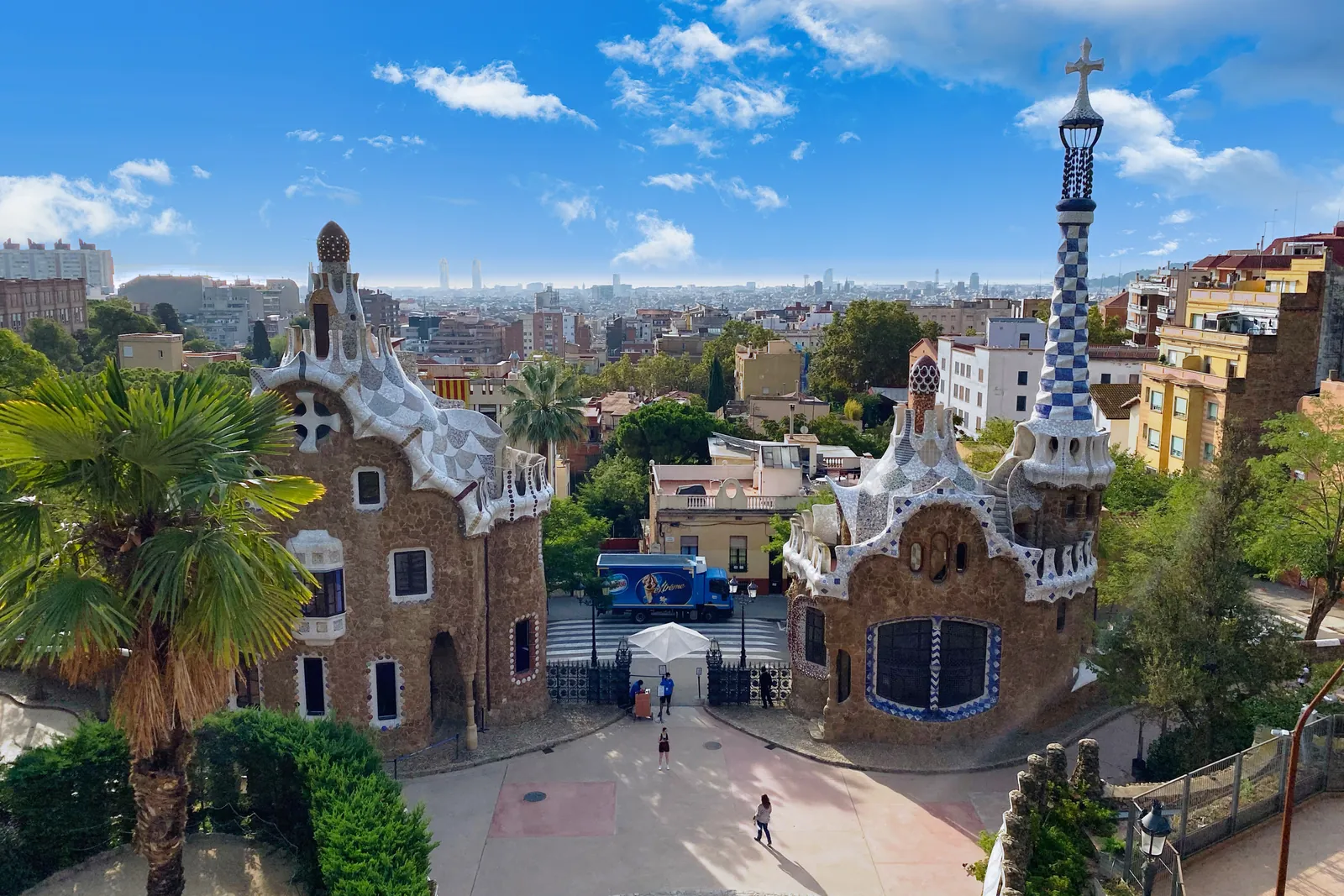
| Park Güell, Barcelona | €18 |
| Real Alcázar of Seville | €15.50 |
| Mosque-Cathedral of Córdoba | €15 |
| Prado Museum, Madrid | €15 (free in the last two hours of the day; free under 18) |
| Plaza de España, Seville | Free |
Free and cheap ideas: use the Prado’s free evening hours, visit the Royal Palace in its free weekday slots if you are an EU or Latin American citizen, stroll Madrid’s Retiro Park and Seville’s old town, and spend afternoons on city beaches such as La Concha in San Sebastián or the Barceloneta in Barcelona. The big Barcelona and Granada sights sell out, so book them online in advance.
Tipping and tax-free shopping
Tipping in Spain is modest and never compulsory. Leaving small change at a bar or rounding up a restaurant bill for good service is common. Our tip calculator helps you work out amounts on the spot. Visitors who live outside the EU can reclaim Spain’s VAT (21% standard rate) on goods bought at stores that offer tax-free shopping; the forms are validated electronically through the DIVA system at your departure airport or port.
Money-saving tips for Spain
- Travel outside July and August. The average Spanish hotel room cost €116 in January 2026 against €166.90 in August.
- Eat your main meal at lunch, when fixed-price menus are cheapest.
- Buy a 10-trip ticket in Madrid instead of single tickets.
- Book trains early. With three high-speed operators competing, early fares are the cheapest.
- Use free museum hours at the Prado and other state museums.
- Mix big cities with smaller ones. Valencia, Córdoba and Salamanca are usually cheaper bases than Barcelona.
For ideas on where to go, see our top places to visit in Spain.
Plan your trip: our free trip planner can build a day-by-day plan for Spain from our guides, including Madrid, Barcelona, Seville, Granada and Málaga. Then use the Money exchange tool to turn euros into your own currency.
Frequently asked questions
How much money do I need for a week in Spain?
Using the example days above, seven days on the ground cost roughly €385–735 (about $435–830) per person on a tight budget, €805–1,225 (about $910–1,385) mid-range, and €1,785–2,275 (about $2,015–2,570) in five-star comfort, before flights, long-distance trains and shopping.
Is Spain expensive?
Not compared with most of Western Europe. Spain scores 80 on our travel cost scale (US = 100), so hotels, meals and transport cost on average about a fifth less than in the United States. Barcelona, Ibiza and the coast in August are the expensive exceptions.
Do I need cash in Spain?
Not much. Cards and contactless payments are widely used in Spain, but keep some euros in small notes and coins for markets, small bars and tips.
How much is the tourist tax in Spain?
Only some regions charge one. In Barcelona it runs from €1 per night in youth hostels to €7 in five-star hotels, and in the Balearic Islands from €1 to €4 per night in summer, with lower rates from November to April. Bilbao and San Sebastián start charging on 1 January 2027.
Is Madrid or Barcelona more expensive?
Both are among Spain’s priciest places to visit. In INE’s August 2026 survey, tourists whose main destination was the Madrid region spent €334 a day and those in Catalonia €238, against €202 for Spain as a whole, partly because city breaks are short and spending is concentrated. Barcelona also adds a tourist tax of €1–7 per person per night, depending on where you stay.
What is the cheapest month to visit Spain?
January, after the Epiphany holiday on 6 January, and November are among the cheapest months on the mainland; Spain’s hotel rates averaged €116 a night in January 2026 against €166.90 in August. The Canary Islands are the exception, with their peak season in winter. See our best time to visit Spain guide.