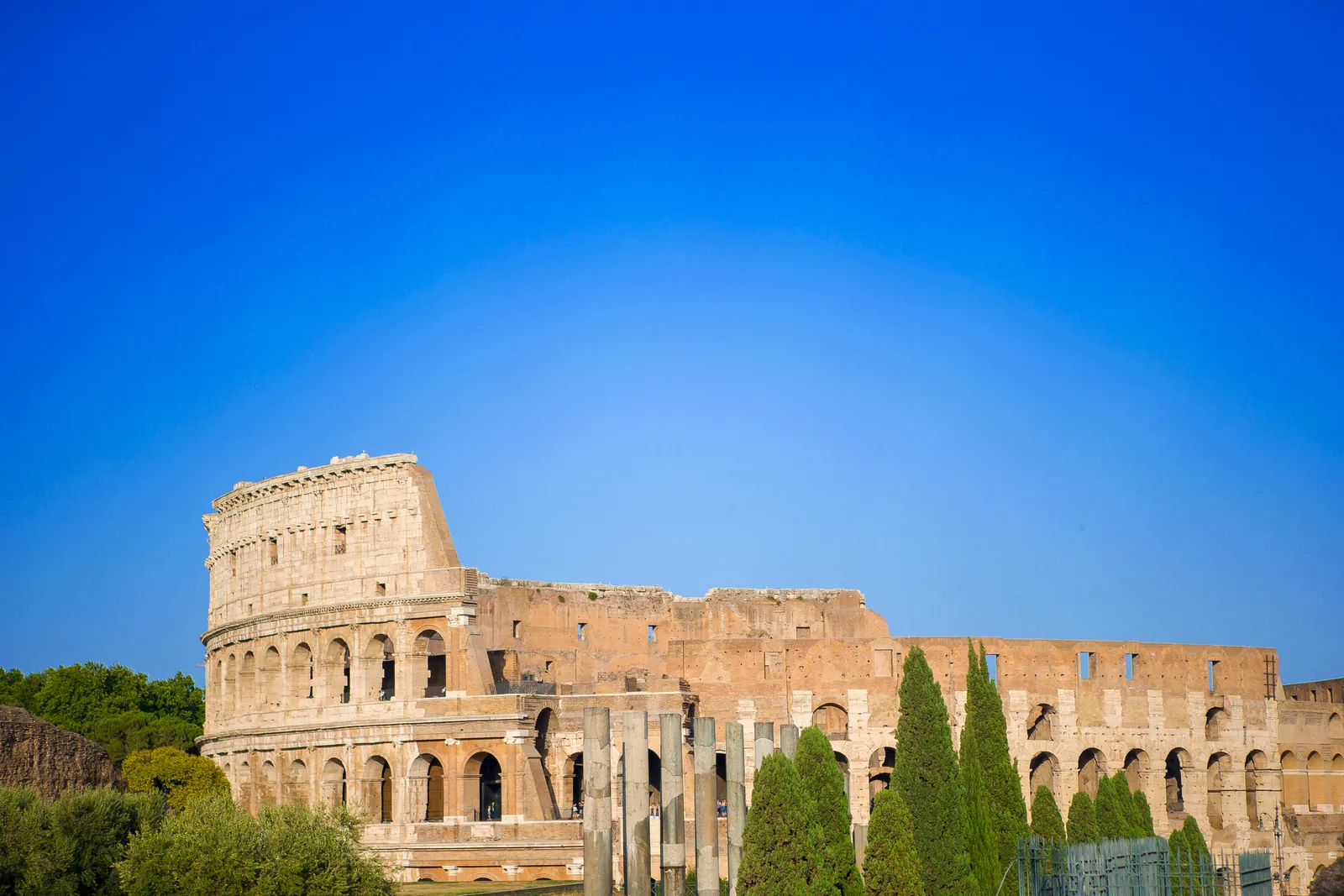
Short answer: The top places to visit in Italy are Rome, Florence, Venice, the Amalfi Coast, the Tuscan countryside around Siena, the Cinque Terre, Lake Como, the Dolomites, Naples with Pompeii, and Sicily. For a first trip, start with Rome, Florence and Venice, then add one coast, lake or mountain area that suits the season.
Italy packs ancient ruins, Renaissance art, cities on water, cliffside villages, Alpine peaks and volcanic islands into one country. This list is ordered the way we would recommend it for a first visit: the three classic cities first, then the coasts, lakes, mountains and the south.
Each section links to our full guide for that place, and the Italy travel guide covers trains, entry rules and costs.
1. Rome
Why it made the list: no other city lets you walk through so many centuries in a single afternoon. The Colosseum, the Roman Forum and the Pantheon sit a short walk from baroque squares and fountains, and the Vatican Museums and St. Peter’s Basilica are just across the Tiber.
Best time to go: April to June and September to October. Winter is mild and the quietest time for the big sights, while July and August are hot.
Don’t miss: the Colosseum together with the Roman Forum and Palatine Hill, which share one ticket, and an evening walk from the Pantheon to the Trevi Fountain and the Spanish Steps. Art lovers should book the Borghese Gallery.
Getting there and how long: the Leonardo Express train links Fiumicino airport with Termini station in about 32 minutes. Give Rome three or four days. Metro line C’s Colosseo–Fori Imperiali station, right by the ruins, opened in December 2025.
Practical note: since February 2026, visitors pay a small fee to go down to the basin of the Trevi Fountain during the day, while the view from the square stays free. The Vatican Museums are free on the last Sunday of the month, with long lines. See our Rome travel guide for tickets, neighborhoods and airport transfers.
2. Florence
Why it made the list: Florence is the cradle of the Renaissance, and almost all of it fits in a compact, walkable center. Botticelli’s paintings in the Uffizi, Michelangelo’s David, Brunelleschi’s dome and the view from Piazzale Michelangelo at sunset are all within a short stroll of each other.
Best time to go: April, May, September and October. In summer Florence is one of Italy’s hottest cities, especially in July and August.
Don’t miss: the Uffizi Gallery, and the Florence Cathedral complex, where you can climb Brunelleschi’s dome or Giotto’s bell tower for the classic view over the red rooftops.
Getting there and how long: high-speed trains from Rome take about an hour and a half. Two or three days covers the main museums; stay longer if you want day trips into Tuscany.
Practical note: the Uffizi is closed on Mondays and sells a cheaper afternoon ticket for entry from 4 p.m. The cathedral itself is free to enter but closed on Sundays and religious holidays; the dome and bell tower need a paid pass, and the dome a timed slot. See our Florence travel guide.
3. Venice
Why it made the list: there is nowhere else like it: a city without cars, built on more than a hundred small islands in a lagoon, where the buses are boats and the main street is the Grand Canal.
Best time to go: April to June and September to October, or quiet winter days for mist and atmosphere. Carnival runs from 23 January to 9 February 2027 and is spectacular but packed.
Don’t miss: St. Mark’s Basilica with its golden mosaics, the Doge’s Palace next door, and a slow vaporetto ride down the Grand Canal. Take a boat out to Murano for glass-blowing and to colorful Burano.
Getting there and how long: trains run from Florence, Milan and Rome to Venezia Santa Lucia station, right on the Grand Canal. Stay at least two nights so you see the city at its quietest.
Practical note: in 2026, day-trippers paid an access fee on 60 busy days between April and July; the trial ended on 26 July, and the 2027 calendar had not been published when we checked. See our Venice travel guide.
4. The Amalfi Coast
Why it made the list: pastel villages stacked on cliffs above a deep-blue sea make this the most photographed coastline in Italy. Positano, Amalfi and Ravello each have their own character, and the whole coast is a UNESCO World Heritage Site.
Best time to go: May, June and September, when the boats are running and the sea is warm but the crowds are lighter than in July and August. From about November to Easter, many hotels and ferries close.
Don’t miss: the Path of the Gods, a 5.3 km trail from Bomerano above Agerola to Nocelle above Positano, about two hours one way with huge views over the coast. Then take a ferry between the villages, and a day trip to Capri.
Getting there and how long: most visitors come from Naples via Sorrento or from Salerno, then use the SITA buses and the coastal ferries. Three or four nights lets you see Positano, Amalfi and Ravello and keep a day for the sea.
Practical note: skip the rental car. The coast road is narrow and busy, and on many spring and summer days an alternating number-plate rule limits which cars may use it. See our Amalfi Coast travel guide.
5. Tuscany: Siena and the hill towns
Why it made the list: the Tuscan countryside of vineyards, cypress-lined roads and medieval hill towns is the Italy many people dream about. Siena, with its shell-shaped Piazza del Campo, is the star, but the towers of San Gimignano, the walls of Lucca and long lunches in Chianti make it worth slowing down.
Best time to go: May for green hills, September and October for the grape harvest. Siena is at its liveliest, and most crowded, for the Palio horse race on 2 July and 16 August.
Don’t miss: Siena Cathedral, whose inlaid marble floor is uncovered only for a few weeks a year (in 2026, from 27 June to 31 July and from 18 August to 15 November), and a drive through the Chianti or Val d’Orcia countryside. Pisa’s Leaning Tower is an easy add-on from Florence.
Getting there and how long: express buses and trains link Florence and Siena in roughly an hour and a half. Spend at least two nights in the countryside or in Siena itself; a car makes the small villages much easier.
Practical note: historic centers across Tuscany have camera-enforced limited traffic zones (ZTL). Park outside the walls. See our Siena travel guide and Tuscany travel guide.
6. The Cinque Terre
Why it made the list: five pastel fishing villages cling to the cliffs of the Ligurian coast, linked by a local train and by footpaths through terraced vineyards. It is a national park and part of a UNESCO site.
Best time to go: April, May, September and October for walking. Summer is hot and crowded, and autumn and winter storms can close trails.
Don’t miss: the coastal Blue Trail between Monterosso, Vernazza and Corniglia, which reopened in November 2025, and the short Via dell’Amore between Riomaggiore and Manarola, which now needs a booked half-hour slot.
Getting there and how long: trains run along the coast from La Spezia and Levanto, with a special Cinque Terre fare for the short hops between villages. Two nights is ideal so you can walk early before the day crowds arrive.
Practical note: the coastal path between Manarola and Corniglia remains closed, with an open inland alternative via Volastra. The Cinque Terre Card covers the park trails, and a train version adds the local trains. See our Cinque Terre travel guide.
7. Lake Como
Why it made the list: villas with terraced gardens, mountains dropping straight into the water and elegant villages connected by ferry make Lake Como the most romantic of the Italian lakes.
Best time to go: May, June and September, when the villa gardens are open and the ferries run full timetables without the August crowds.
Don’t miss: Villa del Balbianello on its wooded point near Lenno, where booking is required, and the gardens of Villa Carlotta in Tremezzo, famous for azaleas and rhododendrons in spring. In 2026 Villa Carlotta keeps its main hours until 18 October, then shorter hours until 8 November.
Getting there and how long: direct trains run from Milano Centrale to Varenna in about an hour, and from Milan to Como. Stay two or three nights in the central lake; it also pairs well with a day or two in Milan for the cathedral and Leonardo’s Last Supper.
Practical note: a one-day ferry pass for the central lake is the easiest way to hop between Bellagio, Varenna and Menaggio. Fast boats cost a supplement, and their tickets do not allow stopovers along the way. See our Lake Como travel guide, and Lake Garda or Lake Maggiore if you prefer a quieter lake.
8. The Dolomites
Why it made the list: jagged pale peaks, green high meadows and mountain huts serving dumplings and strudel make the Dolomites Italy’s most dramatic mountains, and a UNESCO World Heritage Site since 2009.
Best time to go: mid-June to late September for hiking, when huts and cable cars are open, and December to early April for skiing. The Dolomiti Superski season is expected to run from 28 November 2026 to 11 April 2027.
Don’t miss: the loop around the Tre Cime di Lavaredo, and the Seceda ridge above Ortisei in Val Gardena.
Getting there and how long: trains on the Brenner line reach Bolzano from Verona, and coaches run from Venice to Cortina d’Ampezzo. Base yourself in one valley, such as Val Gardena, Alta Badia or Cortina, for three to five days.
Practical note: the most popular spots now limit traffic. Driving up to the Tre Cime car park needs an online booking and a toll, and from 1 July to 15 September the road to Lago di Braies is restricted between 9:00 and 16:00 unless you book or come by bus. See our Dolomites travel guide.
9. Naples and Pompeii
Why it made the list: Naples is the birthplace of pizza and one of Europe’s most vivid cities, with a UNESCO-listed historic center and a superb archaeological museum. Just down the bay, Pompeii and Herculaneum, buried by Vesuvius in AD 79, are the most complete Roman towns anywhere.
Best time to go: all year, but spring and autumn avoid the summer heat.
Don’t miss: a full day at Pompeii, including the Villa of the Mysteries, and the National Archaeological Museum in Naples, where many of Pompeii’s mosaics and frescoes now hang.
Getting there and how long: fast trains link Rome and Naples in a little over an hour, and the Circumvesuviana local train runs from Naples to Pompei Scavi in about 35–40 minutes. Two days covers Naples and Pompeii.
Practical note: Pompeii tickets are named and non-transferable, with a cap of 20,000 visitors a day and timed entry slots from mid-March to mid-October, so book ahead on the official site. See our Naples travel guide.
10. Sicily
Why it made the list: Sicily could fill a whole trip on its own. Greek temples, Arab-Norman churches, baroque towns, Europe’s highest active volcano and some of Italy’s best street food all share one island.
Best time to go: April to June and September to October. Sicily has Italy’s mildest winters, and early October is still warm enough to swim.
Don’t miss: the Valley of the Temples at Agrigento, and the Greek theater in Taormina, with Mount Etna rising behind the stage. Then eat your way through Palermo‘s street markets.
Getting there and how long: fly to Catania or Palermo, or take an overnight ferry from Naples. Allow at least five days for one side of the island, and a week or more for a loop with a car.
Practical note: on Etna, the summit area above roughly 2,500 m may only be visited with an authorized alpine or volcano guide, and a helmet is required. Book a guided trip from Catania or Taormina. See our Sicily travel guide.
How to fit them into one trip
You won’t see all ten in one visit. These pairings work well:
- One week, the classic triangle: three days in Rome, two in Florence and two in Venice, all by high-speed train.
- Ten days, north: add Milan and Lake Como to Venice and Florence, or swap in the Cinque Terre between Florence and the lakes.
- Ten days, south: Rome, then Naples and Pompeii, then three or four nights on the Amalfi Coast with a day on Capri.
- Two weeks: the triangle plus either the Tuscan countryside and the Cinque Terre, or Naples and the Amalfi Coast. Keep Sicily and the Dolomites for a second trip.
With more time, the south has plenty more: the trulli of Alberobello in Puglia and the cave dwellings of Matera are both strong candidates for an eleventh place. Check our best time to visit Italy guide to match each region to your month.
Plan your trip
Once you have your shortlist, our AI trip planner builds the day-by-day plan for your dates. Use the destination weather tool to see what is normal for each stop on your dates, and the money exchange tool to budget in euros.
Frequently asked questions
What is the best place in Italy for first-time visitors?
Rome, with the most flights, the most famous sights and fast trains onward to Florence, Naples and Venice.
What is the most beautiful place in Italy?
It depends on what you love. For coastline, the Amalfi Coast and the Cinque Terre; for mountains, the Dolomites; for a city, Venice or Florence; for lakes and gardens, Lake Como.
How many days do you need in Italy?
Five days covers Rome and Florence; a week adds Venice. Ten days lets you add the lakes or Naples and the Amalfi Coast, and two weeks gives time for Sicily, Puglia or the Dolomites as well.
Do you need a car to see Italy?
Not for the cities, the Cinque Terre, Lake Como or the Amalfi Coast, where trains, buses and ferries work better. A car helps in the Tuscan countryside, the Dolomites, Puglia and Sicily.
Do you have to pay to enter Venice?
Only on certain days. In 2026, day-trippers paid an access fee on 60 busy days between April and July, while overnight guests were exempt and paid the tourist tax instead. The 2027 calendar had not been published in October 2026, so check the City of Venice’s official site before you go.