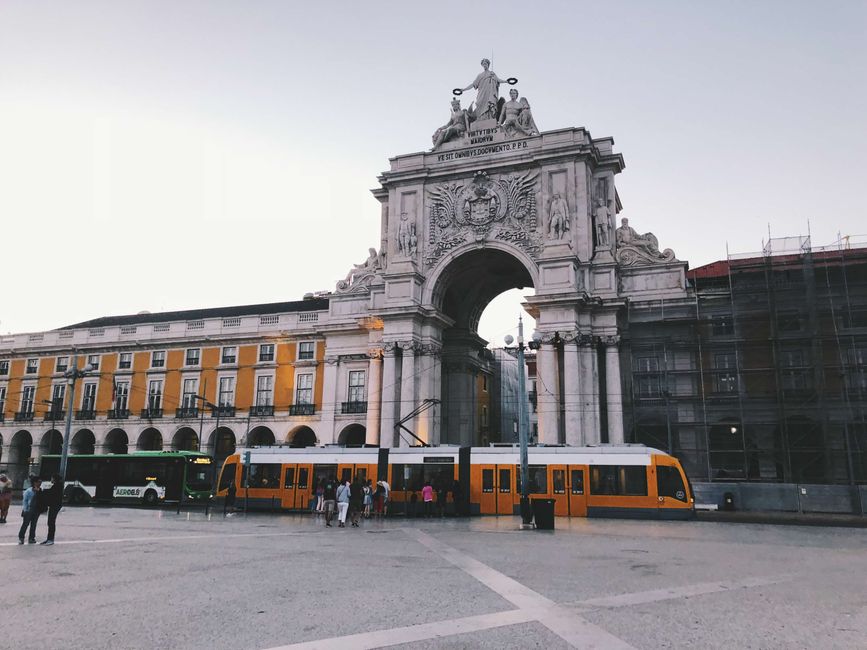
Short answer: For a first solo trip, Portugal, Ireland, the Netherlands, the United Kingdom, Japan, Singapore, Thailand, Australia, New Zealand and Costa Rica are some of the easiest countries to start with. They combine simple entry for most Western passport holders, public transport you can figure out on day one, plenty of hostels and guesthouses, English that is widely spoken (or a language that is easy to pick up), and official tourist offices where you can walk in and ask for help.

We chose these ten on practical factors only. Entry rules below are for US passport holders and were checked in early October 2026. Rules change and differ by nationality, so confirm on the official government site before you book. Each section links to our full guides.
Europe
1. Portugal
Why it is easy: Portugal is compact, and its two big cities are linked by fast trains. The Alfa Pendular runs between Lisbon and Porto in under three hours. In Lisbon, the Metro’s red line starts at the airport, and a 24-hour Carris/Metro ticket covers the city’s buses, trams and metro. Portugal also ranks 6th in the 2025 EF English Proficiency Index, so English goes a long way in the cities.
Help on the ground: Lisbon’s official tourist offices, called Ask Me Lisboa, include a desk in the airport arrivals hall and offices around Praça do Comércio and Rossio.
Best things to do: spend a few days walking Lisbon’s hills and viewpoints, then take the train north to Porto for the riverside Ribeira district and port cellars across the river in Vila Nova de Gaia.
When to go: June to September are the driest months, with fewer than four rainy days a month in Lisbon on average.
Practical note: US citizens can visit Portugal and the rest of the Schengen area without a visa for up to 90 days in any 180-day period. Since 10 April 2026, the EU’s Entry/Exit System has been fully running at Schengen borders: it records your fingerprints and photo instead of stamping your passport, so allow a little extra time at the airport. Our phrase cards cover basic Portuguese. See our Lisbon travel guide, Porto travel guide and Portugal travel guide.
2. Ireland
Why it is easy: English is one of Ireland’s two official languages, so signs, menus and conversations are all familiar. The country is small enough that coaches and trains link Dublin with Galway, Cork and other cities in a few hours.
Help on the ground: Fáilte Ireland runs two Discover Ireland tourist offices in Dublin, on Upper O’Connell Street and at Barnardo Square with free maps and advice. At Dublin Airport you can buy a Leap Visitor Card for Dublin’s public transport.
Best things to do: enjoy Dublin’s museums and traditional music sessions, then head west to Galway, a base for day trips to Connemara.
When to go: late spring and summer, when days are longest and warmest. Rain is possible in any month, so pack a waterproof layer.
Practical note: US citizens can visit Ireland without a visa for up to 90 days. Ireland is not in the Schengen area, so the EU’s new Entry/Exit System does not apply when you fly straight to Ireland. A side trip to Belfast, in the UK, needs a UK ETA (see below), even with no land-border checks. See our Dublin travel guide, Galway travel guide and Ireland travel guide.
3. Netherlands
Why it is easy: the Netherlands ranks first in the 2025 EF English Proficiency Index, so English is rarely a problem. Getting around is simple too: trains run from Schiphol Airport to Amsterdam Centraal eight times an hour, and the trip takes about 17 minutes. You do not need a local travel card. On NS trains you can check in and out at the gates with a foreign contactless Visa or Mastercard, or with your phone.
Help on the ground: the I amsterdam Store at Amsterdam Centraal, on the IJ side of the station, is the city’s visitor information point.
Best things to do: see the canal ring and the big museums in Amsterdam, then take the train to Utrecht, a smaller canal city with a medieval center and canals lined with wharf-level cafés.
When to go: spring, when the Keukenhof flower gardens open (18 March to 9 May in 2027), or summer for long evenings on the canals.
Practical note: the same Schengen 90-day rule and Entry/Exit System registration apply as in Portugal. Use the same card to check in and to check out. See our Amsterdam travel guide, Utrecht travel guide and Netherlands travel guide.
4. United Kingdom
Why it is easy: no language barrier, a dense rail network, and in London you can simply tap a contactless bank card or phone on the Tube and buses. Transport for London caps what you pay in a day, as long as you use the same card or device for every journey. If you are 16 to 30, the £35 16-25 or 26-30 Railcard takes a third off most rail fares in Great Britain for a year.
Help on the ground: the national tourist boards, VisitBritain, VisitScotland and Visit Wales, publish free trip-planning information.
Best things to do: combine London’s free national museums with a train trip north to Edinburgh, where the Old Town, the castle and Arthur’s Seat are all walkable from the station.
When to go: late spring to early fall. July is London’s warmest month, with average highs around 75°F (24°C).
Practical note: US citizens need an Electronic Travel Authorisation (ETA) before traveling to the UK. It costs £20, is applied for online or in the UK ETA app, and is valid for multiple trips over two years (or until your passport expires), with stays of up to six months. Apply at least three working days before you fly. See our London travel guide, Edinburgh travel guide and United Kingdom travel guide.
Asia
5. Japan
Why it is easy: Japan’s trains are famously punctual, and station signs in the big cities are in English as well as Japanese. JR East’s Welcome Suica card, valid for 28 days, works on trains, subways and buses in Tokyo and many other areas, and in convenience stores. The nationwide Japan Rail Pass costs ¥50,000 for seven days.
Help on the ground: more than 1,500 tourist information centers across Japan are certified by the Japan National Tourism Organization, and the larger ones have English-speaking staff. JNTO also runs the Japan Visitor Hotline, 050-3816-2787, which answers in English, Chinese and Korean 24 hours a day, every day of the year.
Best things to do: start in Tokyo, then ride the shinkansen to Kyoto for temples, gardens and the torii gates of Fushimi Inari.
When to go: spring or fall. Around Tokyo, the rainy season normally runs from about 7 June to 19 July.
Practical note: US citizens can visit Japan without a visa for up to 90 days. Japan has passed a law for a pre-arrival online authorization, JESTA; no start date has been set yet. A few polite phrases from our phrase cards help a lot. See our Tokyo travel guide, Kyoto travel guide and Japan travel guide.
6. Singapore
Why it is easy: English is one of Singapore’s four official languages, alongside Malay, Mandarin and Tamil, and you will see it on signs everywhere. The MRT metro has more than 140 stations, trains come every two to three minutes at peak times, and you pay adult fares by tapping a contactless Visa, Mastercard or Amex card, or a phone wallet.
Help on the ground: the Singapore Visitor Centre at 216 Orchard Road, near Somerset MRT station, sells attraction tickets and gives out information.
Best things to do: eat at the hawker centres, walk Marina Bay at night and spend a day on Sentosa.
When to go: any time. Average highs are 87–90°F (30–32°C) in every month; November and December are the wettest.
Practical note: US citizens do not need a visa. Everyone must complete the free SG Arrival Card online or in the MyICA app within three days before arrival. Use only the official site; some third-party sites charge a fee. See our Singapore travel guide.
7. Thailand
Why it is easy: Thailand is one of Asia’s best-known backpacker destinations, so hostels, guesthouses, cooking classes and day tours are easy to find in Bangkok, Chiang Mai and the islands. In Bangkok, the BTS Skytrain and MRT lines connect many of the areas visitors stay in, and overnight sleeper trains run north to Chiang Mai.
Help on the ground: the Tourism Authority of Thailand runs the 1672 call center for travel information and help, and the Tourist Police can be reached on 1155.
Best things to do: see the Grand Palace and Wat Pho in Bangkok, take the night train or a short flight to Chiang Mai for its old-city temples and mountain day trips, then finish on a beach.
When to go: November to February. Bangkok and Chiang Mai each average under 45 mm (1.8 inches) of rain a month then, against 118–336 mm (4.7–13.2 inches) from May to October.
Practical note: since 15 September 2026, US citizens can stay up to 30 days without a visa (down from 60). All visitors must fill in the free Thailand Digital Arrival Card online within three days before arriving. Thai uses its own script, so our phrase cards are handy. See our Bangkok travel guide, Chiang Mai travel guide and Thailand travel guide.
Oceania
8. Australia
Why it is easy: English is spoken everywhere, the big cities have good public transport, and the east-coast backpacker trail is well established. In Sydney you can tap a contactless bank card or phone on trains, buses, ferries and light rail instead of buying a local card.
Help on the ground: look for the yellow italic “i” on a blue background. Only accredited visitor information centres can use it, and they give free, impartial advice on local transport, tours and places to stay.
Best things to do: spend a few days in Sydney, from harbor ferries to Bondi Beach, then travel south to Melbourne for its laneway cafés and the Great Ocean Road.
When to go: seasons are reversed. Spring (September to November) and fall (March to May) are mild in Sydney and Melbourne.
Practical note: US citizens need an Electronic Travel Authority (ETA), applied for only through the official Australian ETA app. The service charge is AUD20, decisions usually come quickly, and the ETA allows stays of up to three months per visit for 12 months. See our Sydney travel guide, Melbourne travel guide and Australia travel guide.
9. New Zealand
Why it is easy: New Zealand is English-speaking and set up for travelers who move around on their own. InterCity, the national coach network, connects more than 600 destinations across both islands, and its FlexiPass includes the Interislander ferry between Wellington and Picton.
Help on the ground: the i-SITE network is New Zealand’s official visitor information network, with more than 50 centres around the country. Staff can book transport, activities and accommodation for you.
Best things to do: start in Auckland, travel south by bus via Rotorua, then cross to the South Island and end in Queenstown for lakes, hiking and adventure sports.
When to go: November to April, the summer hiking season. Huts on Great Walks such as the Routeburn and Milford tracks are in their main season from 1 November to 30 April.
Practical note: US citizens need a New Zealand Electronic Travel Authority (NZeTA): NZ$17 in the official app or NZ$23 on the website, plus the NZ$100 International Visitor Conservation and Tourism Levy. Allow up to 72 hours for processing. You also fill in the free New Zealand Traveller Declaration before you arrive. See our Auckland travel guide, Queenstown travel guide and New Zealand travel guide.
The Americas
10. Costa Rica
Why it is easy: Costa Rica is a direct flight from many US cities, and travelers have long followed the same loop of volcanoes, cloud forest and beaches. Spanish is the language, and it is one of the languages the US Foreign Service Institute rates easiest for English speakers to learn. Costa Rica’s tourism board publishes public bus schedules on its website, and shared shuttle vans run hotel to hotel between the main tourist areas.
Help on the ground: hostels, small lodges and tour desks are common in La Fortuna and Monteverde, and they can book shuttles and guided walks for you.
Best things to do: see Arenal Volcano and soak in the hot springs around La Fortuna, then take a guided walk on the hanging bridges and trails of the Monteverde cloud forest.
When to go: December to April. On the Pacific side the dry season runs from December to March, and around La Fortuna February to April is relatively drier.
Practical note: US citizens do not need a visa for tourist stays, and immigration may allow up to 180 days; the officer decides the length of stay. You need a return or onward ticket and may be asked for proof of funds of at least US$100 per month of your stay. Our phrase cards cover basic Spanish. See our La Fortuna travel guide, Monteverde travel guide and Costa Rica travel guide.
Plan your solo trip
Once you have picked a country, our free trip planner builds a day-by-day plan for your dates and budget from our guides. Use the packing list to travel light, and check Travel costs by country to compare budgets.
Frequently asked questions
What is the easiest country for a first solo trip?
For many first-time solo travelers, Portugal or Japan is the easiest start. Portugal is compact, with fast trains between Lisbon and Porto and widespread English. Japan has very punctual trains, English signs in the big cities and more than 1,500 certified tourist information centers.
Which countries are easiest for solo travelers who only speak English?
Ireland, the United Kingdom, Australia and New Zealand use English day to day, and English is one of Singapore’s four official languages. In the 2025 EF English Proficiency Index, the Netherlands ranked first and Portugal sixth worldwide, so English is widely understood there too.
Do I need a visa for these countries as a US citizen?
None of the ten requires a traditional visa for a short tourist trip by US citizens, but several need an online step before you fly: an ETA for the UK (£20), an ETA for Australia (AUD20), an NZeTA for New Zealand, the free SG Arrival Card for Singapore and the free Thailand Digital Arrival Card. Rules change, so check official sites before booking.
Where can I get help as a solo traveler once I arrive?
Start with the official tourist office: Ask Me Lisboa in Lisbon, Discover Ireland offices in Dublin, Japan’s certified tourist information centers, New Zealand’s i-SITEs or Australia’s accredited “i” visitor centres. Our Traveler Centers directory helps you find tourist information offices and travel agencies near your destination.