Short answer: The top places to visit in Portugal are Lisbon, Sintra, Porto, the Douro Valley, the Algarve, Madeira, the Azores, Évora, Coimbra and Nazaré. Start with Lisbon and Porto, add Sintra and the Douro as easy trips by train, then finish on the Algarve coast or on one of the Atlantic islands.
This list is in the order we would recommend for a first visit. For each place you get why it made the list, when to go, what not to miss, how to get there and how long to stay. Prices and rules were checked as of October 2026; for entry rules and money, start with our Portugal travel guide.
1. Lisbon
Why it made the list: Portugal’s capital spreads over steep hills above the Tagus River, with tiled houses, viewpoints at every turn, yellow trams and fado in the evenings. It is the natural first stop.
When to go: spring and early fall are ideal. Average highs never drop below about 15°C (59°F), even in January, and reach about 29°C (84°F) in August. The Santo António festival fills the old quarters on the night of 12–13 June.
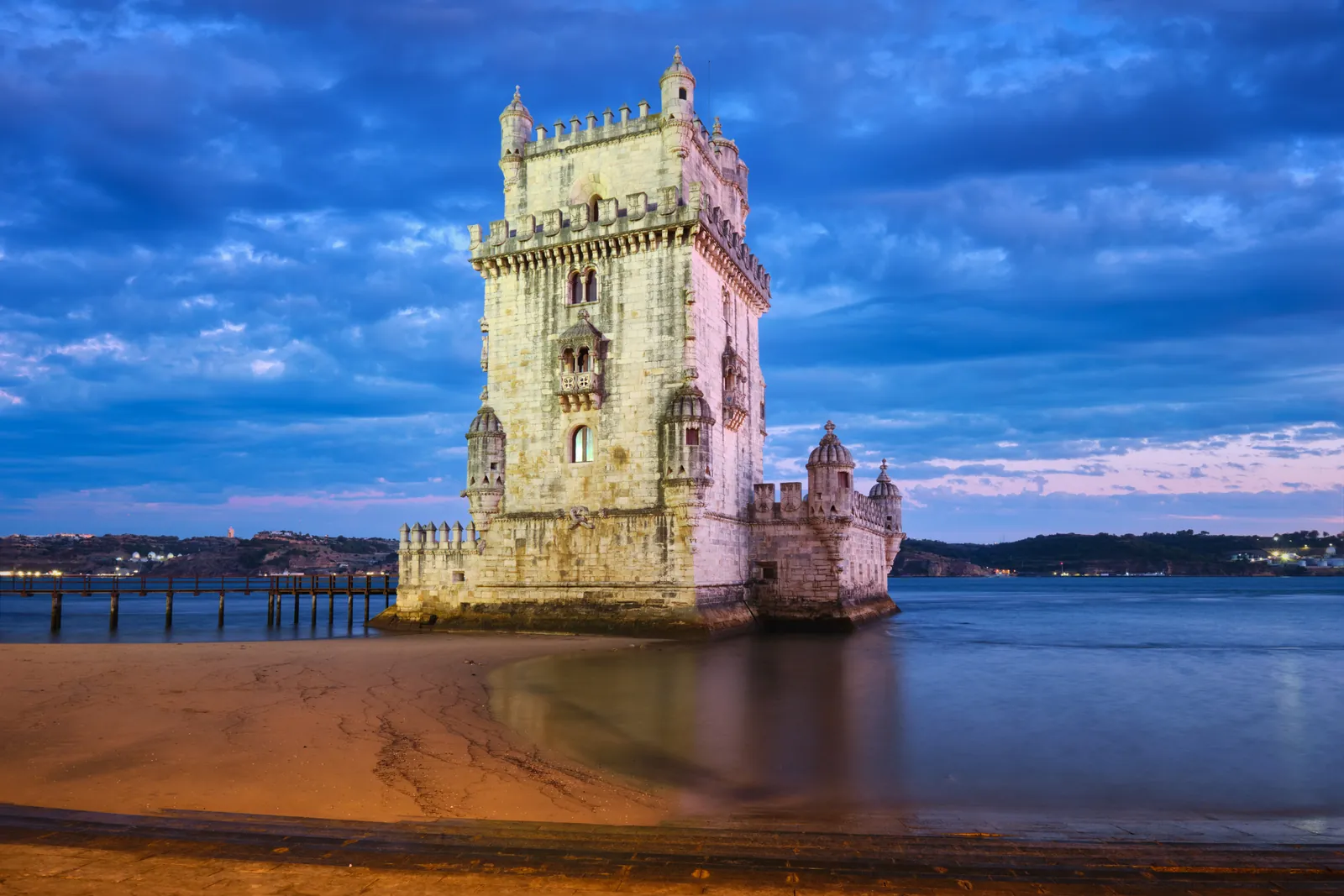
Don’t miss: the Jerónimos Monastery and Belém Tower, a UNESCO World Heritage site since 1983, and the walk up through Alfama to São Jorge Castle for sunset over the rooftops.
Getting there and how long: most international flights land in Lisbon, and the Metro runs from the airport into town. Give it three or four nights, one of them used for Sintra.
Practical note: Jerónimos, Belém Tower and many national museums close on Mondays, and the Santa Justa Lift is temporarily closed. Hotels add a tourist tax of €4 per person per night (from age 13, up to 7 nights). See our Lisbon travel guide.
2. Sintra
Why it made the list: in the green hills west of Lisbon, Sintra is a fairy-tale mix of royal palaces, a Moorish castle and mysterious gardens, listed by UNESCO as a cultural landscape in 1995.
When to go: any time of year, but avoid summer weekends if you can. The sites open every day except 24, 25 and 31 December and 1 January. Go early, or in the afternoon, which the operator says is currently the quieter time at Pena.
Don’t miss: the red and yellow Pena Palace, then the 10th-century walls of the Moorish Castle or the grottoes and Initiation Well of Quinta da Regaleira. With a spare hour, take the bus to Cabo da Roca, the westernmost point of mainland Europe.
Getting there and how long: the train from Lisbon’s Rossio station takes about 40 minutes. One full day covers two or three sites.
Practical note: Pena sells tickets for a date and time slot with no delay tolerance (the “Essential” ticket is €20 for adults), and private cars cannot drive up to Pena or the Moorish Castle, so use the 434 bus or walk. See our Sintra travel guide.
3. Porto
Why it made the list: Portugal’s second city tumbles down granite slopes to the Douro River, with tiled churches, a lively riverfront and the port wine lodges across the water in Vila Nova de Gaia. Its historic center has been a UNESCO World Heritage site since 1996.
When to go: May, June and September, with highs of about 20–24°C (68–75°F). Porto is much wetter than Lisbon, with about 1,150 mm (45 inches) of rain a year, so pack a rain jacket from October to April. On the night of 23 June, the São João festival ends with fireworks over the river at midnight.
Don’t miss: walking across the top deck of the Dom Luís I Bridge at sunset, then a tasting in a Gaia port cellar. By day, climb the Clérigos Tower and see Livraria Lello, where each ticket doubles as a voucher toward a book.
Getting there and how long: the Alfa Pendular train from Lisbon takes about 2 hours 45 minutes, and the airport is about 30 minutes from the center on metro line E. Stay two or three nights, plus a day for the Douro.
Practical note: a 50-minute “six bridges” river cruise is the easiest way to see the city from the water. See our Porto travel guide.
4. The Douro Valley
Why it made the list: upriver from Porto, the Douro winds between hillsides carved into vineyard terraces, where wine has been made for about 2,000 years and port comes from. The Alto Douro Wine Region was listed by UNESCO in 2001.
When to go: May to June for green vines, or the harvest, which usually runs from September into early October.
Don’t miss: a tasting at a quinta (wine estate) near Pinhão and a one-hour trip on a traditional rabelo boat. Pinhão’s station is a sight in itself, with 24 tile panels of the wine region. For the classic view, drive up to the São Leonardo de Galafura viewpoint.
Getting there and how long: regional trains leave Porto Campanhã at 07:30 and 09:30 and reach Pinhão in about 2 hours 15 minutes. A day trip works; one night among the vineyards is better.
Practical note: book quinta visits ahead, and if you drive, Portugal’s drink-drive limit is 0.5 g/l (0.2 g/l in your first three years of driving). See our Douro Valley travel guide.
5. The Algarve
Why it made the list: Portugal’s south coast is the country’s beach playground: golden cliffs, sea caves and coves in the west, and long sandy islands and lagoons in the east.
When to go: June to September for beach days; Faro’s average high reaches about 29°C (85°F) in July and August, with almost no rain. May and late September to October are calmer and still warm.
Don’t miss: a morning boat or kayak trip to the rock arches of Ponta da Piedade near Lagos or to Benagil Cave, then an afternoon on Praia da Marinha. In the east, take a little ferry to the islands of the Ria Formosa Natural Park, a 60 km lagoon system with flamingos and spoonbills.
Getting there and how long: trains from Lisbon reach Faro in about 3 hours, and the coastal line continues to Lagos in about 1 hour 40 minutes. Stay three to five nights in Lagos (cliffs and boat trips) or Tavira (calmer beaches).
Practical note: you cannot swim into or land on the beach inside Benagil Cave, and unguided kayaks are not allowed there, so book a licensed tour. The A22 coastal motorway has been toll-free since January 2025. See our Algarve travel guide.
6. Madeira
Why it made the list: this green, mountainous Atlantic island is made for walking, with trails along old irrigation channels called levadas, cliff-top viewpoints and peaks above the clouds. Its laurel forest has been a UNESCO World Heritage site since 1999.
When to go: any month. Funchal’s average high is about 20°C (68°F) in January and about 27°C (80°F) in August, which makes Madeira Portugal’s best winter escape. The 2027 Flower Festival runs from 29 April to 30 May.
Don’t miss: sunrise at Pico do Areeiro and the trail toward Pico Ruivo, at 1,862 m the island’s highest peak, and the Levada das 25 Fontes walk. Out west, combine the Cabo Girão skywalk with a swim in the Porto Moniz natural pools.
Getting there and how long: flights take about 1 hour 45 minutes from Lisbon and about 2 hours from Porto. Plan four to six nights, based in Funchal.
Practical note: most official trails must be booked and paid online through the SIMplifica portal (€4.50 per trail for visitors over 12, €10.50 for the full PR1), with no refund if you change your mind. Strong winds sometimes delay flights, so keep a spare day before a connection. See our Madeira travel guide.
7. The Azores
Why it made the list: a chain of volcanic islands in the mid-Atlantic, with crater lakes, hot springs, tea fields and superb whale watching. More than 20 species of whales and dolphins are seen here, and sperm whales stay all year.
When to go: May to September. In Ponta Delgada, July averages only about 26 mm (1 inch) of rain and August highs reach about 26°C (79°F), while December is the wettest month.
Don’t miss: the crater-rim views over the twin lakes of Sete Cidades and the hot springs of Furnas, where the local stew is cooked in the volcanic ground. Add Lagoa do Fogo, and if you hop to Pico, Mount Pico, Portugal’s highest mountain at about 2,350 m.
Getting there and how long: flights from Lisbon to Ponta Delgada on São Miguel take a little over two hours. Give the islands four to six nights.
Practical note: the Azores are one hour behind mainland Portugal, a car makes life much easier, and climbing Mount Pico needs a booked slot and a fee. See our Azores travel guide.
8. Évora
Why it made the list: the capital of the Alentejo is a whitewashed, walled city with a Roman temple at its heart, a UNESCO World Heritage site since 1986, and the best taste of the slow, rural south. It will be a European Capital of Culture in 2027.
When to go: spring and fall. Summers are fierce: highs average about 33°C (92°F) in July and August, with more than 20 days above 30°C (86°F) in each.
Don’t miss: the first-century Roman Temple, free to see, and the Chapel of Bones. Walk on the roof of Évora Cathedral (€5 for the complete visit), then drive out to the Almendres Cromlech, 95 standing stones older than Stonehenge.
Getting there and how long: Intercidades trains from Lisbon Oriente take about 1 hour 40 minutes. One or two nights inside the walls is ideal.
Practical note: there is no direct train from Évora to the Algarve; take a coach or a hire car. See our Évora travel guide.
9. Coimbra
Why it made the list: Portugal’s old university city sits on a hill above the Mondego River, halfway between Lisbon and Porto. The university, founded in 1290 and settled here in 1537, is a UNESCO World Heritage site with one of the world’s most beautiful baroque libraries.
When to go: spring or fall, during the academic year, when students bring the old town to life. The big student festival, the Queima das Fitas, takes place in May.
Don’t miss: the Joanina Library and the Palace of Schools (€16.50 with the Science Museum), and the 12th-century Old Cathedral. In the evening, hear Coimbra’s own style of fado.
Getting there and how long: Coimbra-B station is about 1 hour 35 minutes from Lisbon and about 1 hour from Porto on the Alfa Pendular. Half a day to one night is enough.
Practical note: the Joanina has a fixed entry time chosen when you buy, and the old city-center station has closed, so take a bus or taxi from Coimbra-B. See our Coimbra travel guide.
10. Nazaré
Why it made the list: this fishing town about 120 km north of Lisbon has two personalities: a sheltered town beach lined with seafood restaurants, and, around the headland, Praia do Norte, where the biggest waves ever surfed roll in on winter storm days.
When to go: July to September for the beach. The big-wave season runs roughly from October to March, but giant days come only a handful of times each winter, so watch the surf forecasts.
Don’t miss: the funicular up to the clifftop village of Sítio, then the walk to the Fort of São Miguel Arcanjo, built from 1577, the grandstand for the waves. Inland, the UNESCO-listed monasteries of Alcobaça and Batalha are short drives away (€15 each).
Getting there and how long: about 1 hour 30 minutes by car or around 2 hours by express bus from Lisbon; there is no train station in town. A day trip works, or one night with the monasteries.
Practical note: Praia do Norte is not a swimming beach; on big days, watch from the fort and stay behind the barriers. See our Nazaré travel guide.
How to fit them into one trip
The ten group neatly. With 7 days, do Lisbon (three nights, with a Sintra day) and Porto (three nights, with a Douro day), all by train. With 10 days, run north to south: Porto and the Douro, Coimbra on the way to Lisbon and Sintra, a night in Évora, then two nights in the Algarve, flying home from Faro. With 14 days, pair Lisbon and Porto with five nights on Madeira or a week in the Azores. Nazaré fits as a day out from Lisbon by car.
Our Portugal itinerary guide turns these routes into day-by-day plans with real train times, and best time to visit Portugal shows the weather month by month. For trains and buses, see getting around Portugal; to keep costs down, read Portugal on a budget. Still choosing a country? Try Portugal vs Spain.
Plan your trip
Once you know where you want to go, our AI trip planner builds the day-by-day plan for your dates, travelers and budget from our guides. To see what the weather is usually like on your dates, open the Destination weather tool.
Frequently asked questions
What is the best place in Portugal for first-time visitors?
Lisbon. It has the most flights, the most famous sights, and easy day trips by train to Sintra and the Cascais coast. Pair it with Porto, about 2 hours 45 minutes away on the fast train.
What is the most beautiful place in Portugal?
It depends on what you love. For landscapes, the vineyard terraces of the Douro Valley and the crater lakes of Sete Cidades in the Azores. For architecture, Sintra’s Pena Palace and Lisbon’s Jerónimos Monastery. For coast, the arches of Ponta da Piedade in the Algarve.
How many days do you need in Portugal?
Seven days is enough for Lisbon, Sintra, Porto and a Douro day by train. Ten days lets you add Évora and the Algarve. To add one of the island groups, plan about 14 days.
Madeira or the Azores?
Choose Madeira for warmer, steadier weather all year, one base and dramatic mountain walks. Choose the Azores for crater lakes, hot springs, whale watching and island hopping, if you don’t mind changeable weather.
Do I need a car to see Portugal?
Not on the mainland: trains link Porto, Coimbra, Lisbon, Évora and the Algarve, and reach Sintra and the Douro too. A car helps for Nazaré, for wine estates, and on Madeira and the Azores.